
1. Okwu mmalite
This manual provides detailed instructions for the installation, operation, and maintenance of your EVGATSAUTO K2MRH3A Digital Programmable Thermostat. This device is designed for water heating systems, offering intelligent temperature control and energy-saving features. Please read this manual thoroughly before installation and use to ensure proper function and safety.
2. Ihe ngwugwu
Mgbe ị na-ewepụ ihe ndị a, biko hụ na ihe niile edepụtara n'okpuru dị ma dịkwa mma:
- 1 x Temperature Controller (Digital Thermostat)
- 1 x Akwụkwọ ntuziaka onye ọrụ (akwụkwọ a)
- 2 x skru na-agbago

Figure 1: EVGATSAUTO K2MRH3A Digital Thermostat and included mounting screws.
3. Akụrụngwa Ngwaahịa
- Njikwa okpomọkụ nwere ọgụgụ isi: Allows precise temperature management for water heating systems.
- Nchekwa ike: Features low consumption touch buttons and intelligent programming to optimize energy use.
- Ụdị njikwa ọtụtụ: Supports intelligent timing, direct touch control, and programmable time control.
- Ihe owuwu na-adịgide adịgide: Made from flame-retardant PC material with an IP20 rating for safety and longevity.
- Kpochapụ ihe ngosi LCD: Features a dark black LCD screen for easy readability of current and set temperatures, time, and operating modes.
- Ngwa sara mbara: Suitable for various environments including homes, offices, hospitals, and commercial spaces.
4. Nka na ụzụ nkọwa
| Oke | Uru |
|---|---|
| Ụdị ihe | Dijitalụ Dijitalụ |
| Ogo IP | IP20 |
| Ihe onwunwe Shell | PC na-egbochi ọkụ |
| Ihe mmetụta okpomọkụ | NTC |
| Okpomọkụ ziri ezi | ±1℃ |
| Ụdị ngosi | LCD |
| Environment na-arụ ọrụ | -5 ~ 50 ℃ |
| Oriri ike | <1W |
| Oke Ntọala okpomọkụ | 5 ~ 60 ℃ |
| Ngosipụta nso | 0 ruo 50 ℃ |
| Ntinye Voltage | AC 90-240V |
| Ibu kacha | 3A |
| Ike kacha | 3500W |
| Ụdị njikwa | Intelligent timing; Touch control; Programming time control |
| Agba | Nwa |
5. Ozi nchekwa
Please observe the following safety precautions to prevent damage to the device or personal injury:
- Installation should only be performed by a qualified electrician in accordance with local electrical codes.
- Ensure the power supply is disconnected before installation, maintenance, or removal of the thermostat.
- Ewepụla ngwaọrụ ahụ na mmiri ma ọ bụ oke mmiri.
- Do not attempt to disassemble or repair the thermostat yourself. Contact qualified service personnel.
- Keep the device away from flammable materials and direct heat sources.
6. Ntọala na nwụnye
This section outlines the general steps for installing your digital thermostat. For detailed wiring diagrams and specific installation requirements, consult a professional electrician.
6.1 Ịkwanye Thermostat
- Họrọ ebe: Select an indoor wall location, away from direct sunlight, drafts, or heat sources that could affect temperature readings.
- Kwụpụ ike: Turn off the main power supply to your heating system at the circuit breaker.
- Kwadebe waya: Follow the wiring diagram provided by your electrician or heating system manufacturer. Connect the AC 90-240V input and heating load wires to the appropriate terminals on the thermostat.
- Chekwaa na mgbidi: Mount the thermostat base to the wall using the provided screws. Ensure it is level and securely fastened.
- Attach Display Unit: Carefully attach the display unit to the mounted base, ensuring all connections are secure.
- Weghachi ike: Once installation is complete and verified, restore power to the heating system.

Foto 2: Akụkụ view of the thermostat, illustrating its compact design for wall mounting.

Foto 3: N'ihu view of the thermostat, showing the LCD display with current time and temperature settings.
7. Ntuziaka ọrụ
The EVGATSAUTO K2MRH3A thermostat offers intuitive touch controls and programmable settings.
7.1 Ngosipụta karịrịview
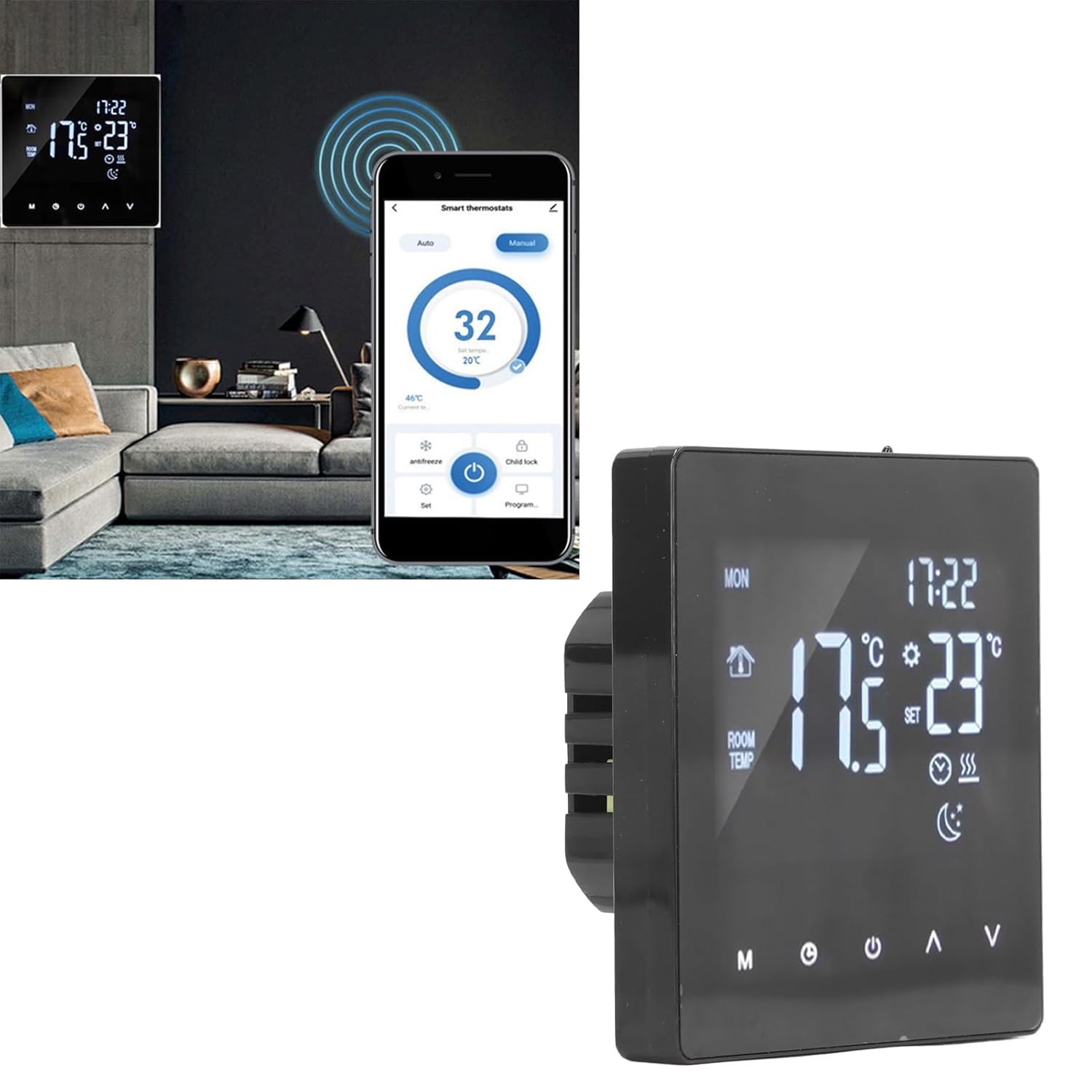
Figure 4: Close-up of the thermostat display, highlighting icons for mode, time, room temperature, set temperature, and heating status.
7.2 Basic Arụmọrụ
- Gbanyụọ/ Gbanyụọ: Pịa Ike button (usually represented by a circle with a vertical line) to turn the thermostat on or off.
- Gbanwee okpomọkụ: Jiri ihe Elu (▲) na Ala (▼) arrows to increase or decrease the desired set temperature.
- Nhọrọ ụdị: Pịa Ụdị (M) button to cycle through available operating modes (e.g., Manual, Auto, Program).
- Clock/Time Setting: Pịa Elekere button (often represented by a clock icon) to access time settings. Use the Up/Down arrows to adjust hours and minutes.
7.3 Usoro mmemme
The thermostat allows you to set a weekly heating schedule to optimize comfort and energy efficiency. Refer to the specific programming instructions in the full user manual for detailed steps on setting daily schedules, temperature points, and periods.

Ọgụgụ 5: Akụkụ profile of the thermostat, highlighting its slim design when mounted.
7.4 Advanced Features (If Applicable)
- Mkpọchi nwa: Some models may feature a child lock function to prevent unauthorized changes to settings. Consult the full manual for activation.
- Ụdị mgbochi friza: This mode maintains a minimum temperature to prevent pipes from freezing.
- Ngwakọta Smart Home: While this specific model is a standalone unit, some EVGATSAUTO thermostats may offer compatibility with smart home systems for remote control via an app.

Figure 6: The thermostat displayed alongside a smartphone showing a potential smart control application interface. Note: App control functionality may vary by model and region. Please refer to product specifications for confirmation.
8. Nlekọta
The EVGATSAUTO K2MRH3A thermostat requires minimal maintenance to ensure optimal performance.
- Nhicha: Gently wipe the display and casing with a soft, dry cloth. Do not use abrasive cleaners, solvents, or spray directly onto the device.
- Zenarị ihe mgbochi: Ensure that the thermostat's vents (if any) are not blocked by furniture or curtains, as this can affect temperature readings.
- Nlele anya mgbe niile: Periodically check the wiring connections for any signs of wear or looseness. (Only perform if qualified and power is off).
9. Nchọpụta nsogbu
Ọ bụrụ na ị hụ nsogbu na thermostat gị, lee nsogbu na ngwọta ndị a na-ahụkarị:
| Nsogbu | Ihe nwere ike ime | Ngwọta |
|---|---|---|
| Ngosipụta thermostat bụ oghere. | Enweghị ọkụ. | Check circuit breaker and wiring connections. Ensure power is restored. |
| Sistemụ kpo oku anaghị aza. | Incorrect settings; Wiring issue; System fault. | Verify thermostat mode (e.g., not in 'Off' mode). Check set temperature. Inspect wiring (if qualified). Consult heating system manual. |
| Ọgụgụ okpomọkụ ezighi ezi. | Thermostat location affected by drafts/heat sources. | Ensure thermostat is not exposed to direct sunlight, drafts, or heat-emitting appliances. |
| Enweghị ike ịgbanwe ntọala. | Agbanyere mkpọchi nwa. | Refer to the full manual for instructions on deactivating the child lock feature. |
Ọ bụrụ na nsogbu ahụ na-aga n'ihu mgbe ị nwara azịza ndị a, biko kpọtụrụ nkwado ndị ahịa ma ọ bụ onye ọkachamara tozuru etozu.
10. Akwụkwọ ikike na nkwado ndị ahịa
EVGATSAUTO products are manufactured to high-quality standards. For specific warranty details, please refer to the warranty card included with your purchase or visit the official EVGATSAUTO website. For technical assistance, troubleshooting, or service inquiries, please contact EVGATSAUTO customer support through the contact information provided on our websaịtị ma ọ bụ akwụkwọ ịzụrụ ihe.
Onye nrụpụta: EVGATSAUTO
Ụbọchị mbụ dị: Ọgọst 10, 2023