Okwu mmalite
This manual provides essential information for the safe and effective use of the Generic BL4266 24V Brushless Motor. This motor features a strong magnetic, 9-pole inner rotor design with double ball bearings for enhanced performance and durability. It operates at 24V and includes red, black, and white output wires for connection.
Ozi nchekwa
Please read and understand all safety instructions before operating the motor. Failure to follow these instructions may result in electric shock, fire, or serious injury.
- Nchekwa Eletriki: Ensure all connections are secure and insulated. Do not operate the motor with damaged wiring.
- Voltage: Use only a 24V power supply. Exceeding the rated voltage nwere ike imebi moto.
- Okpomọkụ: Motors can generate heat during operation. Avoid touching the motor directly after prolonged use. Ensure adequate ventilation.
- Akụkụ na-ebugharị: Keep hands, hair, and loose clothing away from rotating parts during operation.
- gburugburu: Do not expose the motor to water, excessive dust, or corrosive environments.
- Ojiji ndị ọkachamara: This product is intended for users who possess the necessary technical knowledge for its application. Technical support is not provided.
Ngwaahịa gafereview
The BL4266 is a robust 24V brushless DC motor designed for various applications. It features a compact design with a 9-pole inner rotor and double ball bearings for smooth and efficient operation.
Ngwa moto
- Otu moto: Cylindrical housing containing the stator and rotor.
- Ogwe mmepụta: The rotating shaft for power transmission.
- Wiring: Red, black, and white wires for power and control.
- Internal Circuitry: Integrated control board for brushless motor operation.
Onyonyo ngwaahịa
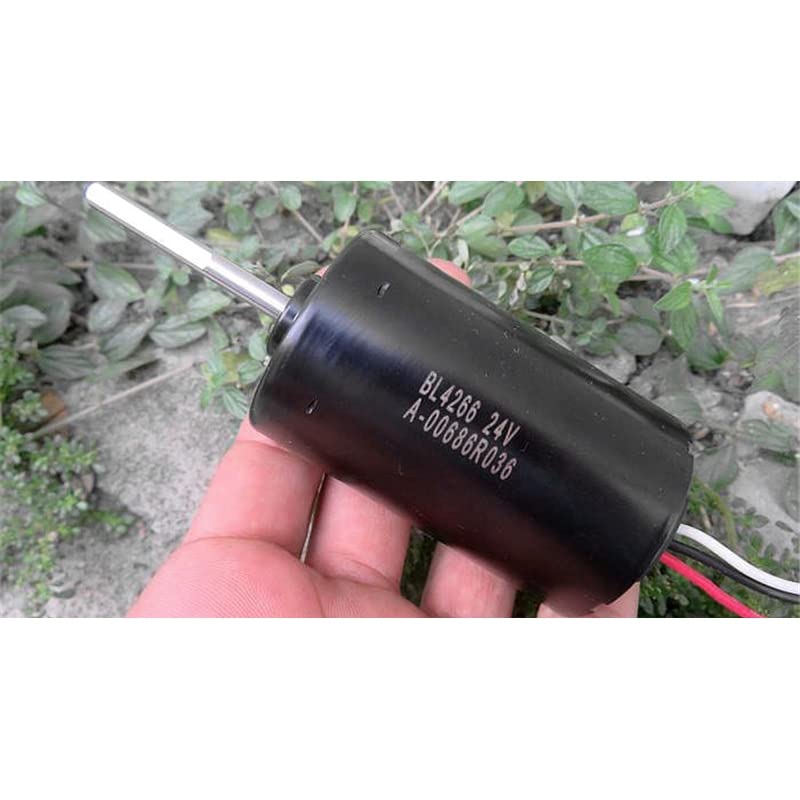
Foto 1: Izugbe view of the BL4266 24V Brushless Motor. This image shows the overall appearance of the motor, highlighting its compact cylindrical design and the output shaft.
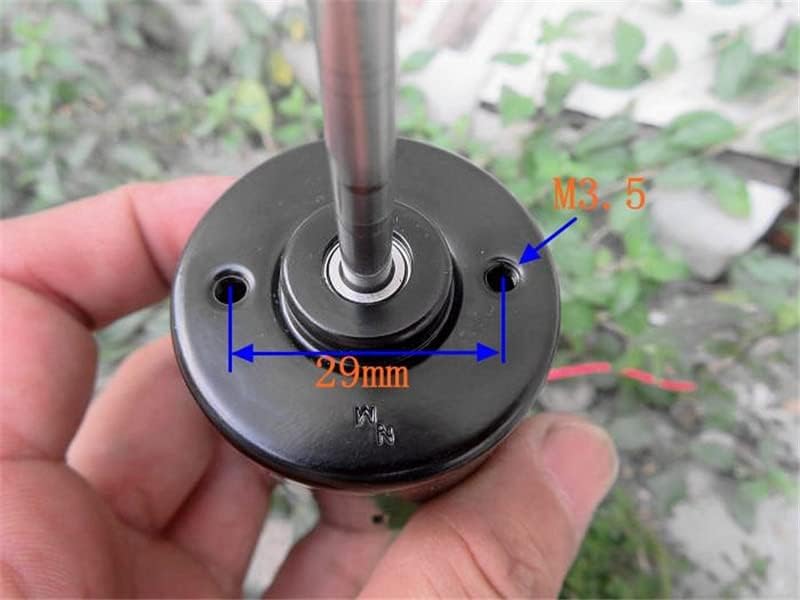
Foto 2: N'ihu view of the BL4266 motor detailing mounting dimensions. This image indicates a mounting hole spacing of 29mm and M3.5 screw size for attachment.
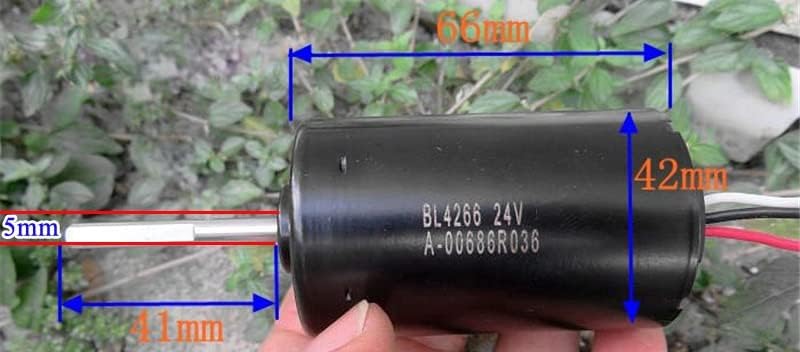
Foto 3: Akụkụ view of the BL4266 motor showing overall dimensions. The motor body length is approximately 66mm, diameter 42mm, shaft diameter 5mm, and exposed shaft length 41mm.

Foto 4: N'elu view of the internal circuit board of the BL4266 motor. This shows various electronic components, including capacitors and integrated circuits, responsible for motor control.
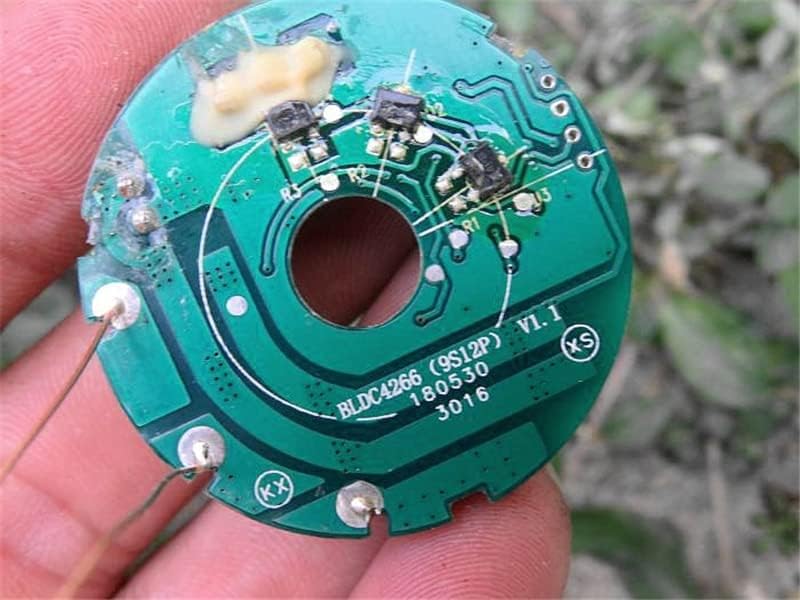
Foto 5: N'okpuru view of the internal circuit board of the BL4266 motor. This perspective reveals additional traces and components on the reverse side of the control board.

Foto 6: Multiple BL4266 motors shown in their original packaging. This image provides a view of how the motors are typically supplied.
Nkọwapụta
| Njirimara | Nkọwapụta |
|---|---|
| Nlereanya | BL4266 |
| Nrụ ọrụ Voltage | 24V |
| Ụdị moto | moto DC na-enweghị brush (BLDC) |
| Ụdị rotor | 9-Pole Inner Rotor |
| Nri | Double Ball Bearings |
| Waya mmepụta | Red, Black, White |
| Ibu | Ihe dị ka 365 g |
| Ogologo Ahụ moto | 66mm (ihe dị ka) |
| Motor Body Diameter | 42mm (ihe dị ka) |
| Dayameta Shaft | 5mm (ihe dị ka) |
| Ogologo Ahịhịa ekpughere | 41mm (ihe dị ka) |
| Ịrịba oghere oghere | 29mm (ihe dị ka) |
| Nha mgbanaka mgbanaka | M3.5 (approx.) |
Ntọala na nwụnye
Proper installation is crucial for the safe and efficient operation of the BL4266 motor. This motor requires an external brushless motor controller (ESC) for operation, which is not included.
Ịkwanye moto
- Identify a suitable mounting surface that can securely hold the motor and withstand any operational vibrations.
- Align the motor's mounting holes with the pre-drilled holes on your mounting surface. Refer to Onyonyo 2 for mounting dimensions (29mm spacing, M3.5 screws).
- Secure the motor using appropriate M3.5 screws. Do not overtighten, as this may damage the motor housing.
Njikọ waya
The BL4266 motor comes with three output wires: Red, Black, and White. These wires are typically connected to a compatible 24V brushless motor controller (ESC).
- Waya uhie: Typically positive power input from the ESC.
- waya ojii: Typically negative power input from the ESC.
- waya ọcha: Typically a signal or control wire from the ESC. The exact function may vary depending on the ESC model. Consult your ESC manual for specific wiring diagrams.
Ihe dị mkpa: Ensure correct polarity and secure connections to prevent damage to the motor or ESC. Incorrect wiring can lead to motor malfunction or permanent damage.
Ntuziaka ọrụ
Once the motor is securely mounted and correctly wired to a compatible 24V brushless motor controller (ESC) and power supply, follow these general steps for operation:
- Ike Na: Connect the 24V power supply to the ESC.
- Ntọala njikwa: Ensure your ESC is properly configured for a 9-pole brushless motor, if applicable.
- Bido ọrụ: Use the control input of your ESC (e.g., throttle signal from a microcontroller or remote control) to start and control the motor speed.
- Nyochaa arụmọrụ: Observe the motor for any unusual noises, excessive heat, or vibrations during initial operation. If any anomalies are detected, immediately power off and inspect the setup.
- Gbanyụọ: Disconnect the power supply from the ESC when the motor is not in use.
Note: The specific operating procedures will largely depend on the brushless motor controller (ESC) used with this motor. Always refer to the ESC's instruction manual for detailed operational guidelines.
Nlekọta
The BL4266 brushless motor is designed for low maintenance. However, periodic checks can help ensure its longevity and optimal performance.
- Nhicha: Keep the motor free from dust, dirt, and debris. Use a soft, dry cloth or compressed air for cleaning. Avoid using liquids.
- Nyocha: Regularly check for any signs of physical damage, loose connections, or worn wires.
- Agba: The double ball bearings are typically sealed and require no lubrication under normal operating conditions. If unusual noise or resistance is detected, the bearings may need inspection by a qualified technician.
- Nchekwa: Store the motor in a dry, clean environment away from extreme temperatures and humidity when not in use.
Nchọpụta nsogbu
This section provides basic troubleshooting steps for common issues. As technical support is not provided for this product, advanced diagnostics may require professional assistance.
| Nsogbu | Ihe nwere ike ime | Ngwọta |
|---|---|---|
| Motor does not start or rotate. | No power to ESC/motor; Incorrect wiring; Faulty ESC; Motor damage. | Check power supply and connections. Verify wiring to ESC. Test ESC with another motor if possible. Inspect motor for visible damage. |
| Motor runs intermittently or stutters. | Loose connections; ESC timing issues; Overheating. | Secure all connections. Consult ESC manual for timing adjustments. Ensure adequate cooling. |
| Motor is excessively hot. | Overload; Insufficient cooling; Incorrect ESC settings. | Reduce load on the motor. Improve ventilation. Check ESC settings (e.g., current limits). |
| Mkpọtụ ma ọ bụ ịma jijiji na-adịghị ahụkebe. | Loose mounting; Damaged bearings; Obstruction. | Check motor mounting screws. Inspect shaft and bearings for damage. Remove any obstructions. |
Akwụkwọ ikike na nkwado
This product is sold without explicit warranty information provided by the manufacturer. As stated in the product description, technical support for its use is not provided. Users are expected to have the necessary technical knowledge for integration and operation.
For any issues, please refer to the troubleshooting section of this manual or consult with a qualified professional if you lack the expertise to diagnose and resolve problems.