
1. Okwu mmalite
This manual provides detailed instructions for the installation, operation, and maintenance of your darkFlash Aquarius Mesh Computer Case. Please read this manual thoroughly before beginning installation to ensure proper setup and safe use of your new computer chassis.
2. Ozi nchekwa
Na-edebe ihe nchekwa nchekwa ndị a mgbe niile:
- Disconnect all power sources before installing or removing any components.
- Yiri eriri nkwojiaka mgbochi static iji gbochie mwepu electrostatic (ESD) mebiri ihe.
- Jiri nlezianya jikwaa ihe ndị dị na ya iji zere mmebi anụ ahụ.
- Debe obere akụkụ na ngwa n'ebe ụmụaka nọ.
- Ensure proper ventilation around the computer case.
3. Ihe ngwugwu
Chọpụta na ihe niile dị na ngwugwu gị:
- darkFlash Aquarius Mesh Computer Case
- Accessory Box (screws, standoffs, cable ties, etc.)
- Akwụkwọ ntuziaka (akwụkwọ a)
4. Ntọala na nwụnye
Follow these steps for proper component installation.
4.1. Ịkwadebe Okwu ahụ
Before installing components, remove the side panels. The Aquarius Mesh case typically features a tempered glass side panel and a solid metal panel.
- Locate the thumbscrews on the rear of the case securing the side panels.
- Unscrew the thumbscrews and carefully slide the panels backward, then lift them off.

Foto 1: N'ihu na akụkụ view of the darkFlash Aquarius Mesh case. Note the mesh front panel and tempered glass side panel.

Ọgụgụ 2: N'azụ view of the darkFlash Aquarius Mesh case, showing expansion slots and rear fan mount.
4.2. Nwụnye motherboard
The Aquarius Mesh supports ATX, Micro-ATX, and Mini-ITX motherboards.
- Wụnye ọta I/O n'ime mbepụ n'azụ ikpe ahụ.
- Align your motherboard with the pre-installed standoffs. Ensure the I/O ports align with the I/O shield.
- Secure the motherboard with the appropriate screws from the accessory box.
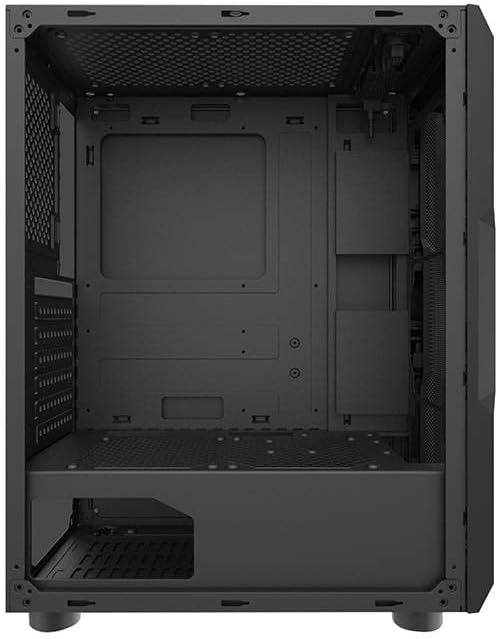
Ọgụgụ 3: Ime view of the darkFlash Aquarius Mesh case, highlighting the motherboard tray and cable routing options.
4.3. Nrụnye Ike Ike (PSU).
The PSU mounts at the bottom rear of the case.
- Slide the PSU into its designated compartment from the rear of the case.
- Align the screw holes and secure the PSU with screws.
4.4. Nchekwa mbanye nwụnye
The case provides mounting options for 3.5-inch HDDs and 2.5-inch SSDs.
- 3.5 "HDDs: Locate the drive cage usually beneath the PSU shroud or behind the motherboard tray. Slide the HDD into the bay and secure it with screws.
- 2.5" SSDs: Mount SSDs to dedicated brackets behind the motherboard tray or on the PSU shroud. Secure with screws.
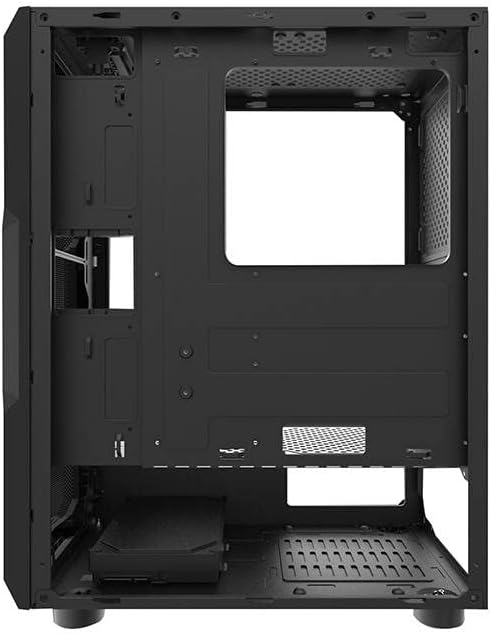
Ọgụgụ 4: Ime ime view of the darkFlash Aquarius Mesh case, showing the motherboard cutout and potential SSD mounting points.
4.5. Expansion Card Installation (e.g., GPU)
- Remove the necessary expansion slot covers from the rear of the case.
- Tinye kaadị mgbasa ahụ n'ime oghere PCIe kwesịrị ekwesị na motherboard.
- Secure the card with the provided screws or retention clips.
4.6. Njikwa USB
Jiri ihe e ji kpụọ eriri na ebe e ji ejikọta eriri ndị dị n'azụ tray motherboard hazie eriri ndị ahụ. Nke a na-eme ka ikuku na ịma mma dịkwuo mma.
4.7. Reassembling the Case
Once all components are installed and cables are managed:
- Carefully reattach the side panels, ensuring they slide into place correctly.
- Secure the side panels with the thumbscrews.
5. Ntuziaka ọrụ
After assembly, connect your peripherals and power cable.
- Connect your monitor, keyboard, mouse, and other peripherals to the motherboard's I/O ports.
- Connect the power cable to the PSU and a wall outlet.
- Press the power button located on the top panel of the case to start your computer.

Foto 5: Top view of the darkFlash Aquarius Mesh case, showing the front I/O panel with power button, reset button, USB ports, and audio jacks.
6. Nlekọta
Nlekọta anya mgbe niile na-enyere aka hụ na arụ ọrụ kacha mma yana ogologo ndụ nke akụrụngwa kọmputa gị.
- Ihe nzacha uzuzu: The Aquarius Mesh case features removable dust filters (e.g., on the front, top, and bottom). Regularly remove and clean these filters with water and mild soap, or by vacuuming, to maintain good airflow. Ensure they are completely dry before reinstallation.
- Ime nhicha: Periodically open the case and use compressed air to remove dust buildup from fans, heatsinks, and other components.
- Nchacha mpụta: Jiri nwayọ hichaa elu mpụta, damp akwa . Zere kemịkalụ siri ike.
7. Nchọpụta nsogbu
Ọ bụrụ na ị na-enwe nsogbu, tụlee ihe ngwọta ndị a na-emekarị:
- Enweghị ike:
- Gbaa mbọ hụ na ngbanwe PSU nọ n'ọnọdụ 'ON'.
- Lelee njikọ ike niile na motherboard na ihe ndị mejupụtara ya.
- Verify the power cable is securely plugged into the wall outlet and PSU.
- Ndị Fans anaghị agba ọsọ:
- Check fan connections to the motherboard or fan controller.
- Ensure fans are not obstructed by cables or dust.
- Ogwe ihu I/O anaghị arụ ọrụ:
- Verify that the front panel connectors (USB, audio, power/reset switches) are correctly connected to the motherboard headers. Refer to your motherboard manual for header locations.
8. Nkọwapụta
| Njirimara | Nkọwa |
|---|---|
| Ụdị | ọchịchịrịFlash |
| Nọmba nlereanya | Aquarius Mesh |
| Ụdị ikpe | Ụlọ elu etiti |
| Ihe onwunwe | Alloy Steel |
| Agba | Nwa |
| Usoro jụrụ oyi | Ikuku |
| Akwadoro ojiji | Kọmputa |
| Ihe Dị na Ụdị Draịvụ Ike | 3.5 sentimita asatọ |
9. Akwụkwọ ikike na nkwado
For warranty information or technical support, please refer to the official darkFlash websaịtị ma ọ bụ kpọtụrụ ndị ahịa ha ọrụ. Debe ihe akaebe nke ịzụrụ ihe maka akwụkwọ ikike.
Maka enyemaka ọzọ, ị nwere ike ịga na darkFlash official websaịtị.