
1. Ntuziaka nchekwa
Always prioritize safety when operating the Garland CRUMMER 820 QG-V22 wood chipper. Failure to follow these instructions can result in serious injury or property damage.
- Gụọ akwụkwọ ntuziaka a: Thoroughly read and understand this entire instruction manual before assembly, operation, or maintenance.
- Ngwa nchekwa nkeonwe (PPE): Always wear appropriate PPE, including safety glasses or goggles, hearing protection, heavy-duty gloves, and sturdy footwear. Avoid loose clothing that could get caught in moving parts.
- Mpaghara ọrụ: Operate the chipper on a firm, level surface. Keep the work area clear of bystanders, children, and pets. Maintain a safe distance from the discharge opening.
- Nchekwa mmanụ ụgbọala: Gasoline is highly flammable. Refuel in a well-ventilated area with the engine off and cool. Do not smoke or allow open flames near the chipper or fuel. Store gasoline in approved containers.
- Nkwadebe ihe: Only feed organic material into the chipper. Remove any metal, rocks, plastic, or other foreign objects from branches.
- Nkwụsị ihe mberede: Familiarize yourself with the location and operation of the engine stop switch.
- Nchekwa nlekọta: Disconnect the spark plug wire before performing any maintenance or clearing clogs to prevent accidental starting.
2. Ngwaahịa gafereview
2.1 Nkọwa ngwaahịa
The Garland CRUMMER 820 QG-V22 is a robust gasoline-powered wood chipper designed for efficient shredding of garden waste. It features a powerful 4-stroke, 208 cc engine delivering 5.2 HP, utilizing a blade disc system to process branches up to 7 cm (approximately 2.75 inches) in diameter. This machine is ideal for reducing brush, branches, and other organic debris into mulch for composting or disposal.
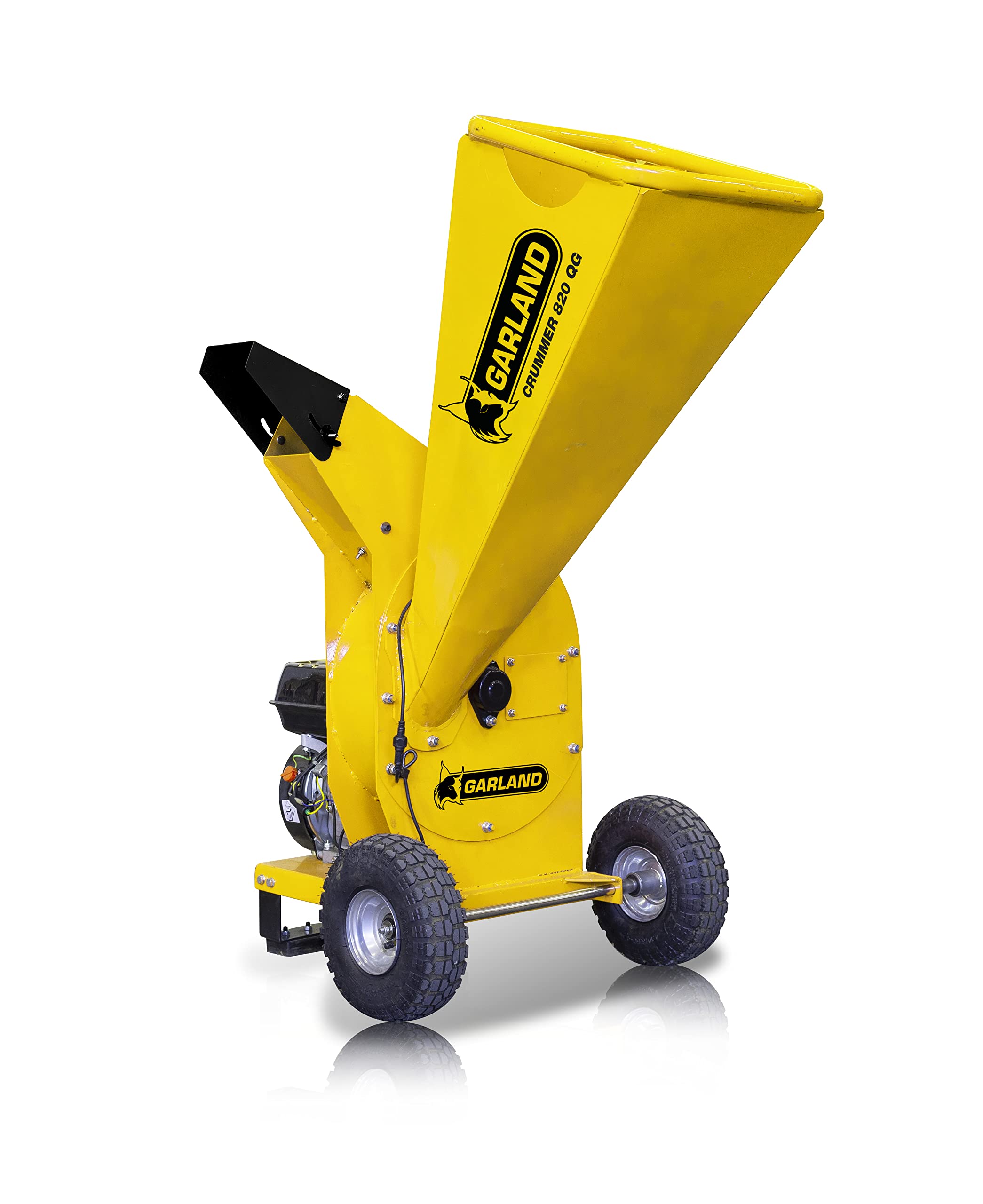
Image 1: Garland CRUMMER 820 QG-V22 gasoline wood chipper in operation, with a person feeding branches into the hopper. The chipper is yellow with black accents and has two wheels for mobility.
2.2 Ngwa gụnyere
The package includes the Garland CRUMMER 820 QG-V22 Wood Chipper unit. Key components of the chipper include:
- Main Chipper Unit with Engine
- Hopper na-enye nri
- Agbapụta Chute
- Blade Disc Shredding System
- Ụkwụ maka Portability

Foto 2: Zuru ezu view of the Garland CRUMMER 820 QG-V22 wood chipper, highlighting its engine and shredding mechanism. The yellow body and black engine components are clearly visible.
3. Nhazi
3.1 Nwepu
Carefully remove all components from the packaging. Inspect for any shipping damage. Retain packaging materials for future storage or transport.
3.2 Mgbakọ
The Garland CRUMMER 820 QG-V22 may require minor assembly, typically involving attaching the wheels, feeding hopper, and discharge chute. Refer to the assembly diagrams in the separate assembly guide for detailed instructions. Ensure all fasteners are securely tightened before operation.
3.3 Mmanụ na mmanụ na-ejuputa
This chipper is powered by a 4-stroke gasoline engine. Before first use, and periodically thereafter, ensure proper fuel and oil levels.
- Mmanụ Engine: Fill the engine crankcase with the recommended 4-stroke engine oil (refer to the engine manual for specific type and capacity). Do not overfill.
- mmanụ ụgbọala: Fill the fuel tank with fresh, unleaded gasoline. Do not use E85 or mixed fuels. Ensure the fuel cap is securely fastened.
3.4 Nlele Tupu Ọrụ
Tupu ojiji ọ bụla, mee nyocha ndị a:
- Lelee ọkwa mmanụ engine.
- Lelee ọkwa mmanụ ụgbọala.
- Inspect blades for sharpness and damage.
- Ensure all guards and covers are in place and securely fastened.
- Verify that the work area is clear of obstructions and bystanders.
4. Ntuziaka ọrụ
4.1 Malite Engine
- Ensure the chipper is on a level surface.
- Tụgharịa valvụ mmanụ ọkụ na ọnọdụ 'ON'.
- Set the choke lever to the 'CHOKE' position (for cold starts).
- Move the throttle lever to the 'FAST' position.
- Dịrị eriri mmalite ahụ nke ọma ruo mgbe injin malitere.
- Ozugbo injin malitere, jiri nwayọọ nwayọọ bugharịa ihe nkuchi ahụ gaa n'ọnọdụ 'RUN'.
- Allow the engine to warm up for a few minutes before beginning operation.
4.2 Feeding Material
- Always wear appropriate PPE.
- Feed branches and other organic material into the hopper one at a time.
- Do not force material into the chipper. Allow the blades to pull the material through.
- Do not exceed the maximum branch diameter of 7 cm.
- Keep hands and feet clear of the hopper opening and discharge chute. Use a push stick if necessary to feed shorter pieces.
- Avoid feeding wet or excessively leafy material, as this can cause clogging.
4.3 Ịkwụsị Engine
- Move the throttle lever to the 'SLOW' or 'IDLE' position.
- Allow the engine to idle for a minute to cool down.
- Turn the engine stop switch to the 'OFF' position.
- Turn the fuel valve to the 'OFF' position for storage.
5. Nlekọta
Regular maintenance ensures optimal performance and extends the life of your wood chipper. Always disconnect the spark plug wire before performing any maintenance.
5.1 Nlekọta injin
- Mgbanwe mmanụ: Change engine oil after the first 5 hours of operation, then every 25-50 hours or annually, whichever comes first.
- Ihe nzacha ikuku: Clean or replace the air filter regularly, especially when operating in dusty conditions.
- Nkwụnye Spark: Inspect and clean the spark plug annually. Replace if worn or fouled.
- Ihe nzacha mmanụ ụgbọala: Inspect and replace the fuel filter as needed.
5.2 Nlekọta agụba
- Nyocha: Regularly inspect the shredding blades for sharpness, nicks, or damage. Dull blades reduce efficiency and can strain the engine.
- Sharpening/Replacement: Sharpen or replace blades as necessary. Always replace blades in sets to maintain balance. Refer to the service manual for detailed instructions on blade removal and installation.
5.3 Nhicha na Nchekwa
- Nhicha: After each use, clean the chipper, especially the hopper and discharge chute, to prevent material buildup. Ensure all debris is removed from around the engine and moving parts.
- Nchekwa: Store the chipper in a clean, dry, and well-ventilated area. If storing for an extended period, drain the fuel tank or use a fuel stabilizer to prevent fuel degradation.
6. Nchọpụta nsogbu
This section addresses common issues you might encounter with your Garland CRUMMER 820 QG-V22 wood chipper.
| Nsogbu | Ihe nwere ike ime | Ngwọta |
|---|---|---|
| Igwe agaghị amalite | No fuel; Choke incorrect; Spark plug issue; Low oil level | Check fuel level; Adjust choke; Inspect/clean/replace spark plug; Check/add oil |
| Poor shredding performance | Dull blades; Overfeeding; Incorrect material | Sharpen/replace blades; Feed material slowly; Only feed approved organic material |
| Chipper clogs frequently | Wet material; Overfeeding; Material buildup | Allow material to dry; Feed slowly; Clear clogs (engine off, spark plug disconnected) |
| Oke ịma jijiji | Unbalanced blades; Loose components | Inspect blades for damage/balance; Tighten all fasteners |
7. Nkọwapụta
- Ụdị: Garland CRUMMER 820 QG-V22
- Nọmba Nlereanya Onye nrụpụta: 60G-0026
- Ụdị igwe: 4-stroke Gasoline Engine
- Ntugharị igwe: 208 cc
- Ike igwe: 5.2 CV (HP)
- Shredding Mechanism: Blade Disc System
- Maximum Branch Diameter: 7 cm (ihe dị ka 2.75 sentimita)
- Akụkụ ngwaahịa (L x W x H): 50 x 50 x 28 cm
- Ngwa gụnyere: Wood Chipper Unit
- Mba onye si: Spain
8. Akwụkwọ ikike na nkwado
For warranty information, technical support, or to order replacement parts, please contact your authorized Garland dealer or the manufacturer directly. Keep your purchase receipt as proof of purchase for warranty claims. Specific warranty terms and conditions may vary by region and are typically provided with the product at the time of purchase.
Manufacturer: Productos Mcland. S.L.