1. Ozi nchekwa dị mkpa
Before attempting any repair or installation, please read and understand all instructions. Appliance repair can be hazardous. If you are not comfortable performing this repair, it is recommended to seek assistance from a qualified technician.
- Kwụpụ ike: Always disconnect the dryer from its power source (unplug or turn off the circuit breaker) before beginning any service.
- Yiri ngwa nchebe: Jiri akụrụngwa nchedo onwe onye kwesịrị ekwesị, dị ka uwe aka na ugogbe nchekwa.
- Nyochaa ndakọrịta: Ensure this replacement kit is compatible with your specific dryer model. Refer to the model numbers listed on the product packaging and in this manual.
- Jiri Nlekọta Aka: Components may have sharp edges. Handle all parts carefully.
2. Ngwaahịa gafereview
This replacement kit includes essential components for restoring heating functionality to compatible Whirlpool dryers. The kit typically contains a heating element, a thermal fuse, and a thermostat.
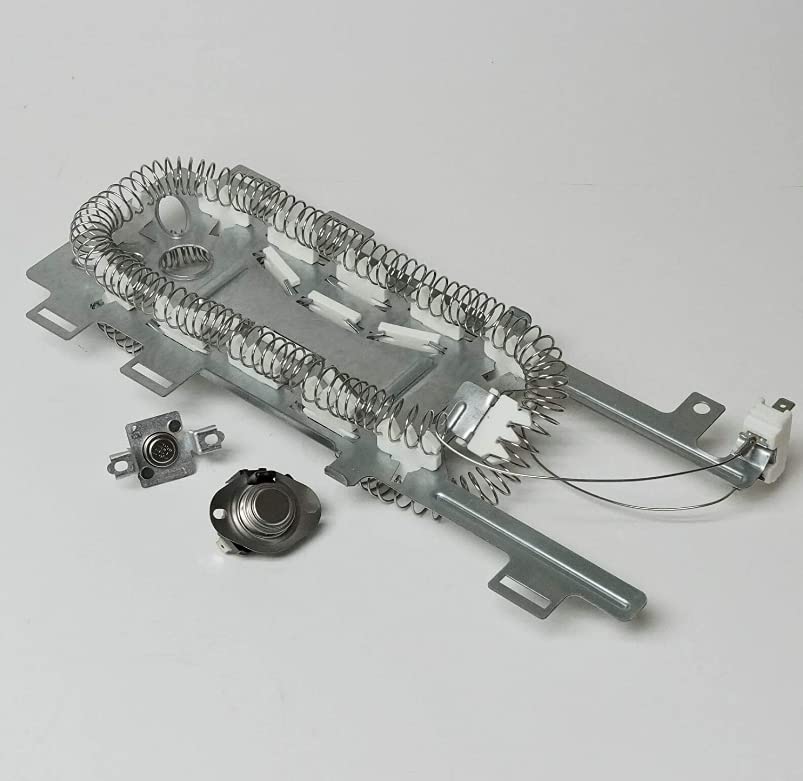
Foto nke 2.1: The complete dryer heating element assembly, featuring the coiled heating wires mounted on a metal frame. This component is responsible for generating heat within the dryer.

Foto nke 2.2: Agara nso view of the thermal fuse (left) and thermostat (right). The thermal fuse is a safety device that trips if the dryer overheats, while the thermostat regulates the dryer's operating temperature.
The heating element is the primary component that generates heat. The thermal fuse is a safety device designed to prevent overheating by cutting power if the dryer's temperature exceeds a safe limit. The thermostat monitors and regulates the internal temperature of the dryer, cycling the heating element on and off to maintain the selected heat setting.
3. Ntọala na nwụnye
This section provides general steps for replacing the heating element, thermal fuse, and thermostat. Specific dryer disassembly procedures may vary by model. Always refer to your dryer's service manual for detailed instructions.
Ngwaọrụ Ndị A Chọrọ (Nwere Ike Ịdị Iche):
- Screwdrivers (Phillips na Flathead)
- Ndị ọkwọ ụgbọ ala ma ọ bụ ntọala Socket
- Pliers
- Multimeter (for testing components, optional but recommended)
Nzọụkwụ nwụnye:
- Kwụpụ ike: Unplug the dryer from the wall outlet or turn off the circuit breaker supplying power to the dryer. This is a critical safety step.
- Access the Heating Element: Depending on your dryer model, you may need to remove the rear panel, top panel, or front panel to access the heating element housing. Carefully remove any screws or clips securing these panels.
- Locate Components: Identify the existing heating element assembly, thermal fuse, and thermostat. They are typically located within a metal housing near the blower wheel or exhaust duct.
- Kwụpụ waya: Take a photograph or make a diagram of the wiring connections to the heating element, thermal fuse, and thermostat before disconnecting them. Carefully pull off the wire terminals.
- Wepu ihe ochie: Unscrew or unclip the old heating element assembly from its housing. Similarly, remove the old thermal fuse and thermostat.
- Wụnye akụrụngwa ọhụrụ:
- Mount the new heating element assembly into the housing, securing it with screws or clips.
- Install the new thermal fuse and thermostat in their respective positions. Ensure they are securely fastened.
- Jikọọ waya: Using your photograph or diagram, reconnect the wire terminals to the new heating element, thermal fuse, and thermostat. Ensure all connections are snug and secure.
- Tinyegharịa Drer: Carefully reattach any panels or components that were removed during disassembly. Ensure all screws and clips are properly secured.
- Weghachi ike: Tinye igwe nkụ azụ n'ime oghere mgbidi ma ọ bụ gbanye ihe mgbawa sekit.

Foto nke 3.1: A close-up of a terminal connection on the heating element. Ensure all electrical connections are clean, tight, and correctly matched during installation.
4. Operating and Testing After Installation
After completing the installation, it is important to test the dryer's functionality to ensure the new components are working correctly.
- Nnwale izizi: Run the dryer on a low heat setting for a short cycle (e.g., 10-15 minutes) with a small load of damp clothes or towels.
- Lelee maka okpomọkụ: Verify that the dryer is producing heat. You should feel warm air coming from the exhaust vent.
- Nyochaa arụmọrụ: Listen for any unusual noises and observe if the dryer cycles properly. The clothes should dry as expected.
- Nyochaa nchekwa: Ensure there are no burning smells or excessive heat from the dryer's exterior. If any issues arise, immediately disconnect power and re-check your installation.
5. Nlekọta
While the heating element kit itself requires no specific maintenance, regular dryer maintenance is crucial for its longevity and efficient operation, and to prevent premature failure of heating components.
- Ihe nzacha lint dị ọcha: Clean the lint filter before or after every load.
- Inspect Exhaust Vent: Periodically check and clean the dryer's exhaust vent system (from the dryer to the outside) to ensure proper airflow. Blocked vents can cause overheating and reduce drying efficiency.
- Nyochaa akụrụngwa: During routine dryer cleaning or other maintenance, visually inspect the heating element, thermal fuse, and thermostat for any signs of damage or wear.
6. Nchọpụta nsogbu
If your dryer is not functioning correctly after installing the replacement kit, consider the following common issues:
- Dryer Not Heating:
- Lelee Ike: Ensure the dryer is receiving power and the circuit breaker has not tripped.
- Wiring: Verify all electrical connections to the heating element, thermal fuse, and thermostat are secure and correctly connected.
- Igwe ọkụ ọkụ: A new thermal fuse can blow if there's an underlying issue causing overheating, such as a clogged vent. Check the vent system.
- Thermostat: Although new, a thermostat could be faulty or incorrectly installed.
- Igwe nkụ ọkụ gabigara ókè:
- Clogged Vent: The most common cause of overheating is a restricted exhaust vent. Clean the entire vent path.
- Thermostat: A faulty operating thermostat might not be cycling off the heat correctly.
- Igwe nkụ anaghị amalite:
- Mgbanwe ọnụ ụzọ: Ensure the dryer door is fully closed and the door switch is engaging properly.
- Igwe ọkụ ọkụ: If the thermal fuse has blown, the dryer will not start. This indicates an overheating issue that needs to be addressed.
If troubleshooting steps do not resolve the issue, it is recommended to consult a professional appliance technician.
7. Nkọwapụta
| Njirimara | Uru |
|---|---|
| Ibu Ibu | 1 pound |
| Akụkụ ngwugwu | 11 x 1 x 1 sentimita asatọ |
| Compatible Dryer Models | WED8410SW1, WED8500SR0, WED85HEFC0, WED85HEFW0, WED86HEBC0, WED86HEBW0, WED8740DC1, WED8740DW1, WED87HEDC1 |
| Ngwa gụnyere | Heating Element, Thermal Fuse, Thermostat |
8. Akwụkwọ ikike na nkwado
For information regarding warranty coverage or technical support for this replacement kit, please refer to the product listing or contact the seller directly through the platform where the purchase was made. Keep your purchase receipt as proof of purchase.
