
1. Okwu mmalite
Thank you for choosing the Mesko MS 4492 Vacuum Sealer. This appliance is designed to extend the freshness of your food by removing air from specially designed bags and sealing them. This manual provides essential information for safe operation, setup, maintenance, and troubleshooting to ensure optimal performance and longevity of your device.
The Mesko MS 4492 offers two primary functions: vacuum sealing (air extraction and bag sealing) and sealing only (without vacuuming). It also features modes for dry and moist food types, adapting to various food preservation needs. For best results, use bags with a maximum width of 28 cm.
2. Ntuziaka nchekwa
Please read these safety instructions carefully before using the appliance and keep them for future reference. Incorrect operation may cause damage or injury.
- Gbaa mbọ hụ na ejikọrọ ngwa ahụ na oghere ọkụ nwere volta dị mmatage dị ka egosiri na akara ọkwa.
- Ejila ngwa, eriri ọkụ, ma ọ bụ nkwụnye na mmiri ma ọ bụ mmiri mmiri ọ bụla ọzọ.
- Ngwa a bụ maka ojiji ezinụlọ naanị. Ejila ya n'èzí ma ọ bụ maka ebumnuche azụmahịa.
- Debe ngwa ngwa ka ụmụaka ghara iru. Nleba anya dị mkpa mgbe eji ngwa ngwa n'akụkụ ụmụaka.
- Do not operate the appliance with a damaged cord or plug, or if it malfunctions or has been damaged in any way. Contact customer service for repair.
- Always unplug the appliance from the power supply before cleaning, maintenance, or when not in use.
- Avoid touching hot surfaces. The sealing strip can become hot during operation.
- Ejila ihe nchacha abrasive ma ọ bụ ihe dị nkọ hichaa ngwa ahụ.
- Ensure the lid is properly closed and latched before starting any operation.
- Only use bags specifically designed for vacuum sealing with this appliance.
3. Ngwa ngwaahịa
Familiarize yourself with the parts of your Mesko MS 4492 Vacuum Sealer:
- Ogwe njikwa: Buttons for Vacuum, Seal, Dry Food, Moist Food, and Vac. Seal/Cancel.
- Eriri akara: Heats up to create an airtight seal on bags.
- Vacuum Channel: Area where air is extracted from the bag.
- Mpempe akwụkwọ: Rubber seals that create a vacuum chamber.
- Mkpọchi mkpuchi: Secure the lid during operation.
- Port Ngwa: For connecting a hose to vacuum seal external containers.
- eriri ike: Connects the appliance to the electrical outlet.

Image: The Mesko MS 4492 Vacuum Sealer with its lid open, revealing the internal sealing strip, vacuum channel, and gaskets. This view helps identify key operational components.

Foto: nkọwa zuru ezu view of the Mesko MS 4492 Vacuum Sealer's accessory port, showing a clear hose connected. This port is used for vacuum sealing external containers.
4. Nhazi
- Ịkwapu: Carefully remove the vacuum sealer from its packaging. Remove all packing materials and labels.
- Nyochaa: Lelee ngwa ngwa maka akara ọ bụla mebiri emebi. Ejila ya ma ọ bụrụ mebiri emebi.
- Ọcha: Jiri mgbasa ozi hichapụ mpụta ngwa ahụamp cloth. Ensure the sealing strip and vacuum channel are clean and dry.
- Nkwanye: Place the vacuum sealer on a flat, stable, and dry surface, away from heat sources and water.
- Njikọ ike: Tinye eriri ọkụ n'ime ebe eletrik kwesịrị ekwesị.
5. Ntuziaka ọrụ
5.1 Preparing the Bag
- Use only high-quality vacuum sealer bags.
- Ensure the bag is clean and dry, especially the area to be sealed.
- Leave at least 7-10 cm (3-4 inches) of empty space at the top of the bag for proper sealing.
- For moist foods, ensure no liquid is near the sealing area. You may pre-freeze liquids or use a paper towel to absorb excess moisture.
5.2 Vacuum Sealing Bags
- Place the food inside a vacuum sealer bag.
- Mepee mkpuchi nke ngwa ahụ.
- Place the open end of the bag into the vacuum channel, ensuring it lies flat over the sealing strip and within the vacuum chamber.
- Close the lid firmly until both latches click into place.
- Select the appropriate food mode: Press "Dry Food" for dry items or "Moist Food" for moist items. The corresponding indicator light will illuminate.
- Pịa "Vacuum" button. The appliance will automatically extract air and then seal the bag. The indicator light will turn off when complete.
- To stop the vacuum process at any time, press the "Vac. Seal/Cancel" bọtịnụ.
- Once the process is complete, press the release buttons (if present) or gently lift the lid to open. Remove the sealed bag.
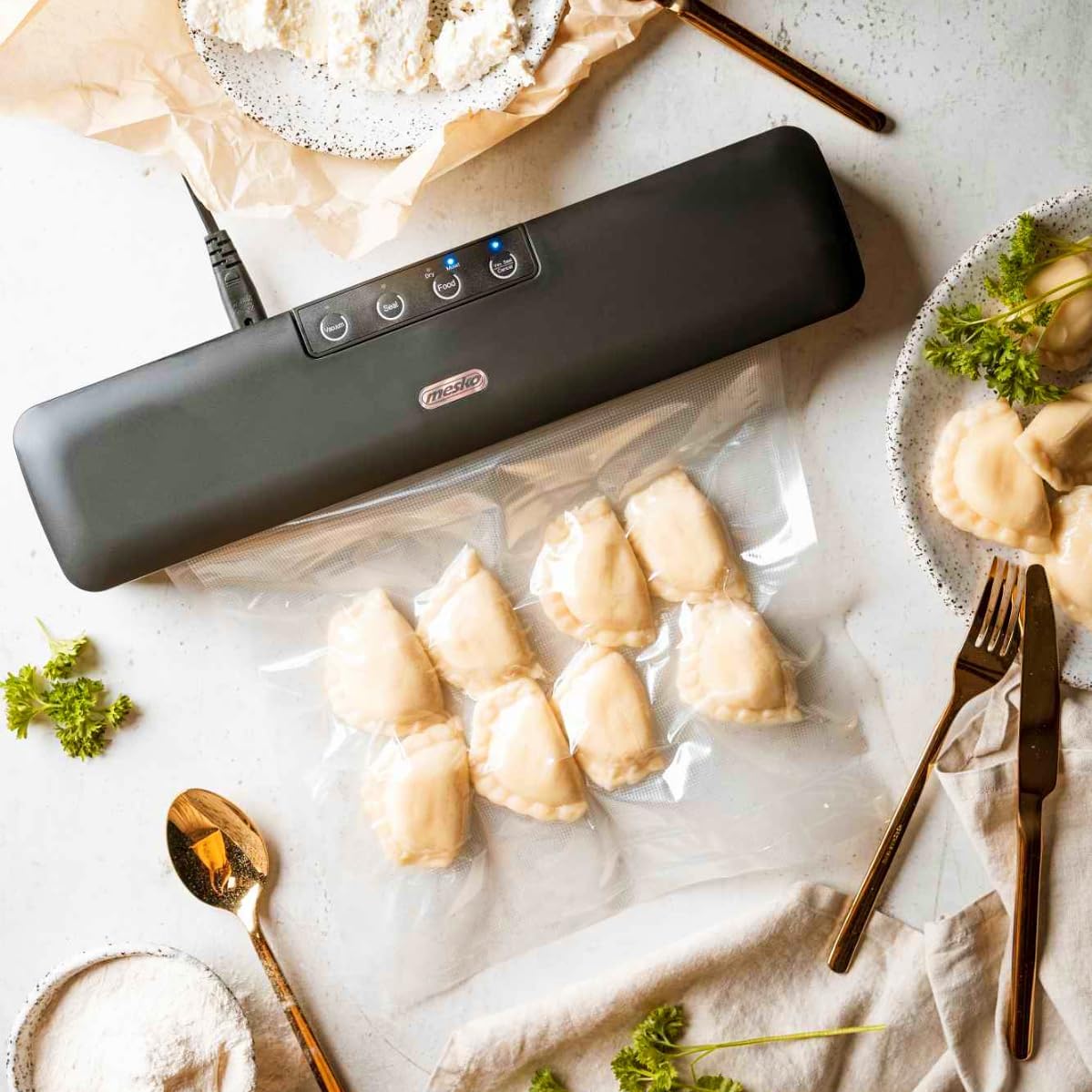
Image: The Mesko MS 4492 Vacuum Sealer actively sealing a bag containing dumplings, demonstrating its primary function.

Image: The Mesko MS 4492 Vacuum Sealer sealing a bag of sliced meat, illustrating its use for various food types.
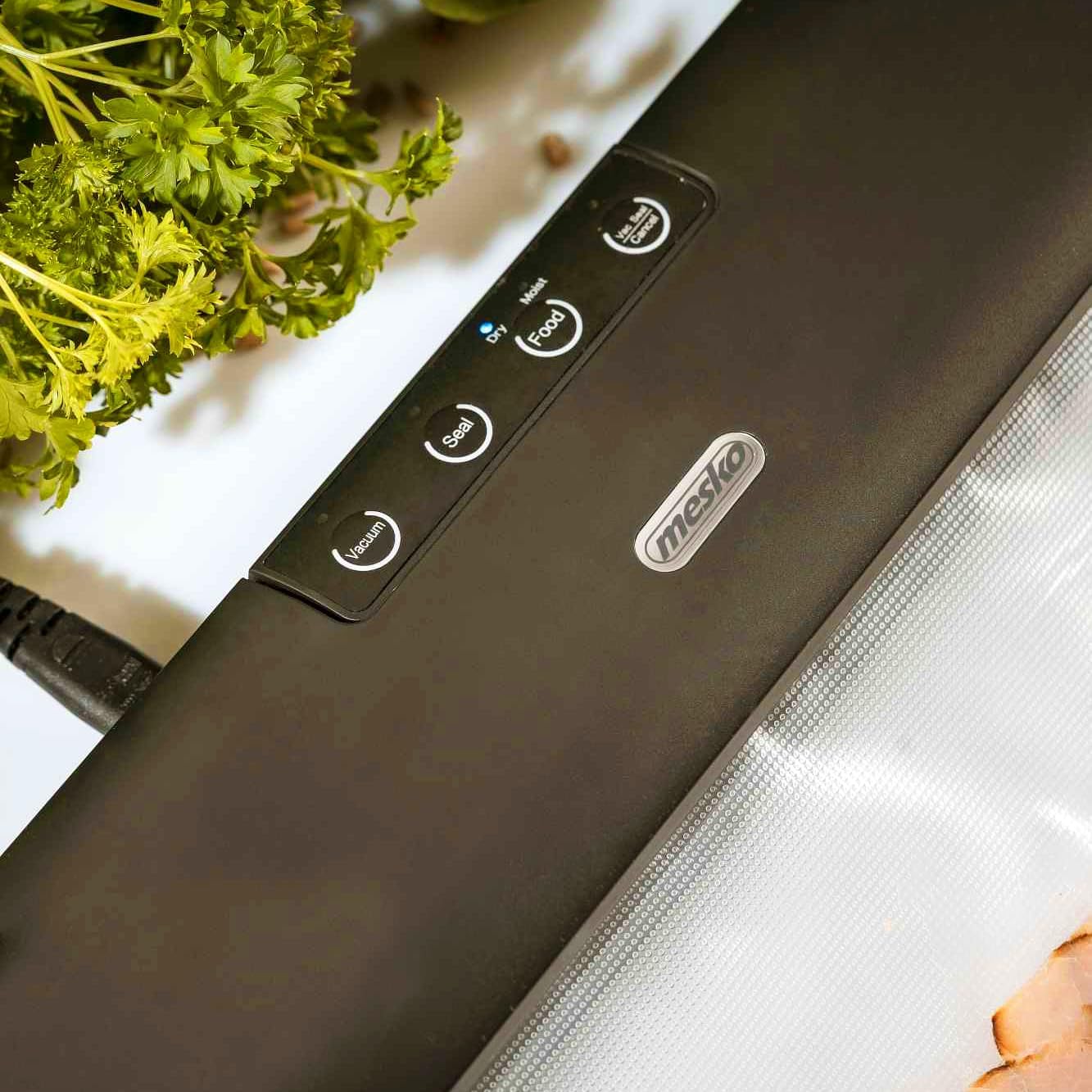
Foto: nkọwa zuru ezu view of the control panel on the Mesko MS 4492 Vacuum Sealer, showing the "Vacuum", "Seal", "Dry Food", "Moist Food", and "Vac. Seal/Cancel" buttons with their respective indicator lights.
5.3 Sealing Only (Without Vacuum)
This function is useful for sealing bags that do not require vacuuming, such as snack bags or delicate items.
- Place the open end of the bag over the sealing strip, ensuring it is flat and smooth.
- Close the lid firmly until both latches click into place.
- Pịa "Seal" button. The appliance will heat the sealing strip and create a seal. The indicator light will turn off when complete.
- Mepee mkpuchi ahụ wee wepụ akpa ahụ e mechiri emechi.
5.4 External Vacuum Sealing (Containers/Canisters)
The Mesko MS 4492 can also vacuum seal compatible external containers or canisters using the accessory port and a vacuum hose (sold separately or included with containers).
- Prepare your vacuum-sealable container with food and ensure its lid is properly closed.
- Insert one end of the vacuum hose into the accessory port on the vacuum sealer.
- Insert the other end of the hose into the port on your container's lid.
- Pịa "Vacuum" button. The appliance will extract air from the container.
- Once the vacuum process is complete (the appliance will stop automatically or you can press "Vac. Seal/Cancel"), remove the hose from both the appliance and the container.

Image: The Mesko MS 4492 Vacuum Sealer connected to an external food storage container via a hose, demonstrating its capability for external vacuum sealing.
6. Nlekọta na nhicha
Regular cleaning and maintenance will ensure the longevity and efficient operation of your vacuum sealer.
- Kwụpụ: Kwupu ngwa ngwa mgbe niile tupu ihicha ya.
- Mputa: Jiri nwayọ hichaa mpụta nke ngwa ahụ, damp akwa . Ejila ihe nchacha abrasive ma ọ bụ ihe mgbaze.
- Vacuum Channel: If food particles or liquids enter the vacuum channel, carefully wipe them clean with a damp cloth or paper towel. Ensure it is completely dry before next use.
- Mpempe akwụkwọ: Check the rubber gaskets for any food debris or damage. Clean them gently with a damp cloth. Ensure they are properly seated.
- Eriri akara: The sealing strip should be kept clean and dry. Do not touch it when hot. If residue builds up, gently wipe it with a soft cloth.
- Nchekwa: When not in use, it is recommended to store the appliance with the lid unlatched to prevent compression of the gaskets, which can affect sealing performance over time.
Image: The Mesko MS 4492 Vacuum Sealer with its lid open, providing access to the sealing strip and vacuum channel for cleaning and maintenance.
7. Nchọpụta nsogbu
If you encounter issues with your Mesko MS 4492 Vacuum Sealer, refer to the following common problems and solutions:
| Nsogbu | Ihe nwere ike ime | Ngwọta |
|---|---|---|
| Ngwa anaghị agbanwuo. | A naghị etinye ya; ike nkwụnye adịghị arụ ọrụ. | Gbaa mbọ hụ na etinyere eriri ọkụ na ebe nchekwa na-arụ ọrụ. Lelee ihe nkesa sekit. |
| Akpa anaghị eji ihe nhicha eme ihe nke ọma. | Lid not properly latched; bag not correctly placed; bag has holes; gaskets are dirty or damaged. | Ensure the lid is fully latched. Reposition the bag so the opening is flat within the vacuum channel. Check the bag for leaks. Clean or inspect gaskets. |
| Akpa anaghị emechi. | Sealing strip is dirty or wet; bag is wrinkled; too much moisture in the bag. | Clean and dry the sealing strip. Smooth out any wrinkles in the bag. Pre-freeze moist foods or use a paper towel to absorb excess liquid. |
| Air leaks into the bag after sealing. | Improper seal; bag puncture; food with sharp edges. | Re-seal the bag. Check the bag for small punctures. For sharp foods, use a paper towel or extra bag material to cushion sharp edges. |
| Vacuum pump runs continuously. | Lid not properly closed; gaskets are not sealing correctly. | Ensure the lid is fully latched. Clean and inspect the gaskets for proper seating. |
8. Nkọwapụta
| Njirimara | Nkọwa |
|---|---|
| Nọmba nlereanya | MS4492 |
| Ụdị | Mesko |
| Onye nrụpụta | Adler |
| Ike | 95 Watt |
| Ihe onwunwe | Aluminom |
| Agba | Nwa |
| Akụkụ ngwaahịa (L x W x H) | 8.5 x 37 x 5 cm |
| Ibu Ibu | 900 g |
| Isi Iyi Ike | Igwe ọkụ eletrik |
| Ụdị ọrụ | Akpaaka |
| Obosara akpa kacha | 28 cm (recommended) |
9. Akwụkwọ ikike na nkwado
For warranty information, technical support, or service inquiries, please refer to the warranty card included with your purchase or contact the retailer where the product was purchased. Keep your proof of purchase for warranty claims.
For further assistance, you may also visit the official Mesko websaịtị ma ọ bụ kpọtụrụ ngalaba ọrụ ndị ahịa ha.