
Okwu mmalite
Thank you for choosing the Zwilling Enfinigy Milk Frother. This manual provides essential information for the safe and efficient operation, maintenance, and care of your appliance. Please read all instructions carefully before first use and keep this manual for future reference.
Ozi nchekwa dị mkpa
- Gụọ ntuziaka niile tupu ị rụọ ngwa.
- Do not immerse the base unit, power cord, or plug in water or any other liquid.
- Gbaa mbọ hụ na voltagegosiri na ngwa ahụ dabara na ọkọnọ ike mpaghara gị tupu ijikọ.
- Debe ngwa ngwa ka ụmụaka ghara iru.
- Use the frother only for its intended purpose: frothing or heating milk and milk alternatives.
- Do not operate the appliance with an empty milk container.
- Kpupu ngwa ahụ na ebe ọkụ ọkụ mgbe ọ naghị eji ya na tupu ihicha ya.
- Kwe ka ngwa ahụ jụọ kpamkpam tupu ihicha ma ọ bụ chekwaa ya.
Ngwa ngwaahịa
Familiarize yourself with the parts of your Zwilling Enfinigy Milk Frother:
- Base Unit (with control buttons)
- Removable Stainless Steel Milk Container
- Ihe mkpuchi transperent
- Frothing Whisk (for dense foam)
- Mixing Whisk (for stirring or light foam)

Description: An exploded view showing the separate components of the Zwilling Enfinigy Milk Frother, including the base, stainless steel container, lid, and whisks.
Ntọala na ojiji mbụ
- Ịkwapu: Jiri nlezianya wepụ ihe niile dị na nkwakọ ngwaahịa. Jido nkwakọ ngwaahịa maka mbugharị ma ọ bụ nchekwa n'ọdịnihu.
- Nhicha izizi: Before first use, wash the removable stainless steel milk container, the lid, and both whisks with warm water and a mild dish soap. Rinse thoroughly with clean water and dry completely. Do not wash the base unit.
- Nkwanye: Place the base unit on a stable, dry, and level surface, away from heat sources and water.
- Whisk Insertion: Select the desired whisk (frothing or mixing) and securely insert it onto the spindle at the bottom of the milk container.
Ntuziaka ọrụ
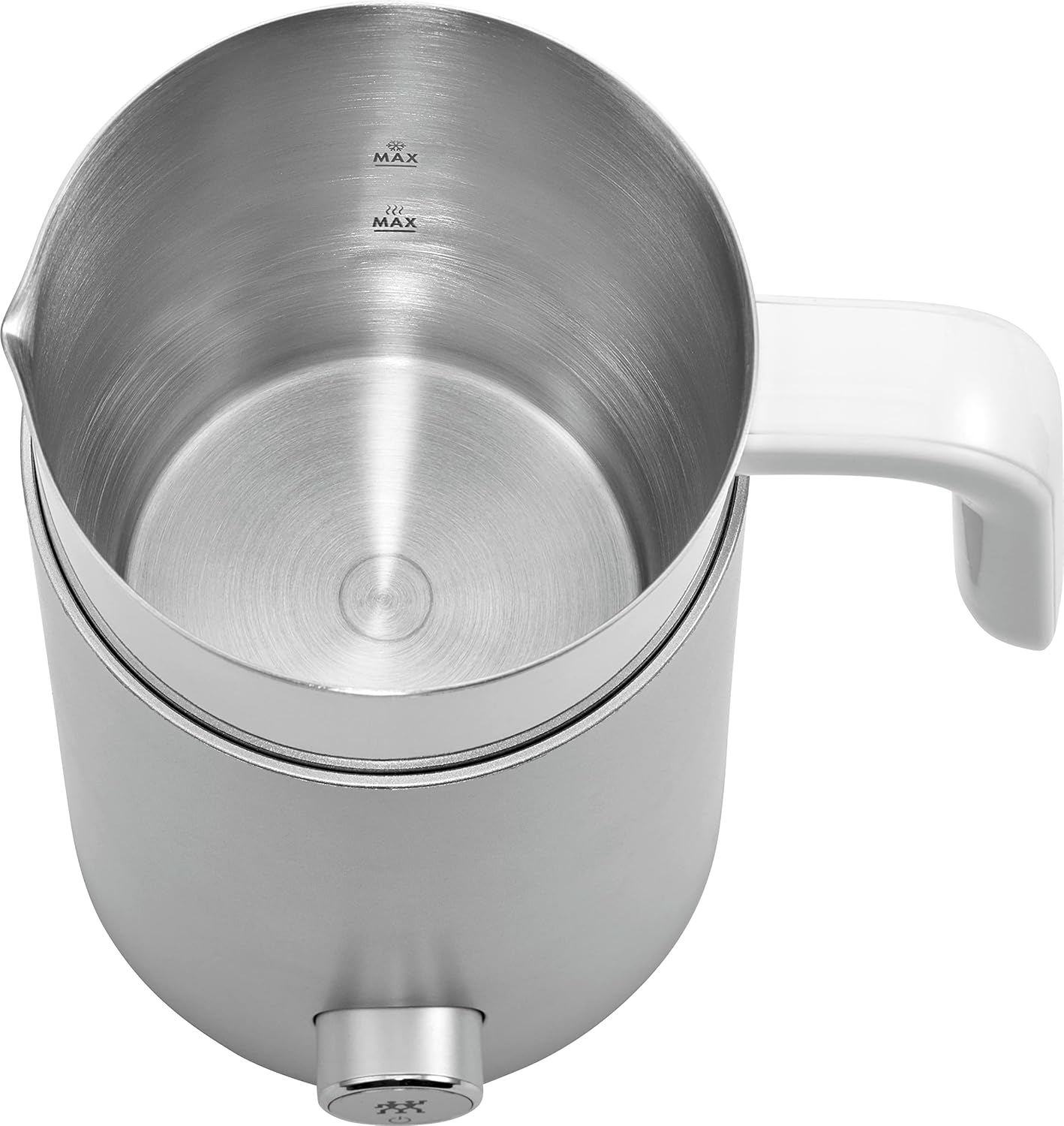
- Jupụta Akpa Mmiri ara ehi: Pour fresh, cold milk or a milk alternative into the stainless steel container. Observe the internal MAX fill lines:
- For frothing warm milk: Do not exceed the lower "MAX" line (approximately 200 ml).
- For frothing cold milk or simply mixing: Do not exceed the upper "MAX" line (approximately 400 ml).
Description: A hand pours milk into the stainless steel container of the milk frother, illustrating the filling process.

Description: An overhead view of the frother's stainless steel container, clearly showing the two 'MAX' fill lines for different milk volumes.
- Tinye mkpuchi: Place the transparent lid securely onto the milk container. Ensure the whisk is properly attached to the lid's central spindle for optimal performance.

Description: A hand places the transparent lid, which has the frothing whisk attached, onto the milk container.
- Akpa ebe: Position the filled milk container onto the base unit. Ensure it is seated correctly.
- Họrọ Mmemme: Press the desired button on the base unit to select your program (e.g., warm froth, cold froth, warm milk). The indicator light will illuminate.
- Malite frothing: The frother will begin operation automatically. The milk will be frothed or heated according to the selected program.

Description: A close-up view of milk actively frothing inside the container, visible through the transparent lid.
- Mmecha: The frother will automatically stop once the program is complete. The indicator light may change or turn off.
- jee ozi: Carefully remove the milk container from the base unit. Pour the frothed milk into your coffee or beverage.

Description: Frothed milk is poured from the frother's container into a glass cup containing coffee, demonstrating the serving process.

Description: The Zwilling Enfinigy Milk Frother stands on a wooden counter next to a glass of frothed coffee, showcasing the final product.
Nhicha na Nlekọta
Proper cleaning ensures the longevity and hygiene of your milk frother.
- Kwụpụ: Na-ewepụ ngwa ahụ mgbe ọ bụla tupu gị ehicha ya.
- Wetuo obi: Kwe ka ngwa ahụ dị jụụ kpamkpam tupu ihicha ya.
- Clean Container and Whisks: Immediately after each use, remove the milk container, lid, and whisk(s). Wash them with warm water and a mild detergent. Rinse thoroughly and dry completely with a soft cloth.
- Ngalaba ntọala: Wipe the exterior of the base unit with a soft, damp Ákwà. Etinyela ihe dị n'okpuru ya n'ime mmiri ma ọ bụ mmiri ọ bụla ọzọ.
- Nchekwa igwe efere: The milk container, lid, and whisks are ọ bụghị suitable for cleaning in a dishwasher. Hand wash only.
- Nchekwa: Debe ihe mkpuchi ahụ n'ebe dị ọcha ma kpọọ nkụ mgbe a naghị eji ya.
Nchọpụta nsogbu
If you encounter issues with your milk frother, please refer to the following common problems and solutions:
- Ngwa anaghị ebido:
- Ensure the appliance is properly plugged into a functional power outlet.
- Verify that the milk container is correctly seated on the base unit.
- Check that the lid is securely closed.
- Milk not frothing properly:
- Ensure the correct whisk (frothing whisk) is installed.
- Check that the milk level is within the specified MAX lines. Overfilling or underfilling can affect frothing quality.
- Use fresh, cold milk (or milk alternative). Older milk or milk that is too warm may not froth effectively.
- Ensure the whisk is clean and free from any residue.
- Milk overflowing:
- Do not exceed the maximum fill lines for milk.
- Ensure the lid is securely in place during operation.
Nkọwa nka nka
| Njirimara | Nkọwapụta |
|---|---|
| Ụdị | Ịdị njikere |
| Aha Nlereanya | Enfinigy |
| Agba | Ọlaọcha |
| Ihe eji eme ụlọ | Plastic |
| Ihe eji eme ihe | Igwe anaghị agba nchara |
| Capacity (Cold Milk) | 400 ml |
| Capacity (Warm Milk Frothing) | 200 ml |
| Ibu ngwaahịa | 1020 grams |
| Njirimara Pụrụ Iche | Mmiri mmiri ara ehi |
| Ntuziaka nlekọta | Hand wash only (not dishwasher safe) |
| Ngwa gụnyere | Removable stainless steel milk container, frothing whisk, mixing whisk |
Akwụkwọ ikike na nkwado
For detailed warranty information, product registration, or customer support, please refer to the documentation included with your purchase or visit the official Zwilling websaịtị. Debe ihe akaebe nke ịzụrụ maka akwụkwọ ikike.