
Chuango CGA-1003-SP
Akwụkwọ ntuziaka onye ọrụ Chuango SPS-260 maka ike anyanwụ ikuku siren
Model: CGA-1003-SP
1. Okwu mmalite
The Chuango SPS-260 Solar Wireless Siren is an essential component of your Chuango smart home security system, designed to provide robust outdoor deterrence and alert capabilities. This siren operates wirelessly and is powered by solar energy, ensuring continuous operation with minimal maintenance. It is crucial to note that this siren functions as an accessory and requires connection to a compatible Chuango central alarm system or sensor to operate.
Akụkụ ndị bụ isi:
- Ịrụ ọrụ nke anyanwụ: Equipped with solar panels for constant charging, reducing reliance on external power sources.
- High-Performance Alarm: Emits a penetrating 110dB sound and features a red strobe light to effectively deter intruders and alert neighbors.
- Nhazi na-eguzogide ihu igwe: IP55 rated, making it suitable for outdoor installation and resistant to various weather conditions.
- Reliable Wireless Communication: Utilizes direct device communication (433 MHz) for stable and immediate alarm activation.
- Extended Backup Battery: Internal backup battery provides power for up to 45 days without direct sunlight, ensuring continuous protection.
2. Ngwa ngwaahịa
Before installation, please ensure all components are present and undamaged:
- Chuango SPS-260 Solar Wireless Siren x 1
- 3.7V 18650 Rechargeable Battery x 1
- 9V6F22 Alkaline Battery x 1
- Ihe mgbakwasị ụkwụ na ihe nkwụnye mgbidi

Image: The Chuango SPS-260 Solar Wireless Siren, showcasing its compact design with a solar panel at the top and a red strobe light section at the bottom.
3. Ntọala na nwụnye
3.1 Ntinye batrị
- Carefully open the battery compartment located on the back of the siren.
- Insert the 3.7V 18650 rechargeable battery into its designated slot, ensuring correct polarity.
- Insert the 9V6F22 alkaline battery into its slot, ensuring correct polarity.
- Mechie oghere batrị ahụ nke ọma.
3.2 Mounting the Siren
Choose a suitable outdoor location for the siren, ideally where it receives ample direct sunlight throughout the day for optimal solar charging. Ensure the mounting surface is stable and secure.
- Mark the desired drilling points on the wall using the siren's mounting bracket as a template.
- Gwuo oghere n'ebe akara akara ma tinye plọg mgbidi.
- Secure the siren to the wall using the provided screws.
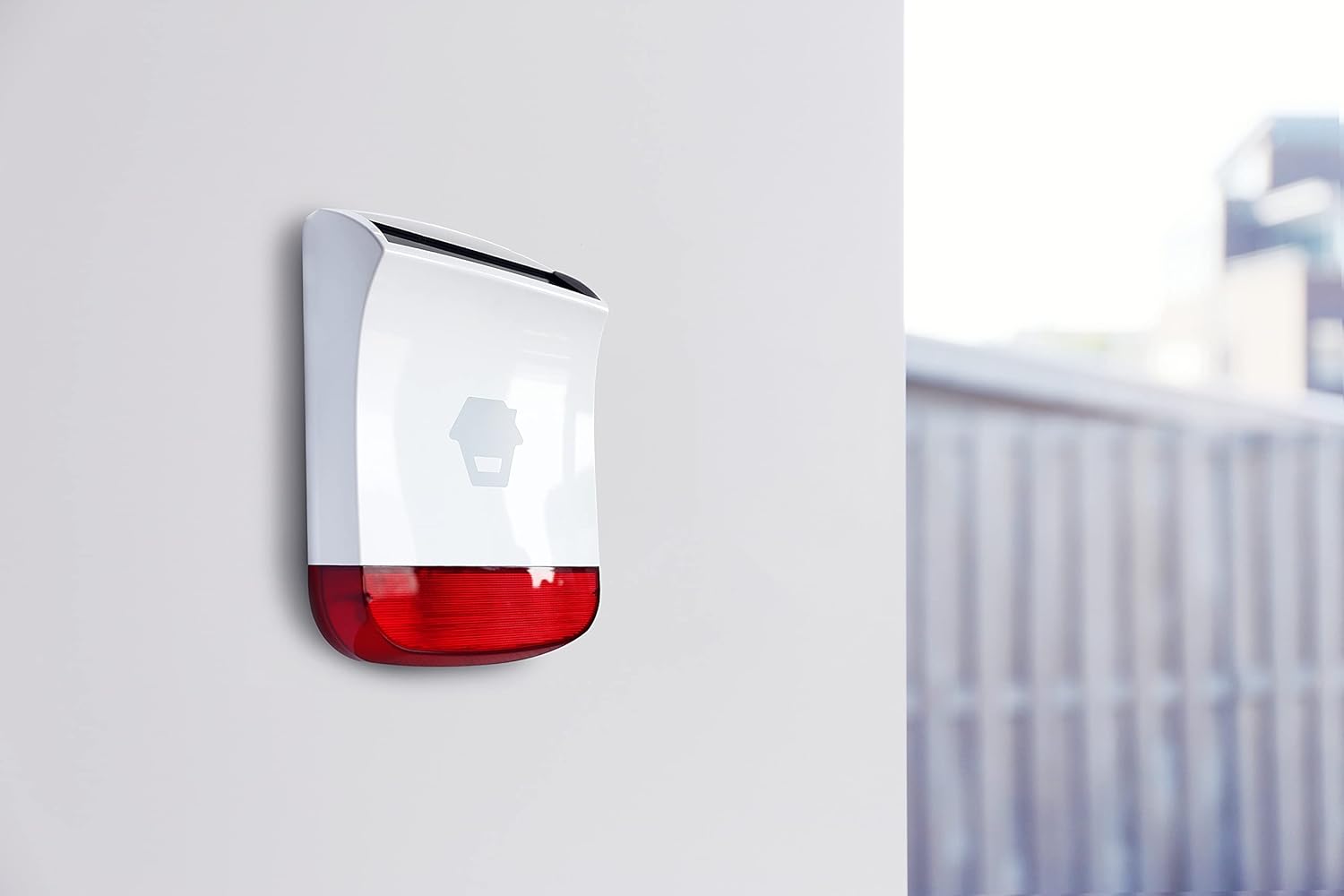
Image: The solar siren mounted on an exterior wall, illustrating its discreet yet effective placement.
3.3 Pairing with Alarm System
The SPS-260 siren must be paired with a Chuango central alarm panel or compatible sensors to function correctly. Refer to your main alarm system's manual for specific pairing instructions. Generally, the process involves putting the alarm panel into pairing mode and then activating the siren to establish a connection.

Image: An illustrative diagram demonstrating how the solar siren integrates with other Chuango security components within a home environment.
4. Ntuziaka ọrụ
4.1 Oti mkpu
Once paired, the SPS-260 siren will automatically activate when the connected Chuango alarm system detects an intrusion or when a paired sensor is triggered. The siren will emit a loud 110dB sound and flash its red strobe light simultaneously to alert occupants and deter intruders.
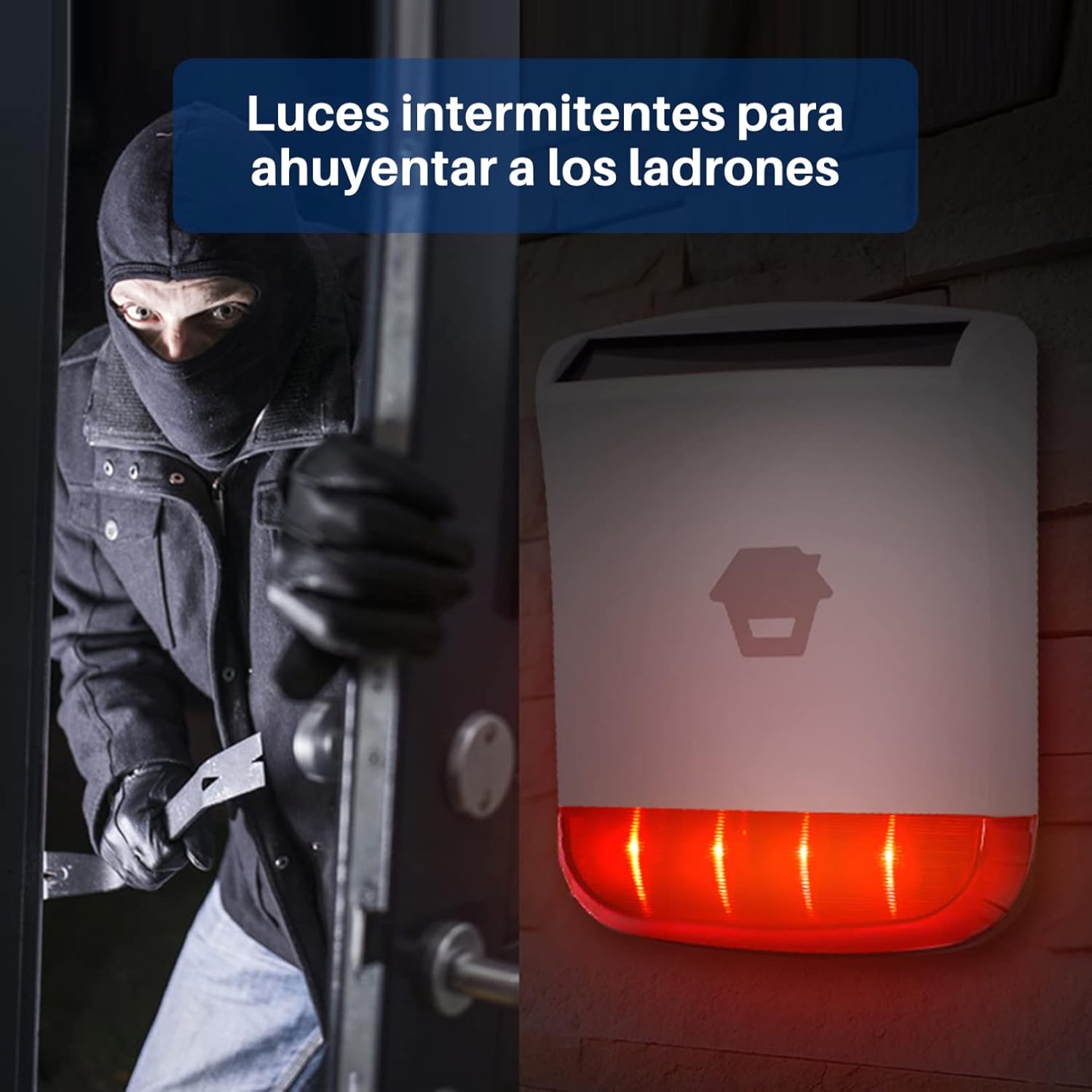
Image: The siren's flashing lights actively deterring a potential intruder, highlighting its visual alarm capability.
4.2 Solar Charging and Backup Power
The integrated solar panel continuously charges the internal 3.7V 18650 rechargeable battery during daylight hours. This ensures the siren remains powered even during extended periods without direct sunlight, with the backup battery capable of lasting approximately 45 days. If the battery level becomes critically low, the siren may reduce its flash frequency as a reminder.

Image: The siren's solar charging capability and long-lasting backup battery, ensuring reliable operation.
5. Nlekọta
5.1 Nhicha
Periodically clean the solar panel and the siren's exterior with a soft, damp cloth to remove dust, dirt, or debris that may obstruct sunlight or affect performance. Do not use abrasive cleaners or solvents.
5.2 Ahụike batrị
While the solar panel maintains the rechargeable battery, it is advisable to occasionally check the siren's operational status, especially after prolonged cloudy periods. If the siren's performance seems diminished, ensure it receives adequate sunlight or consider replacing the 9V6F22 alkaline battery if necessary.
5.3 Nchekwa ihu igwe
The siren is designed for outdoor use with an IP55 rating, providing protection against dust and low-pressure water jets. However, avoid submerging the device in water or exposing it to extreme weather conditions beyond its specified operating limits.

Image: The siren demonstrating its weather-resistant capabilities, suitable for various outdoor environments.
6. Nchọpụta nsogbu
6.1 Siren Not Activating
- Lelee ọkwa batrị: Ensure both the rechargeable and alkaline batteries are properly installed and sufficiently charged.
- Nyochaa njikọta: Confirm that the siren is correctly paired with your Chuango central alarm system or the triggering sensor. Refer to your alarm system's manual for re-pairing instructions.
- Ọrụ sensọ: Ensure the sensors linked to the siren are functioning correctly and are not experiencing any issues.
- Ntinye aka mgbaama: Check for potential sources of wireless interference near the siren or alarm panel.
6.2 Siren Activates Randomly
- Mkpu ụgha: Identify if any connected sensors are causing false alarms due to improper placement or sensitivity settings.
- Ntọala sistemụ: Review your alarm system's settings to ensure there are no configurations that might inadvertently trigger the siren.
- Ihe na-akpata gburugburu: Extreme weather conditions or strong electromagnetic fields might rarely cause erratic behavior.
6.3 Low Battery Life / Inconsistent Charging
- Ìhè anyanwụ: Ensure the solar panel receives adequate direct sunlight throughout the day. Trim any overhanging branches or clear obstructions.
- Panel Cleanliness: Clean the solar panel regularly to ensure maximum light absorption.
- Ahụike batrị: If the rechargeable battery is old, its capacity may have degraded. Consider replacing it if issues persist despite good sunlight exposure.
7. Nkọwapụta
| Njirimara | Nkọwa |
|---|---|
| Nọmba nlereanya | CGA-1003-SP |
| Isi Iyi Ike | Ike anyanwụ |
| Ụdị batrị | 3.7V 18650 Rechargeable, 9V6F22 Alkaline |
| Voltage | 3.7 volts |
| Ọkwa mkpọtụ | 110 dB |
| Ugboro ikuku | 433 MHz |
| Ụdị nkwụnye | Ugwu mgbidi |
| Oke kacha | 400 ụkwụ (ihe dị ka mita 120) |
| Ogo IP | IP55 (Weather-resistant) |
| Akụkụ ngwaahịa | 32.8l x 23.6w x 8.4h cm (approx. 10 x 10 x 10 cm) |
| Ibu ngwaahịa | 1.33 n'arọ |
| Agba | Ọcha |
| Ngwa dakọtara | Chuango Central Alarms and Sensors |

Image: Detailed dimensions of the solar siren for accurate installation planning.
8. Akwụkwọ ikike na nkwado
For warranty information, please refer to the documentation provided with your original purchase or visit the official Chuango website. Chuango products typically come with a manufacturer's warranty covering defects in materials and workmanship.
For technical support, troubleshooting assistance beyond this manual, or inquiries about compatible accessories, please contact Chuango customer service through their official website or the contact information provided in your product packaging. Always provide your product model number (CGA-1003-SP) and purchase details when seeking support.
You can visit the Chuango store on Amazon for more information and products: Chuango Amazon Store
Akwụkwọ ndị emetụtara - CGA-1003-SP
 |
Akwụkwọ ntuziaka onye ọrụ Chuango SPS-260 nwere ike anyanwụ Akwụkwọ ntuziaka onye ọrụ zuru oke maka Chuango SPS-260 Solar-Powered Siren, na-akọwapụta ngwaahịa.view, ntinye, ojiji, na nkọwapụta. |
 |
Solar-Powered Siren SPS-260 User Manual User manual for the Chuango SPS-260 Solar-Powered Siren, detailing its features, installation, and operation as a wireless siren or alarm panel. |
 |
Mini Strobe Siren WS-105 Operation Manual Operation manual for the Chuango Mini Strobe Siren WS-105, detailing its features, setup, and usage as a standalone alarm or part of a wireless system. |
 |
Akwụkwọ ntuziaka CHUANGO WS-105 Obere Strobe Siren Akwụkwọ ntuziaka maka CHUANGO WS-105 Mini Strobe Siren, nke na-ekpuchi atụmatụ, okwu mmalite, na ngwaahịa dị n'eluview, ọrụ ike, usoro njikọ, nnwale, njikwa ngwa mgbakwunye, ntọala igbu oge, ọrụ ọkụ abalị, na nkọwapụta teknụzụ. |
 |
Chuango WS-105 Obere Strobe Siren: Akwụkwọ ntuziaka & atụmatụ Nduzi zuru oke maka Chuango WS-105 Mini Strobe Siren. Mụta maka atụmatụ ya, ntọala ya, njikọ ikuku, ikike mkpu nkeonwe, na nkọwapụta maka sistemụ nchekwa ụlọ. |
 |
Akwụkwọ ntuziaka onye ọrụ CHUANGO WS-280 Ikuku n'èzí Strobe Siren Akwụkwọ ntuziaka maka CHUANGO WS-280 siren strobe ikuku n'èzí. Na-enye ntuziaka zuru ezu gbasara ntinye, ọrụ dị ka siren ikuku ma ọ bụ panel nkeonwe, ntọala mpaghara, na nkọwapụta teknụzụ. |
Ask a question about this manual
Ask about setup, troubleshooting, compatibility, parts, safety, or missing instructions. Manuals+ will review the question and use this page’s manual context to help answer it.