
1. Okwu mmalite
The Rakstore ZB2L3 Battery Capacity Tester is a versatile device designed to measure the capacity of various battery types, including 18650 Lithium batteries and Lead-Acid batteries. It functions as a discharge tester, allowing users to determine the actual capacity by discharging the battery through a load and measuring the discharged energy. This manual provides detailed instructions for the safe and effective use of the ZB2L3 tester.
2. Ozi nchekwa
- Always ensure correct polarity when connecting batteries to avoid damage to the tester and battery.
- Use appropriate discharge loads. Overloading the tester or using incorrect loads can cause overheating and damage.
- Emegharịala ọdụ batrị dị mkpụmkpụ.
- Operate the device in a well-ventilated area, especially when discharging batteries, as they can generate heat.
- Debe ngwaọrụ ahụ ka ọ ghara iru mmiri na oke okpomọkụ.
- Ngwaọrụ a abụghị egwuregwu ụmụaka. Ekwela ka ụmụaka rute.
3. Akụrụngwa Ngwaahịa
- Ịnye ọkụ: DC4.5-6V via micro USB interface.
- Na-arụ ọrụ ugbu a: Less than 70mA.
- Mwepu Voltage Oke: 1-15V with 0.01V resolution.
- Nkwụsị Voltage Oke: 0.5-11.0V.
- Supported Discharge Current: Up to 3.000A with 0.001A resolution.
- Voltage mperi nha: Less than 1% + 0.02V.
- Njehie nha ugbu a: Less than 1.2% ± 0.002A.
- Oke ikike batrị: Up to 9999Ah (1Ah=1000mAh). Display adjusts decimal point for large values (e.g., X.XXX Ah, XX.XX Ah).
- Nha kọmpat: Circuit board 50mm x 37mm, finished product 50mm x 37mm x 17mm (L x W x H, including copper foot height).
4. Ihe ngwugwu
- 1 x Rakstore ZB2L3 Battery Capacity Tester Unit
- (Note: Discharge resistors and battery holders are typically sold separately and are required for operation.)
5. Nhazi
Before operating the ZB2L3 tester, ensure all connections are made correctly.

Figure 1: ZB2L3 Battery Capacity Tester showing the micro USB power input, battery terminals, and load terminals.
- Njikọ ọkọnọ ike: Connect a DC 4.5-6V power source to the micro USB port on the tester. A standard phone charger or power bank can be used. The display should light up.
- Njikọ batrị: Connect the battery to be tested to the "BAT+" and "BAT-" terminals. Ensure correct polarity. The tester will display the current battery voltage.
- Discharge Load Connection: Connect an appropriate discharge resistor (load) to the "LOAD+" and "LOAD-" terminals. The resistance value of the load will determine the discharge current. Ensure the load can handle the expected power dissipation.
Ihe dị mkpa: The discharge current should not exceed 3.000A. Calculate the required resistance using Ohm's Law (R = V/I) and Power Law (P = V*I or P = I²*R) to ensure the resistor can handle the power. For example, if testing a 3.7V battery at 1A, you need a 3.7 Ohm resistor capable of dissipating at least 3.7W.
6. Ntuziaka ọrụ
Follow these steps to perform a battery capacity test:
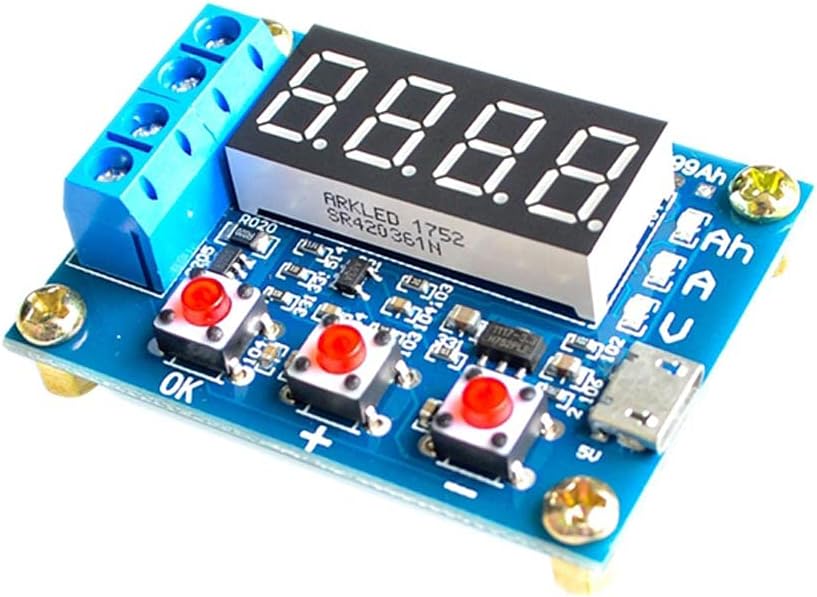
Figure 2: ZB2L3 Battery Capacity Tester showing the 'OK', '+', and '-' buttons for operation.
- Initial Display: After connecting the power and battery, the tester will display the battery's current voltage.
- Set Termination Voltage:
- Press the "OK" button once. The display will show the current termination voltage (e.g., "U 3.00").
- Use the "+" and "-" buttons to adjust the termination voltage. This is the voltage at which the discharge test will stop. For 18650 Lithium batteries, a common termination voltage is 3.0V. For Lead-Acid batteries, consult the battery's specifications.
- Press "OK" again to confirm the setting and return to the main display.
- Start Discharge Test:
- With the battery and load connected, and the termination voltage set, press and hold the "OK" button for approximately 3 seconds.
- The tester will begin discharging the battery through the connected load. The display will cycle through current voltage (V), discharge current (A), and accumulated capacity (Ah).
- Monitor Test Progress: Observe the display. The voltage will gradually decrease, and the accumulated capacity will increase.
- Test Completion: The test will automatically stop when the battery voltage reaches the set termination voltage. The display will then show the final accumulated capacity (Ah) and flash.
- View Nsonaazụ: After the test stops, you can press the "OK" button to cycle through the final voltage, current, and capacity readings.
- Reset for New Test: To start a new test, disconnect the battery and load, then reconnect them, or simply press and hold the "OK" button again to clear the previous results and start a new cycle.
7. Nlekọta
- Nhicha: Jiri ákwà dị nro ma kpọọ nkụ hichaa ngwaọrụ ahụ. Ejila ihe nhicha mmiri ma ọ bụ ihe mgbaze.
- Nchekwa: Debe ihe nnwale ahụ n'ebe dị jụụ ma kpọọ nkụ, ebe anwụ na-anaghị anwụ kpọmkwem na oke okpomọkụ dị oke njọ.
- Nyocha: Periodically check the terminals and connections for any signs of wear or damage.
8. Nchọpụta nsogbu
| Nsogbu | Ihe nwere ike ime | Ngwọta |
|---|---|---|
| Ngosipụta anaghị agba ọkụ. | No power or incorrect power supply. | Ensure micro USB power supply is connected and providing DC 4.5-6V. Check cable and adapter. |
| Test does not start. | Battery not connected, load not connected, or "OK" button not held long enough. | Verify battery and load connections. Hold "OK" button for 3 seconds to initiate. |
| Incorrect capacity reading. | Incorrect termination voltage set, or load resistance is too high/low. | Verify the termination voltage setting. Ensure the discharge load is appropriate for the desired current. |
| Tester gets hot during operation. | High discharge current or insufficient ventilation. | Ensure the discharge current does not exceed 3.000A. Operate in a well-ventilated area. The discharge load resistor will also generate heat; ensure it is rated for the power. |
9. Nkọwapụta
| Oke | Uru |
|---|---|
| Ịnye ọkụ Voltage | DC 4.5-6V (Micro USB) |
| Na-arụ ọrụ ugbu a | <70mA |
| Mwepu Voltage Oke | 1-15V (0.01V resolution) |
| Nkwụsị Voltage Oke | 0.5-11.0V |
| Supported Discharge Current | ≤ 3.000A (0.001A resolution) |
| Voltage Mperi nha | < 1% + 0.02V |
| Current Measurement Error | <1.2% ± 0.002A |
| Oghere Ike Batrị | 0-9999Ah (1Ah=1000mAh) |
| Circuit Board Size | 50mm x 37mm |
| Nha ngwaahịa emechara | 50mm x 37mm x 17mm (L x W x H, including copper foot height) |
10. Akwụkwọ ikike na nkwado
This product is manufactured by Rakstore. For any technical support or warranty inquiries, please refer to the retailer where the product was purchased or visit the official Rakstore websaịtị maka ozi kọntaktị.
Biko dowe ihe akaebe nke ịzụrụ ihe maka akwụkwọ ikike.