
ToolkitRC M8S
ToolkitRC M8S Smart Charger Instruction Manual
Ụdị: M8S
1. Okwu mmalite na gafereview
The ToolkitRC M8S is a highly versatile and powerful smart charger and discharger designed for a wide range of battery types commonly used in remote-controlled (RC) applications, including drones, cars, and boats. Beyond its primary charging and discharging capabilities, the M8S integrates several essential tools such as a servo tester, cell tester, wattmeter, PWM/PPM/Sbus input/output generators, and a variable DC output control. Its intuitive interface, displayed on a vibrant 2.4-inch TFT color LCD screen, ensures ease of use for both hobbyists and professionals.

Foto 1.1: N'ihu view of the ToolkitRC M8S Smart Charger, showing its 2.4-inch TFT color LCD screen with main menu options for Charger, Measurer, Output, and Settings. A rotary knob and OK/Exit buttons are visible on the right.

Onyonyo 1.2: Akuku view of the ToolkitRC M8S Smart Charger, highlighting the screen interface and the output ports on the right side, including the main XT60 output and balance port.
2. Ozi nchekwa
WARNING: Failure to follow these safety instructions can result in fire, property damage, or injury.
- Always operate the charger in a well-ventilated area, away from flammable materials.
- Do not charge batteries that are damaged, swollen, or leaking. Dispose of such batteries properly.
- Ensure correct polarity when connecting batteries to the charger. Incorrect connections can cause damage to the charger or battery.
- Never leave the charger unattended while it is in operation.
- Debe chaja na mmiri, mmiri mmiri na oke okpomọkụ.
- This device is not a toy. Keep out of reach of children. Adult supervision is required during operation.
- Use only the recommended power supply for the charger.
- Zenarị mbịkọta ọnụ ọnụ mmepụta.
3. Ihe ngwugwu
Upon opening the package, please verify that all components are present and in good condition. If any items are missing or damaged, contact your retailer immediately.
- ToolkitRC M8S Smart Charger Unit
- Akwụkwọ ntuziaka (akwụkwọ a)
- (Note: Power supply and charging cables are typically sold separately unless specified by your retailer.)

Image 3.1: The ToolkitRC M8S Smart Charger unit displayed alongside its retail packaging box, indicating the product's compact size.
4. Akụrụngwa Ngwaahịa
The ToolkitRC M8S is engineered with advanced features to provide comprehensive battery management and diagnostic capabilities:
- Ndakọrịta Batrị zuru oke: Supports LiPo, LiHV, LiFe, Lion (1-8S), NiMh (1-20S), and Pb (1-12S) battery types.
- Mpụta ike dị elu: Capable of charging and discharging at 0.1-18A with a maximum charge power of 400W.
- Multi-functional Tools:
- Balance Charge: Ensures even cell voltage for optimal battery health.
- Measurer: Functions as a cell voltage checker.
- Watt Meter: Measures power consumption and output.
- Servo Tester: Tests servo functionality.
- PWM/PPM/Sbus Input/Output Generators: For testing and generating control signals.
- DC Output Control: Provides a variable voltage and current DC power supply.
- Ngosipụta doro anya: Features a 2.4-inch TFT color LCD screen for clear and detailed information display.
- Interface onye ọrụ nwere nghọta: All-new UI designed for simple interaction and easy navigation.
- Nkwado ọtụtụ asụsụ: System supports multiple languages for global users.
- Sistemụ Jụụ Kachasị Mma: Efficient heat dissipation for reliable high-power operation.
- Nhazi kọmpat: Portable dimensions of 98 x 68 x 35 mm.

Image 4.1: A visual representation of the ToolkitRC M8S's multifunctional capabilities, including Balance Charge, Measurer, Watt Meter, Annunciator, Drone Adapter, and Signal Tester.

Image 4.2: The ToolkitRC M8S display showing various language options, indicating its multi-language support for users worldwide.

Image 4.3: An internal diagram of the ToolkitRC M8S, illustrating its optimized cooling system designed for efficient heat dissipation during high-power operation.
5. Nhazi
Follow these steps to set up your ToolkitRC M8S Smart Charger:
- Jikọọ ọkọnọ ike: Connect a DC power supply (7-30V) to the input ports on the back of the charger. Ensure the polarity is correct (+ to + and - to -).
- Ike Na: Once the power supply is connected, the charger will automatically power on and display the main menu.
- Jikọọ batrị: For charging or discharging, connect your battery to the appropriate output ports on the side of the charger. For LiPo/LiHV/LiFe/Lion batteries, connect both the main discharge lead (XT60) and the balance lead to the corresponding ports.
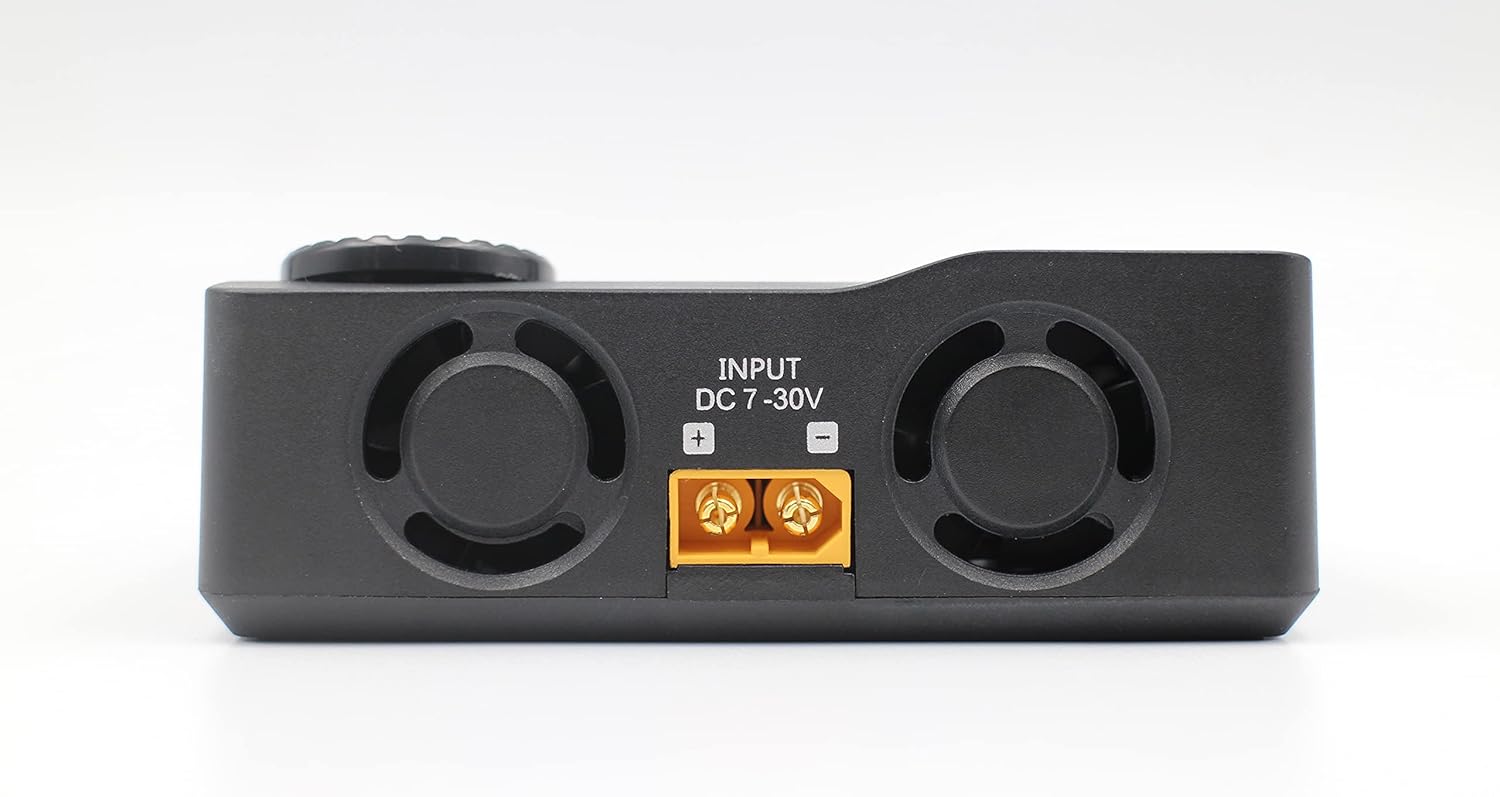
Foto 5.1: N'azụ view of the ToolkitRC M8S Smart Charger, clearly showing the DC 7-30V input ports with positive and negative terminals for power connection.

Foto 5.2: Akụkụ view of the ToolkitRC M8S Smart Charger, displaying the main XT60 output port and the 2-8S balance port for connecting batteries.
6. Ntuziaka ọrụ
The M8S features a user-friendly interface controlled by a rotary knob and two buttons (OK and EXIT).

Image 6.1: A close-up of the ToolkitRC M8S screen, showing the main menu with the 'Charge' option highlighted, indicating readiness for battery charging operations.
6.1. Ntugharị
- Rotary akpu: Rotate to scroll through menu options or adjust values.
- OK bọtịnụ: Pịa iji kwado nhọrọ ma ọ bụ tinye obere menu.
- Bọtịnụ ọpụpụ: Press to go back to the previous menu or cancel an operation.
6.2. Charging a Battery
- Site na isi menu, họrọ "Charger" wee pịa OK.
- Select the battery type (e.g., LiPo, LiHV, NiMh) and the number of cells (S).
- Adjust the desired charge current (Amps) na voltage (ọ bụrụ na ọdabara).
- Confirm settings and start the charging process. The screen will display real-time charging data.
6.3. Using Other Functions
- Measurer: Họrọ "Measurer" ịlele cell onye ọ bụla voltages, mkpokọta voltage, and internal resistance of your battery.
- Mpụta: Họrọ "Output" to use the M8S as a variable DC power supply or to test PWM/PPM/Sbus signals.
- Ntọala: Họrọ "Ntọala" to configure system parameters such as language, backlight, and sound.

Image 6.2: A composite image showcasing the ToolkitRC M8S's new user interface, displaying various screens including the main menu, a charging progress screen, and a PWM/PPM/Sbus signal testing screen.
7. Nlekọta
Proper maintenance ensures the longevity and optimal performance of your ToolkitRC M8S charger.
- Nhicha: Use a soft, dry cloth to clean the charger's exterior. Do not use liquid cleaners or solvents.
- Nchekwa: Chekwaa chaja n'ebe dị jụụ, kpọrọ nkụ pụọ na ìhè anyanwụ kpọmkwem na oke okpomọkụ mgbe ọ naghị eji ya.
- Igwe ikuku: Ensure the ventilation openings are clear of dust and debris to maintain efficient cooling.
- Mmelite femụwe: Periodically check the ToolkitRC official website for any available firmware updates to ensure your charger has the latest features and bug fixes.
8. Nchọpụta nsogbu
If you encounter issues with your M8S charger, refer to the following common problems and solutions:
| Nsogbu | Ihe nwere ike ime | Ngwọta |
|---|---|---|
| Chaja anaghị agba ọkụ. | No power supply, incorrect power supply voltage, loose connection. | Check power supply connection and voltage (7-30V DC). Ensure connections are secure. |
| Battery not detected. | Incorrect battery connection, damaged battery, wrong battery type selected. | Verify main and balance lead connections. Check battery health. Ensure correct battery type and cell count are selected in settings. |
| Charging error message. | Batrị voltage too low/high, internal resistance too high, short circuit. | Lelee batrị voltage. Inspect battery and cables for damage. Reduce charge current if battery is old or has high internal resistance. |
| Ihuenyo anaghị anabata ma ọ bụ oyi kpọnwụrụ. | Nsogbu ngwanrọ nwa oge. | Disconnect power, wait a few seconds, then reconnect to restart the charger. |
If the problem persists after attempting these solutions, please contact ToolkitRC customer support or your retailer for further assistance.
9. Nkọwapụta
| Njirimara | Nkọwa |
|---|---|
| Nlereanya | M8S |
| Ntinye Voltage | DC 7-30V |
| Chajị ugbu a | 0.1-18A |
| Mwepu ugbu a | 0.1-5A (Max 20W) |
| Ike chaja kacha | 400W |
| Ụdị batrị akwadoro | LiPo/LiHV/LiFe/Lion (1-8S), NiMh (1-20S), Pb (1-12S) |
| Itule ugbua | Oke 1A |
| Ngosipụta | 2.4-inch TFT Agba LCD |
| Akụkụ | 98 x 68 x 35 mm |
| Ibu | 255g |
| UPC | 729974629191 |

Image 9.1: A detailed specifications table for the ToolkitRC M8S, outlining input, charge/discharge parameters, supported battery types, and other technical data.
10. Akwụkwọ ikike na nkwado
ToolkitRC products are manufactured to high quality standards. For warranty information, please refer to the warranty card included with your product or visit the official ToolkitRC websaịtị. Debe nnata nzụta gị dị ka ihe akaebe nke ịzụrụ maka nkwupụta ikike.
For technical support, troubleshooting assistance beyond this manual, or inquiries about spare parts, please contact your authorized ToolkitRC dealer or the manufacturer directly through their official support channels.
Ndị ọchịchị Websaịtị: www.toolkitrc.com (Biko mara: Nke a bụ ebe njide ihe URL. Refer to your product packaging or official documentation for the correct websaịtị.)
Ask a question about this manual
Ask about setup, troubleshooting, compatibility, parts, safety, or missing instructions. Manuals+ will review the question and use this page’s manual context to help answer it.