
1. Ngwaahịa gafereview
The SIIG JU-DK0L11-S1 is a versatile USB 3.0 Dual Monitor Docking Station designed to expand your laptop or desktop's connectivity and display capabilities. It supports up to two 1080p@60Hz Full HD video displays via two HDMI ports, along with multiple USB ports, Gigabit Ethernet, and a 3.5mm audio jack. This docking station is compatible with both Windows and macOS operating systems, including Mac M1/M2/M3 Pro&Max.
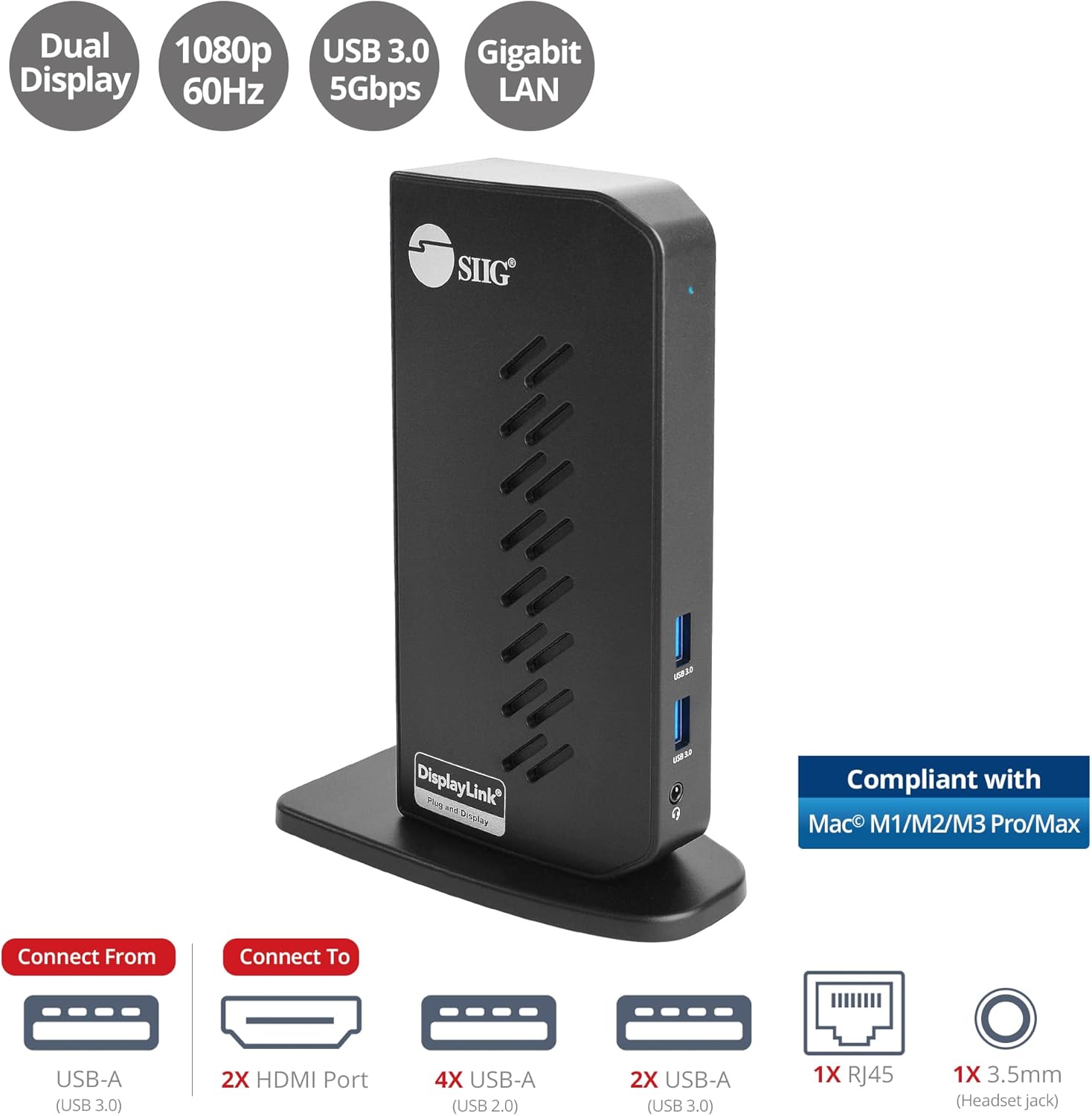
Image 1.1: The SIIG JU-DK0L11-S1 Dual Monitor Docking Station, showcasing its compact vertical design and various connectivity options.
2. Ihe ngwugwu
Nyochaa na ihe niile dị na ngwugwu tupu ịga n'ihu na ntinye.
- SIIG JU-DK0L11-S1 Dual Head Full HD HDMI Video Docking Station
- Ihe nkwụnye ọkụ (12V/2A)
- USB 3.0 Type-A to Type-B Cable
- Driver CD (Drivers can also be downloaded from the official SIIG websaịtị)
- Akwụkwọ ntuziaka onye ọrụ

Image 2.1: All components included in the SIIG JU-DK0L11-S1 docking station package, including the docking station, power adapter, USB cable, driver CD, and user manual.
3. Nhazi ngwaike
Familiarize yourself with the ports and indicators on the docking station.
Ogwe ihu
- Igwe ọkụ ọkụ: Na-egosi ọkwa ike.
- 2x USB 3.0 Ports: For connecting high-speed USB devices (5Gbps, 4.5W/900mA).
- Jack ekweisi 3.5mm: For connecting headphones or stereo speakers with microphone input.
Ogwe azụ
- 4x USB 2.0 Ports: For connecting standard USB devices (480Mbps, 5V/900mA).
- Ọdụ ụgbọ elu Ethernet RJ45 Gigabit: For wired network connection (10/100/1000Mbps).
- 2x HDMI Outputs: For connecting external displays (up to 1080p@60Hz).
- USB 3.0 Type-B Port: For connecting the docking station to your host computer.
- Ike Jack: For connecting the 12V/2A power adapter.

Foto 3.1: Zuru ezu view of the front and rear panels of the docking station, highlighting all available ports and their functions.
4. Nhazi ntuziaka
Soro usoro ndị a iji melite ọdụ docking gị:
- Install DisplayLink Drivers: Before connecting the docking station, install the necessary DisplayLink drivers on your computer. You can use the included driver CD or download the latest drivers from the official DisplayLink websaịtị (www.displaylink.com/downloads) or SIIG's support page.
- Njikọ Ike: Plug the provided 12V/2A power adapter into the docking station's power jack and then into a wall outlet. The Power LED on the front panel should illuminate.
- Connect to Host Computer: Use the supplied USB 3.0 Type-A to Type-B cable to connect the docking station's USB 3.0 Type-B port to an available USB 3.0 Type-A port on your laptop or desktop computer.
- Ngosipụta Njikọ: Connect your external monitors to the two HDMI output ports on the rear of the docking station using HDMI cables.
- Ngwa njikọ: Connect your USB devices (keyboard, mouse, printer, flash drives, etc.) to the available USB 3.0 and USB 2.0 ports. Connect an Ethernet cable to the RJ45 port for a wired network connection. Plug your headset or speakers into the 3.5mm audio jack.
Video 4.1: An official video demonstrating the setup and connectivity of the SIIG JU-DK0L11-S1 Dual Head Full HD HDMI Docking Station, showing how to connect monitors and peripherals.
5. Ntuziaka ọrụ
Once the docking station is set up, you can configure your display settings and utilize the connected peripherals.
Ụdị ngosi
The docking station supports three primary display modes:
- Ụdị enyo: Duplicates your primary display onto the external monitors.
- Gbatịkwuo ọnọdụ: Extends your desktop across multiple screens, allowing for increased workspace.
- Ụdị isi: Designates one of the connected displays as the main display.
You can configure these settings through your operating system's display settings (e.g., Windows Display Settings or macOS System Settings > Displays).

Image 5.1: A typical dual 1080p monitor setup utilizing the SIIG docking station, demonstrating an extended display configuration for enhanced productivity.
Njikọ USB
The docking station provides two USB 3.0 ports for high-speed data transfer (e.g., external hard drives, SSDs) and four USB 2.0 ports for standard peripherals (e.g., keyboard, mouse, printer). Simply plug your devices into the corresponding ports.
Gigabit Ethernet
For a stable and fast internet connection, connect an Ethernet cable from your router or modem to the RJ45 port on the docking station. This provides a more reliable connection than Wi-Fi, supporting 10/100/1000 BASE-T wired networks.

Foto 5.2: nso nso view of the Gigabit RJ45 Ethernet port and USB ports, illustrating their use for network and high-speed data transmission.
Njikọ ọdịyo
The 3.5mm headset jack allows you to connect headphones, speakers, or a microphone. Ensure your operating system's audio settings are configured to use the docking station's audio output/input.
6. Specifications (Model: JU-DK0L11-S1)
| Ụdị | SIIG |
| Nọmba nlereanya | JU-DK0L11-S1 |
| Ngwaọrụ Akụrụngwa | 3.5mm Audio, Ethernet, HDMI, USB 1.1, USB 2.0, USB 3.0 |
| Ngwa dakọtara | Desktop or laptop computer with an available USB 3.0 Type-A port. Compatible with Windows® 11/10/8.1/8/7 and macOS® 11 / 10.15 to 10.10. |
| Mgbakọta ọdụ ụgbọ mmiri USB | 6 (2x USB 3.0, 4x USB 2.0) |
| Mgbakọta ọdụ ụgbọ mmiri HDMI | 2 |
| Mkpebi Max | 1080p@60Hz (per display) |
| Ọsọ Ethernet | Gigabit (10/100/1000Mbps) |
| Ntinye Voltage | 100 volts (AC) |
| Akụkụ ngwaahịa (L x W x H) | 5.31" x 2.87" x 7.36" |
| Ibu Ibu | 0.75 pound |

Image 6.1: Physical dimensions of the SIIG JU-DK0L11-S1 docking station, illustrating its compact and space-saving design.
7. Nchọpụta nsogbu
- Enweghị mmepụta ihe ngosi:
- Ensure the docking station is powered on and the Power LED is lit.
- Verify that the USB 3.0 cable is securely connected between the docking station and your computer.
- Check that HDMI cables are firmly connected to both the docking station and your monitors.
- Confirm that DisplayLink drivers are correctly installed and up to date.
- Gbalịa ịmalitegharị kọmputa gị.
- Achọpụtaghị ngwaọrụ USB:
- Ensure the docking station is powered and connected to your computer.
- Try connecting the USB device to a different port on the docking station.
- Connect the USB device directly to your computer to rule out device issues.
- Enweghị njikọ netwọkụ:
- Verify the Ethernet cable is securely connected to the RJ45 port on the docking station and your network source.
- Check your computer's network settings to ensure the Ethernet adapter is enabled.
- Confirm that your router/modem is functioning correctly.
- Okwu ọdịyo:
- Ensure your headset/speakers are properly plugged into the 3.5mm jack.
- Check your computer's sound settings to select the docking station as the default audio output/input device.
8. Nlekọta
To ensure the longevity and optimal performance of your SIIG docking station, follow these maintenance guidelines:
- Keep the device clean by wiping it with a soft, dry cloth. Avoid using liquid cleaners or aerosols.
- Ensure proper ventilation around the docking station to prevent overheating. The vertical design with heat dissipation features aids in this.
- Zere ikpughe ngwaọrụ ahụ na oke okpomọkụ, iru mmiri, ma ọ bụ ìhè anyanwụ kpọmkwem.
- Handle cables and connectors gently to prevent damage.
9. Akwụkwọ ikike na nkwado
For warranty information and technical support, please refer to the documentation included with your product or visit the official SIIG website. SIIG is committed to providing reliable products and customer assistance.
For further assistance, you may contact SIIG customer support directly through their websaịtị ma ọ bụ ozi kọntaktị enyere na nkwakọ ngwaahịa gị.