
1. Ozi nchekwa
Read all safety instructions carefully before installing and operating the PNI SP2000W Voltage Inverter. Failure to follow these instructions may result in electric shock, fire, or serious injury.
- Nchekwa Eletriki: Ngwaọrụ a na-arụ ọrụ na elu voltage. Do not open the inverter casing. All servicing must be performed by qualified personnel.
- Igwe ikuku: Ensure adequate ventilation around the inverter. Do not block the cooling fans or place the inverter in an enclosed space. Overheating can cause damage or fire.
- gburugburu: Do not expose the inverter to water, rain, snow, spray, or dust. Operate in a dry, cool, and well-ventilated area.
- Njikọ batrị: Connect the inverter directly to a 12V car battery. Do not connect to other voltage sources or attempt to use with solar panels, as special inverters are required for solar systems.
- Ndakọrịta ibu: This inverter is designed for resistive loads such as TVs, lighting lamps, radios, fans, and mini-refrigerators. Avoid connecting inductive loads with high starting currents unless within the inverter's surge capacity.
- Nchekwa ibu ibu: The inverter includes overload protection. Do not exceed the continuous output power of 2000W.
2. Ngwaahịa gafereview
The PNI SP2000W is a pure sinusoid voltage inverter designed to convert 12V DC power from a car battery into 230V AC power, suitable for powering various electrical appliances. It features a continuous output of 2000W and active cooling for efficient operation.
2.1. Atụmatụ igodo
- Ike mmepụta: 2000W continuous, 4000W peak.
- Ntinye Voltage: 12V DC.
- Mmepụta Voltage: 220V / 230V AC.
- Mmepụta Waveform: Pure Sinusoid.
- Ugboro: 50 Hz.
- Na-ajụ oyi: Active cooling with two built-in fans and aluminum housing.
- Nchedo: Overload, thermal, short circuit.
2.2. Ihe ngwugwu
- PNI SP2000W Voltage inverter
- Power connection cables (red for positive, black for negative)
- Wrench for terminal connections
- Akwụkwọ ntuziaka onye ọrụ
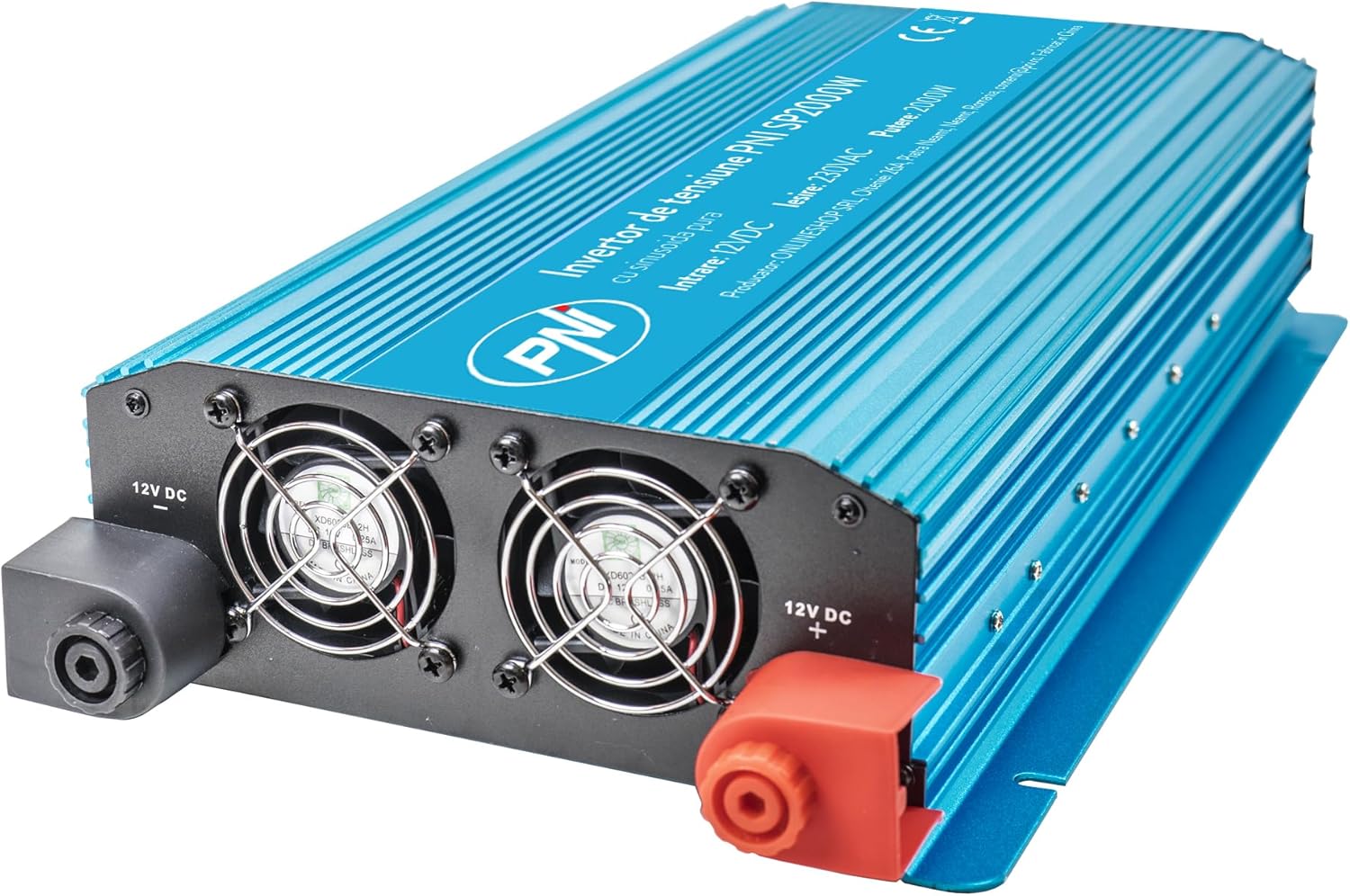
Foto 1: N'ihu view of the PNI SP2000W Voltage Inverter, showing the blue casing and the PNI logo.

Foto 2: Top view of the PNI SP2000W Voltage Inverter, displaying the product label with model information and specifications.

Figure 3: The PNI SP2000W Voltage Inverter shown with its included accessories: power connection cables (red and black) and a wrench for securing terminals.
3. Nhazi
Ntọala kwesịrị ekwesị dị oke mkpa maka ọrụ nchekwa na nke ọma nke inverter gị.
3.1. Ntinye
- Place the inverter on a flat, stable surface.
- Ensure there is at least 15 cm (6 inches) of clear space around the inverter for proper ventilation.
- Avoid direct sunlight, heat sources, and areas with high humidity or dust.
3.2. Connecting to a 12V Battery
The inverter must be connected directly to a 12V DC battery. Use the provided cables for connection.
- Ensure the inverter's power switch is in the "OFF" position.
- Connect the red cable to the positive (+) terminal of the inverter and then to the positive (+) terminal of the 12V battery.
- Connect the black cable to the negative (-) terminal of the inverter and then to the negative (-) terminal of the 12V battery.
- Tighten all connections securely using the provided wrench to prevent loose connections, which can cause overheating and damage.
- Verify that all connections are correct and secure before proceeding.

Figure 4: Input side of the inverter, showing the 12V DC positive (+) and negative (-) terminals for battery connection, along with the cooling fans.

Figure 5: Output side of the inverter, featuring two 230V AC sockets, the main power switch, and indicator lights for power and fault status.
4. Ntuziaka ọrụ
Follow these steps to operate your PNI SP2000W Voltage Inverter safely.
- Ike Na: After ensuring all connections are secure and correct, switch the inverter's power button to the "ON" position. The green "POWER" indicator light should illuminate.
- Jikọọ Ngwa: Plug your 230V AC appliances into the inverter's output sockets. Ensure the total wattagike nke ngwa niile ejikọrọ anaghị agafe 2000W.
- Nyochaa: Observe the inverter's indicator lights. If the red "FAULT" light illuminates, refer to the Troubleshooting section.
- Gbanyụọ: When you are finished using the inverter, first turn off and unplug all connected appliances. Then, switch the inverter's power button to the "OFF" position.
5. Nlekọta
Regular maintenance helps ensure the longevity and reliable performance of your inverter.
- Nhicha: Periodically clean the exterior of the inverter with a soft, dry cloth. Do not use liquid cleaners or solvents. Ensure the cooling vents are free from dust and debris.
- Igwe ikuku: Regularly check that the cooling fans are not obstructed and are operating correctly. Good airflow is essential to prevent overheating.
- Njikọ eriri: Periodically inspect the battery connection cables for any signs of wear, damage, or corrosion. Ensure connections remain tight.
- Nchekwa: If storing the inverter for an extended period, disconnect it from the battery and store it in a cool, dry place away from direct sunlight.
6. Nchọpụta nsogbu
If you encounter issues with your PNI SP2000W Inverter, refer to the following common problems and solutions.
| Nsogbu | Ihe nwere ike ime | Ngwọta |
|---|---|---|
| No power output / Inverter does not turn on | Njikọ batrị tọhapụrụ Obere batrị voltage Inverter switch is OFF | Check and tighten battery cables Fanye ma ọ bụ dochie batrị Ensure inverter switch is ON |
| Red "FAULT" light is on | Ibu ibu ekpo oke ọkụ Obere sekit Ntinye dị ala/dị elu voltage | Belata ibu ejikọrọ Allow inverter to cool, ensure ventilation Check for short circuits in connected appliances/cables Lelee batrị voltage |
| Appliances not working correctly | Ngwa wattage oke elu Appliance type incompatible (e.g., high inductive load) | Ensure total load is within 2000W continuous Consult appliance manual for compatibility with pure sine wave inverters |
| Fans are constantly running loudly | High internal temperature due to heavy load or poor ventilation | Reduce load or improve ventilation around the inverter |
Ọ bụrụ na nsogbu ahụ anọgide mgbe ị nwalechara ngwọta ndị a, kpọtụrụ ndị ọrụ nkwado ndị ahịa.
7. Nkọwapụta
| Njirimara | Nkọwapụta |
|---|---|
| Nlereanya | PNI-SP2000W |
| Ike Mbupute na-aga n'ihu | 2000 W |
| Maximum Output Power (Peak) | 4000 W |
| Ntinye Voltage | 12 V DC |
| Mmepụta Voltage | 220 V / 230 V AC |
| Ugboro arụ ọrụ | 50 Hz |
| Mmepụta Waveform | Pure Sinusoid |
| Ịrụ ọrụ | > 88% |
| Consumption in Stand-by | 10-15 W |
| Ịjụ oyi na-arụ ọrụ | Ya na onye ofufe |
| Akụkụ (L x W x H) | 440 x 220 x 100 mm |
| Ibu | 4.27 n'arọ |
| Ogologo eriri USB | 44 cm |
| Okpomọkụ na-arụ ọrụ | -10 °C ~ +40 Celsius |
| Okpomọkụ nchekwa | -20 °C ~ +55 Celsius |
| iru mmiri | 90% (na-abụghị condensing) |
| Ibu Ibu Ike | > 120% |
| Nchedo | Overload, Thermal, Short Circuit, Over-voltage, Under-voltage |
| Sockets mmepụta | 2 x 230 V AC sockets |
8. Akwụkwọ ikike na nkwado
PNI products are manufactured to high-quality standards. This product is covered by a manufacturer's warranty against defects in materials and workmanship. Please retain your proof of purchase for warranty claims.
For technical support or warranty inquiries, please refer to the contact information provided with your purchase documentation or visit the official PNI websaịtị.