
1. Okwu mmalite
Thank you for choosing the ABSINA Rechargeable Battery Charger. This manual provides essential information for the safe and efficient use of your new charger. Please read it thoroughly before operation and keep it for future reference.
Ọdịnaya ngwugwu:
- 1x ABSINA X4 Charger for AAA, AA, and 9V batteries
- 4x ABSINA AAA Rechargeable Batteries (1150 min. 1050mAh 1.2V HR03)
2. Ozi nchekwa
- Use this charger only for NiMH and NiCd rechargeable batteries. Do not attempt to charge non-rechargeable batteries or other battery types, as this may lead to explosion, rupture, or leakage, causing personal injury or property damage.
- Emela ka chaja ma ọ bụ batrị ahụ ghara ịdị ike, gbanwee, ma ọ bụ gbanyụọ chaja ma ọ bụ batrị ahụ.
- Debe chaja ahụ ka ọ ghara iru mmiri, mmiri, na okpomọkụ dị elu.
- Ejila chaja rụọ ọrụ ma ọ bụrụ na emebiela n'ụzọ ọ bụla.
- Gbaa mbọ hụ na ikuku ikuku dị mma mgbe ị na-ebufe.
- Debe ebe ụmụaka na-apụghị iru.
- Kpupu chaja n'ofe ọkụ mgbe ejighi ya.
3. Ngwaahịa gafereview
The ABSINA X4 charger is designed for efficient and safe charging of various rechargeable battery types. It features individual slot monitoring and advanced safety functions.
Akụkụ ndị bụ isi:
- X4 Charging Station: Allows simultaneous charging of 1-4 Micro AAA (500mA), 1-4 Mignon AA (500mA), or 1-2 9V Block (13mA) batteries.
- Individual Slot Monitoring: Each battery slot is monitored independently for optimal charging.
- Pulse Maintenance Charging: Ensures batteries remain at full capacity after charging.
- Defective Battery Detection: Automatically identifies and signals faulty batteries.
- Ụdị mmezi: For discharged batteries, a gentle pre-charge with reduced current is applied.
- Nchaji ngwa ngwa: Microcontroller-supervised charge management and overload protection allow batteries to be charged in approximately 2 hours.
- Ihe ngosi LED: Provides clear information on the charging status of each battery.
- Nwepu akpaaka: The charger automatically stops charging once batteries reach full capacity.

Foto 3.1: The ABSINA 4-slot battery charger shown with four included AAA rechargeable batteries. The charger is black with green LED indicators.

Foto 3.2: The ABSINA charger with AA batteries inserted, highlighting its simple operation without unnecessary buttons.

Foto 3.3: An illustration demonstrating the environmental and economic benefit of rechargeable batteries, where one rechargeable battery can replace numerous disposable ones.
4. Nhazi
- Mepee chaja: Carefully remove the charger and included batteries from the packaging.
- Jikọọ na Ike: Plug the charger directly into a standard 100-240V AC 50-60Hz wall outlet. The charger is designed for direct wall plug-in.
- Fanye batrị: Insert the rechargeable batteries into the appropriate slots. Ensure correct polarity (+ and -) as indicated on the charger and batteries. The charger supports 1-4 AA or AAA batteries, or 1-2 9V block batteries.

Foto 4.1: The charger illustrating its compatibility with AAA, AA, and 9V battery types, indicating the number of cells supported for each type.
5. Ntuziaka ọrụ
Usoro nchaji:
- Once batteries are correctly inserted and the charger is plugged in, the charging process will begin automatically.
- The LED indicators above each slot will show the charging status.
- The charger automatically switches to maintenance charging once batteries are fully charged.
- Defective batteries will be identified immediately, and their corresponding LED will indicate an error (e.g., red light).

Foto 5.1: The ABSINA charger in operation, plugged into a wall outlet, with an estimated charging time of 2 hours.
Ọnọdụ ihe ngosi LED:
- Green ikanam: Battery is fully charged or in maintenance mode.
- Red ikanam: Defective battery detected or error during charging.
- Flashing LED (if applicable): Charging in progress (specific behavior may vary, refer to visual cues on the charger).

Foto 5.2: A nso-elu view of the LED status indicators on the ABSINA charger, showing green lights for charged batteries and a red light for a detected issue.

Foto 5.3: The charger indicating a defective battery with a red LED, demonstrating its fault detection capability.
Nwepu akpaaka:
The charger is equipped with an automatic shut-off function that activates once the batteries are fully charged, preventing overcharging and extending battery life.
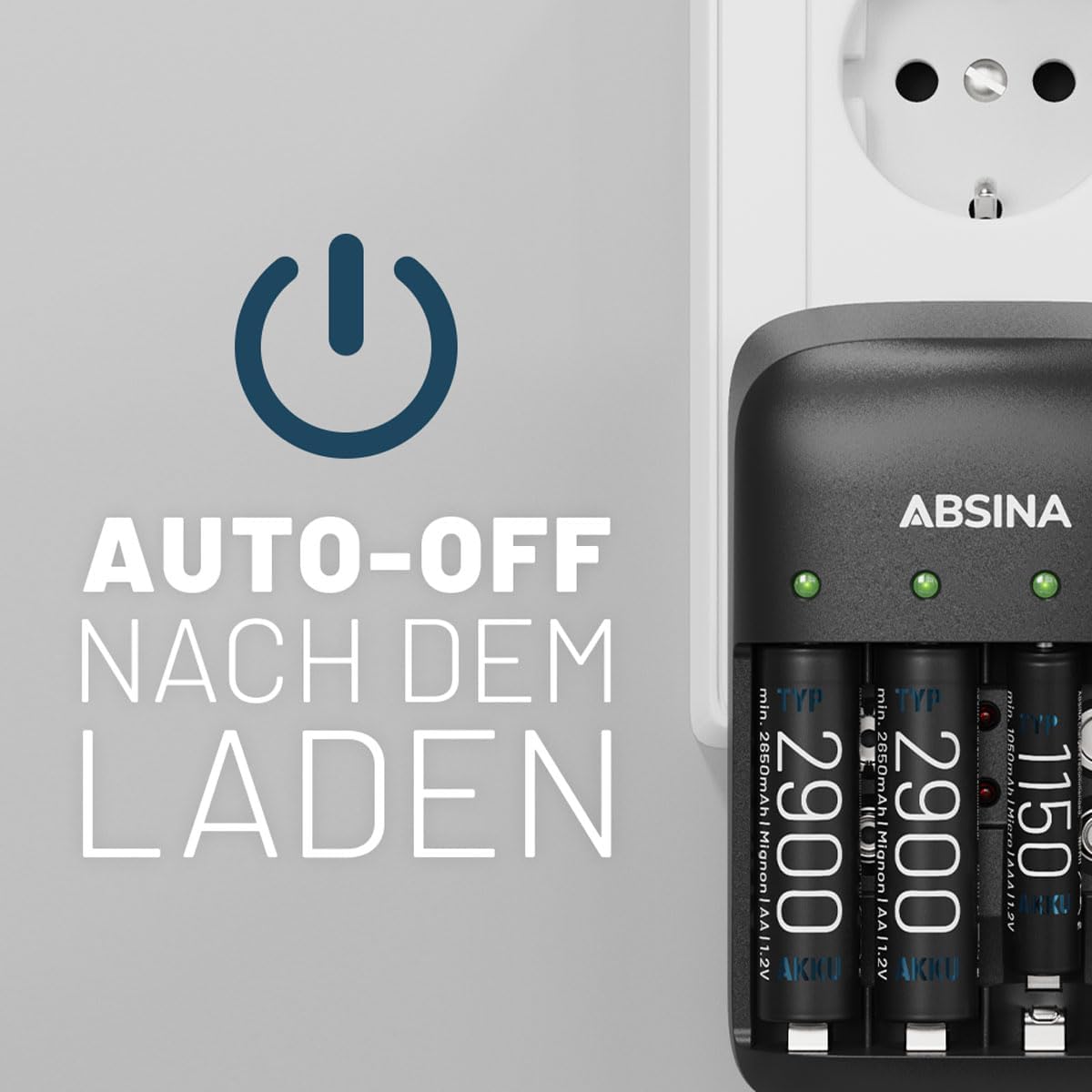
Foto 5.4: The charger illustrating its auto-off feature, which activates once batteries are fully charged.
6. Nlekọta
- Nhicha: Disconnect the charger from the power outlet before cleaning. Use a soft, dry cloth to wipe the exterior. Do not use abrasive cleaners or solvents.
- Nchekwa: Chekwaa chaja n'ebe dị jụụ na ebe kpọrọ nkụ na-anọghị na ìhè anyanwụ kpọmkwem na oke okpomọkụ.
- Nlekọta batrị: For optimal battery life, avoid completely discharging batteries before recharging.
7. Nchọpụta nsogbu
| Nsogbu | Ihe nwere ike ime | Ngwọta |
|---|---|---|
| Batrị anaghị achaji | Charger not plugged in; incorrect battery insertion; non-rechargeable batteries; defective battery. | Ensure charger is securely plugged in. Check battery polarity. Confirm batteries are NiMH/NiCd rechargeable. Remove and reinsert batteries. If a red LED persists, the battery may be defective. |
| Ihe ngosi ọkụ na-acha uhie uhie | Defective battery; incorrect battery type. | Remove the battery. If the LED remains red with other batteries, the charger may be faulty. If only that battery causes a red light, it is likely defective and should be replaced. |
| Chaja na-adị ọkụ | Normal operation during charging. | A slight warmth is normal. If the charger becomes excessively hot or emits smoke/odor, unplug immediately and discontinue use. |
8. Nkọwapụta
| Njirimara | Nkọwa |
|---|---|
| Ụdị | ABSINA |
| Nọmba nlereanya | 301001+401002-4 |
| Ụdị batrị dakọtara | NiMH & NiCd Micro AAA, Mignon AA, 9V E-Block |
| Oghere cha cha | 4 (for AA/AAA), 2 (for 9V) |
| Ntinye Voltage | 100-240V AC, 50-60Hz, 160mA |
| Mmepụta Voltage | 9 Volts (for 9V batteries) |
| Charging Current (AA/AAA) | 500mA kwa oghere |
| Charging Current (9V) | 13mA kwa oghere |
| Ihe ruru. Oge Nchaji | 2 hours (varies by battery capacity) |
| Atụmatụ pụrụ iche | Automatic shut-off, Full battery and defective battery detection, LED charge indicator, Repair mode, Single bay monitoring |
| Akụkụ ngwaahịa | 7.5D x 11.5W x 7H centimita |
| Ibu Ibu | 200 grams |
| Batrị gụnyere | 4x AAA 1150 min. 1050mAh 1.2V HR03 |
| Mba onye si | China |
9. Akwụkwọ ikike na nkwado
Specific warranty information for this product is not available in the provided data. For warranty claims or technical support, please refer to the retailer or manufacturer's official websaịtị maka ozi kacha ọhụrụ.
Spare parts availability and software update guarantees are not available.