
Okwu mmalite
This manual provides instructions for the LeadsaiL Wireless Optical Mouse, model LX005. This 2.4 GHz wireless mouse offers a stable connection, silent clicks, and adjustable DPI settings for various computing needs. It is designed for comfort and portability, suitable for use with laptops and personal computers.
The mouse features a silent click design, minimizing noise during use, making it ideal for environments where quiet operation is essential. Its 2.4GHz wireless technology ensures a reliable connection over a range of up to 10 meters. The mouse has undergone a 5,000,000 click test, ensuring long-lasting usage.

Image: A close-up of a hand using the LeadsaiL wireless mouse, with an overlay highlighting that the mouse has been tested for 5,000,000 clicks to ensure durability.
Ntuziaka nhazi
- Fanye batrị: Open the battery compartment located on the underside of the mouse. Insert one AA battery (included with some models, otherwise purchase separately) ensuring correct polarity.

Image: The underside of the LeadsaiL wireless mouse, illustrating the battery compartment for a single AA battery and the storage slot for the Nano USB receiver. The power switch is also visible.
- Weghachite eriri USB: The Nano USB receiver is stored in a dedicated slot next to the battery compartment on the mouse's underside. Gently pull it out.
- Onye nnata njikọ: Plug the Nano USB receiver into an available USB port on your computer or laptop.

Image: A LeadsaiL wireless mouse in use with a laptop, demonstrating the 2.4GHz wireless connection established by the USB receiver plugged into the laptop's side.
- Ike Na: Locate the ON/OFF switch on the bottom of the mouse and slide it to the "ON" position.
- Njikọ akpaaka: The mouse should automatically connect to your computer. No additional drivers are typically required (Plug and Play).
Ntuziaka ọrụ
- Pịa nkịtị: The mouse features a silent click design, minimizing noise during use. This is beneficial in quiet environments.
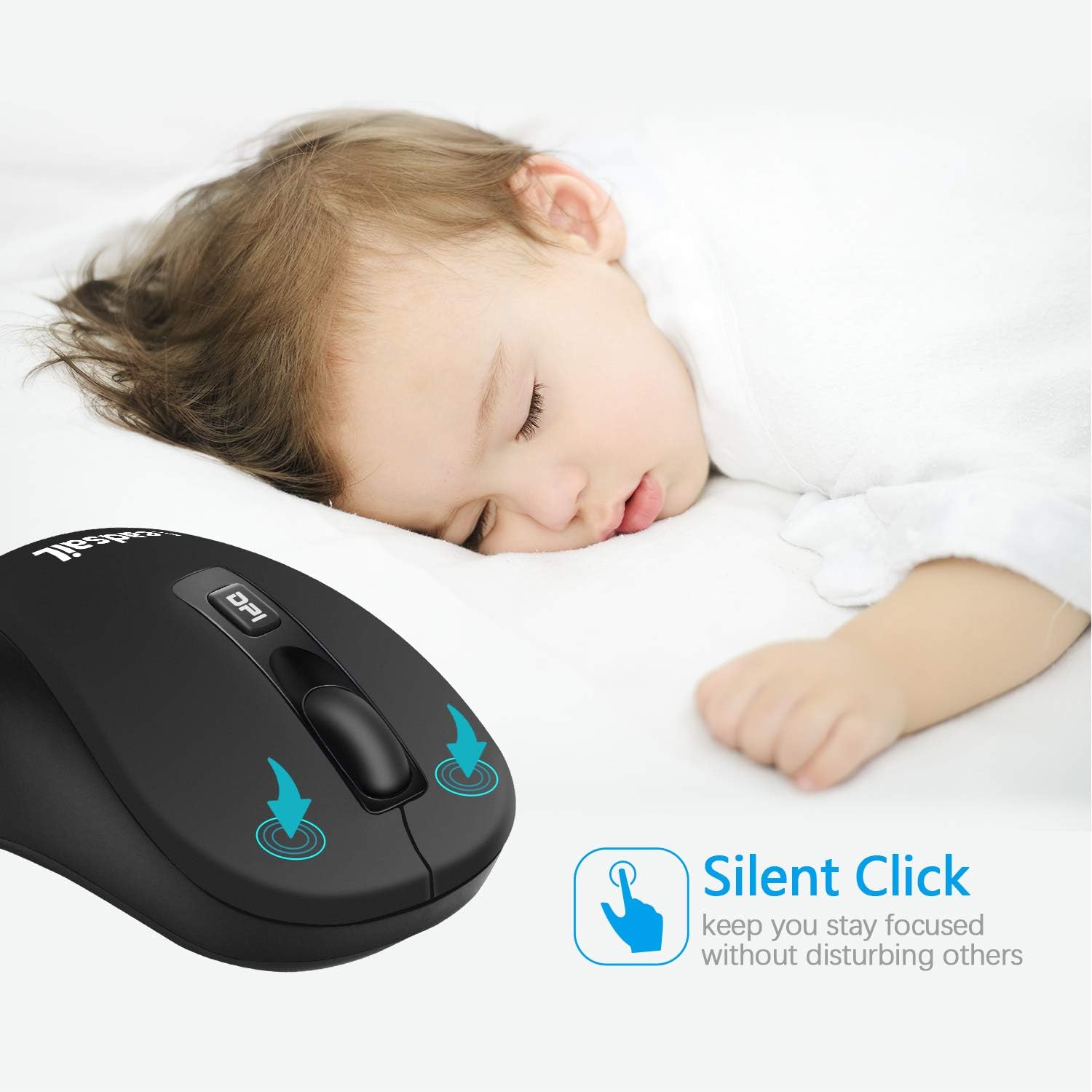
Image: A LeadsaiL wireless mouse with an overlay indicating "Silent Click," positioned near a sleeping baby, emphasizing its quiet operation.
- Ndozi DPI: The mouse offers three adjustable DPI settings: 800, 1200, and 1600. Press the DPI button, usually located behind the scroll wheel, to cycle through these settings. A higher DPI provides faster cursor movement, while a lower DPI offers more precise control. The default setting is 1600 DPI.
- Oke ikuku: The 2.4GHz wireless connection provides a reliable operating range of up to 10 meters (approximately 33 feet) without interference.
- Ndakọrịta n'elu: The optical sensor allows for smooth operation on various surfaces, including mouse pads, desks, and glass surfaces.
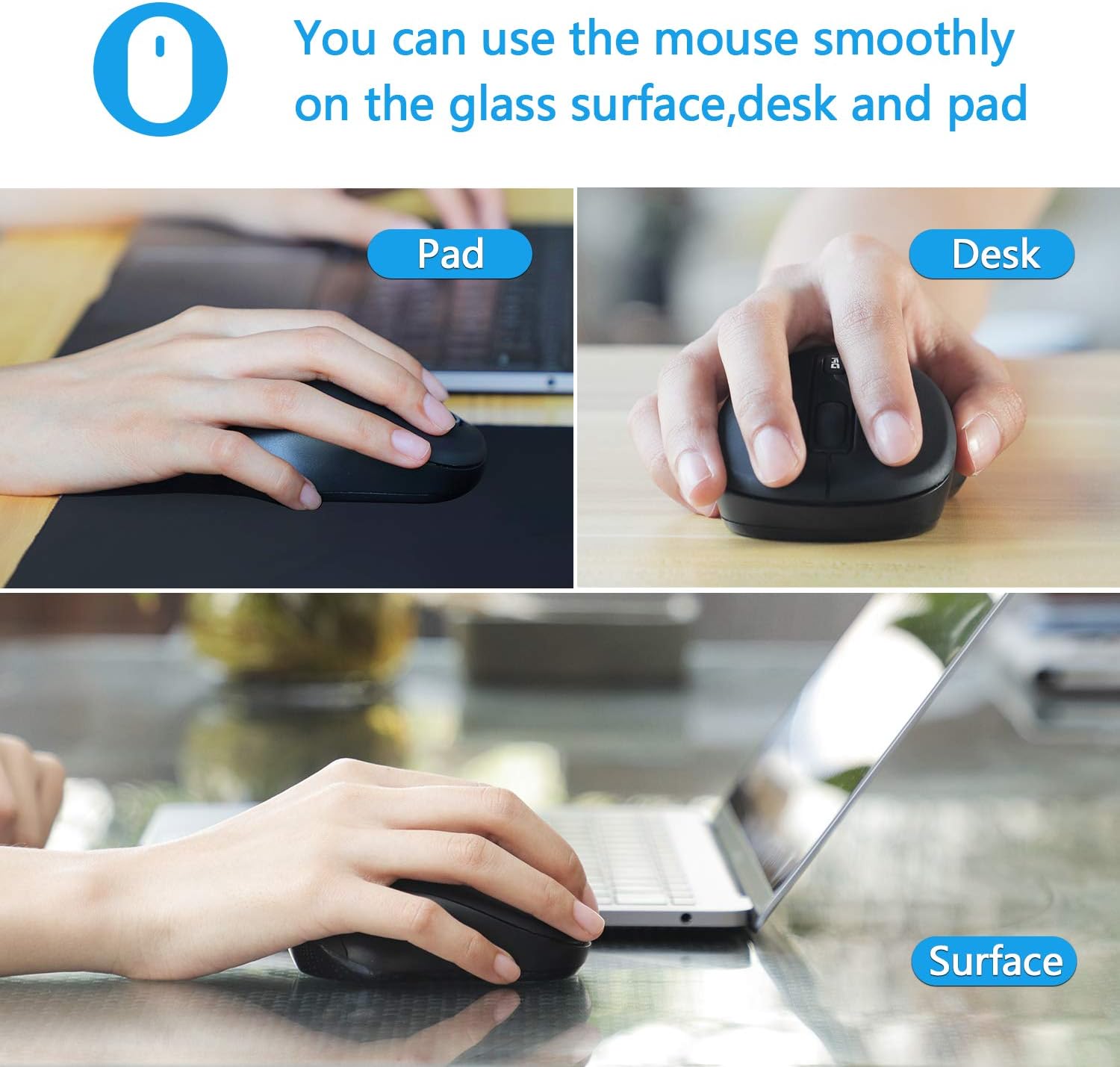
Image: A LeadsaiL wireless mouse demonstrated in use on three different surfaces: a mouse pad, a wooden desk, and a glass surface, highlighting its versatile tracking capabilities.
Nlekọta
- Ngbanwe batrị: When the mouse performance degrades or the indicator light (if present) signals low power, replace the AA battery. Ensure the mouse is switched off before replacing the battery.
- Ọnọdụ Nchekwa Ike: To conserve battery life, the mouse will enter an energy-saving mode after 8 minutes of inactivity. To reactivate, simply move or click the mouse.
- Nhicha: Use a soft, dry cloth to clean the exterior of the mouse. Avoid using harsh chemicals or abrasive materials.
- Nchekwa: When not in use for extended periods, switch off the mouse using the ON/OFF switch on the bottom. For transport, store the Nano USB receiver in its dedicated slot on the mouse's underside to prevent loss.
Nchọpụta nsogbu
- Òké anaghị aza:
- Hụ na agbanyere òké ahụ "GBANYỊ".
- Check if the AA battery is correctly inserted and has sufficient charge. Replace if necessary.
- Verify that the USB receiver is securely plugged into a working USB port on your computer.
- Gbalịa itinye ihe nnata USB n'ọdụ ụgbọ mmiri USB dị iche.
- Move the mouse closer to the USB receiver to rule out range issues.
- Njikọ na-adịte aka:
- Ensure there are no large metallic objects or other wireless devices operating on the 2.4GHz frequency between the mouse and the receiver, as these can cause interference.
- Gbalịa iji òké na elu dị iche.
- Cursor Movement is Erratic or Slow:
- Gbanwee ntọala DPI site na iji bọtịnụ DPI na òké.
- Jiri ákwà dị nro ma kpọọ nkụ hichaa ihe mmetụta anya dị n'ala òké ahụ.
- Ensure the surface you are using the mouse on is clean and suitable for optical tracking.
Nkọwapụta
| Nọmba nlereanya | LX005 |
| Teknụzụ Njikọta | Ikuku 2.4GHz (USB nnata) |
| Teknụzụ nchọpụta ngagharị | Ngwa anya |
| Ntọala DPI | 800 / 1200 / 1600 (Enwere ike ịgbanwe) |
| Ọnụọgụ bọtịnụ | 4 |
| Ntuzi aka | Ambidextrous |
| Ikuku iche | Ruo mita 10 |
| Isi Iyi Ike | 1 x AA batrị |
| Nkezi Ndụ batrị | 12 months (approximate) |
| Ngwa dakọtara | Kọmputa nkeonwe, Laptọọpụ |
| Sistemu eji arụ ọrụ dakọtara | Windows 7/8/10/XP, Vista 7/8, Linux (Not compatible with Pro or other laptops with only Type-C ports) |
| Akụkụ ngwaahịa | 115 x 62 x 32 mm (4.5 x 2.4 x 1.3 inch) |
| Ibu ngwaahịa | 62g (2.2 oz) |
| Ihe ngwugwu | Wireless Mouse, USB Receiver, User Manual |

Foto: A n'elu-ala view of the LeadsaiL wireless mouse, showing its approximate dimensions of 11 cm in length and 6.6 cm in width.
Akwụkwọ ikike na nkwado
Specific warranty information and direct support contact details are not provided in the product description. Please refer to the retailer or manufacturer's official website for warranty terms and customer support options.