
1. Okwu mmalite
This manual provides essential information for the safe assembly, operation, maintenance, and troubleshooting of your WilTec Garden Cart Wheelbarrow, Model 61307. Please read these instructions carefully before using the product to ensure proper function and longevity.
2. Ntuziaka nchekwa
- Always ensure the cart is on a stable, level surface before loading or unloading.
- Do not exceed the maximum load capacity of 350 kg (770 lbs) or the volume capacity of 125 liters (33 gallons).
- Distribute the load evenly in the bin to maintain stability.
- Exercise caution when operating on inclines or uneven terrain.
- Keep hands and feet clear of moving parts, especially during tilting operations.
- Regularly inspect all components for wear or damage before each use. Do not use if damaged.
- Keep children and pets away from the cart during operation.
3. Ihe ngwugwu
Nyochaa na akụkụ niile dị tupu ịmalite mgbakọ. Ọ bụrụ na akụkụ ọ bụla na-efu ma ọ bụ mebie, kpọtụrụ nkwado ndị ahịa.
- 1x Plastic Bin (125L capacity)
- 1x Metal Frame/Chassis
- 4x Pneumatic Wheels (13" x 4.00-6)
- 1x Adjustable Handle with Rubber Grip
- 1x Tilting Mechanism Assembly
- Ngwa ngwaike (bolts, akụ, washers, pins)
- Ntuziaka mgbakọ (akwụkwọ a)
4. Ntọala na Mgbakọ
Assembly typically requires basic hand tools (not included). Follow the steps below carefully.
- Tinye wiil ndị ahụ: Secure each of the four pneumatic wheels to the axle shafts using the provided washers and cotter pins. Ensure wheels spin freely.
- Assemble the Chassis: Connect the metal frame components according to the diagram, ensuring all bolts are tightened securely.
- Mount the Plastic Bin: Place the plastic bin onto the assembled chassis. Align the mounting holes and secure the bin to the frame using the designated bolts and nuts.
- Install the Tilting Mechanism: Attach the tilting mechanism to the rear of the chassis and the underside of the bin. Ensure it engages and disengages smoothly.
- Tinye aka: Connect the adjustable handle to the front steering axle. Ensure the handle can pivot freely and the rubber grip is firmly in place.
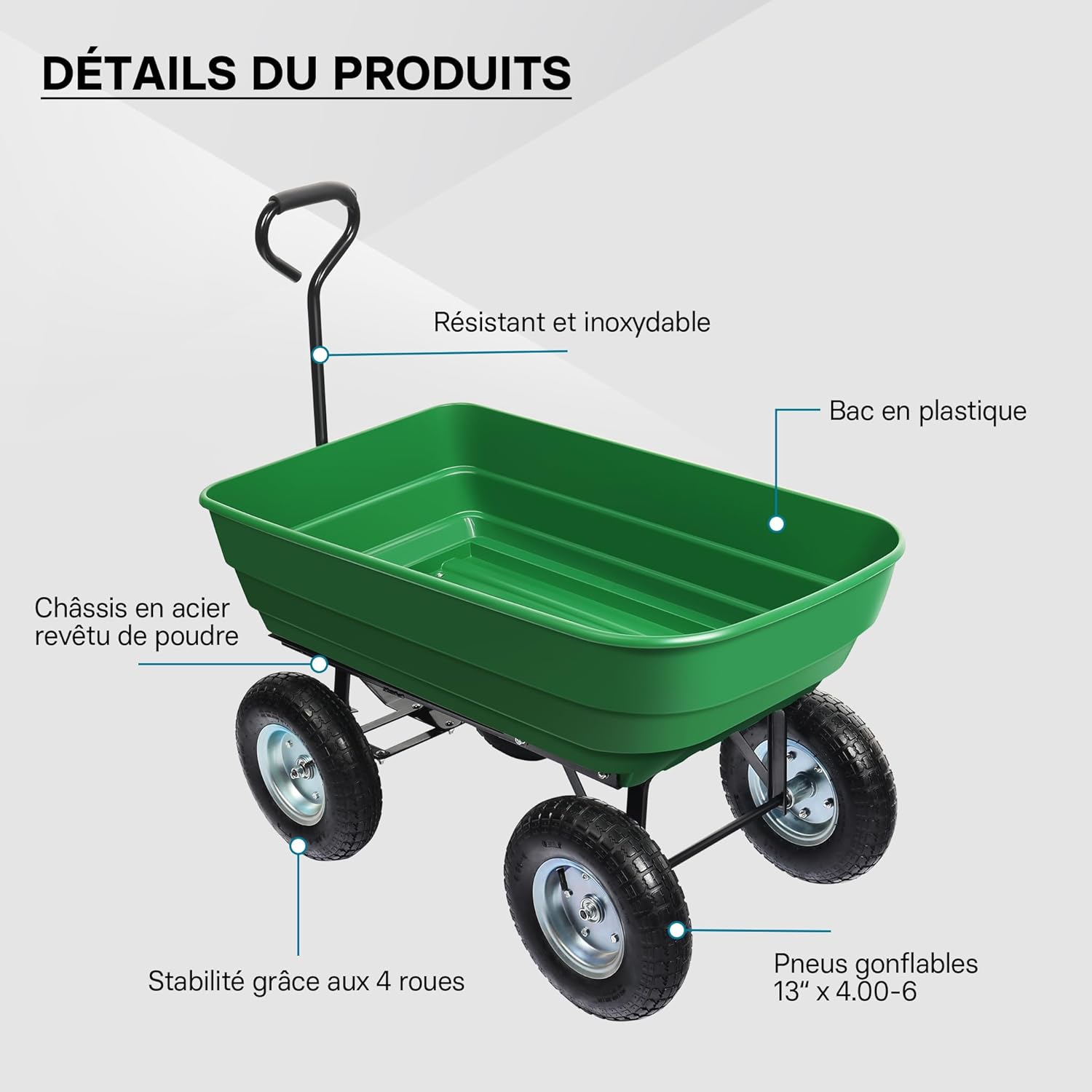
Foto 4.1: Product details diagram illustrating the main components: resistant and stainless metal frame, plastic bin, 4-wheel stability, and 13" x 4.00-6 inflatable tires.

Foto 4.2: The adjustable handle can be moved to different positions for comfortable towing or storage.
5. Ntuziaka ọrụ
5.1 Loading the Cart
- Place items evenly within the plastic bin.
- Ensure the load does not exceed the 125L volume or 350kg weight limit.
- Avoid loading items that could puncture or damage the plastic bin.
5.2 Ibugharị ụgbọ ala
- Grasp the adjustable handle firmly.
- The steerable front axle and pneumatic tires allow for easy maneuverability across various terrains.
- Navigate carefully, especially on uneven ground, gravel, or muddy paths.

Foto 5.1: The pneumatic tires are designed for various terrains including gravel, grass, mud, and asphalt.
5.3 Tilting and Unloading
- To unload, ensure the cart is stationary and stable.
- Engage the tilting mechanism release lever, typically located at the rear of the cart.
- Carefully tilt the bin to empty its contents.
- Once unloaded, return the bin to its flat position and ensure the tilting mechanism is securely latched.

Foto 5.2: The tilting bin feature allows for easy and efficient unloading of materials.
6. Nlekọta
- Nhicha: Clean the plastic bin and metal frame with mild soap and water after each use, especially when transporting dirt or corrosive materials. Rinse thoroughly and dry.
- Nrụgide taya: Periodically check the air pressure in the pneumatic tires. Maintain recommended pressure (usually indicated on the tire sidewall) for optimal performance and longevity.
- mmanu mmanu: Apply a light lubricant to moving parts such as the steering axle and tilting mechanism pivot points annually or as needed.
- Nyochaa ngwaike: Regularly inspect all bolts, nuts, and fasteners. Tighten any loose hardware to ensure structural integrity.
- Nchekwa: Store the garden cart in a dry, covered area to protect it from extreme weather conditions and prolong its lifespan.
7. Nchọpụta nsogbu
| Nsogbu | Ihe nwere ike ime | Ngwọta |
|---|---|---|
| Cart is difficult to steer or pull. | Low tire pressure; uneven load distribution; steering mechanism obstruction. | Check and inflate tires; redistribute load evenly; inspect steering for debris and lubricate. |
| Bin does not tilt smoothly or latch securely. | Tilting mechanism dirty or unlubricated; bent components; latch misalignment. | Clean and lubricate the mechanism; inspect for damage and straighten if possible; adjust latch. |
| Wheels wobble or are loose. | Loose axle nuts or pins; worn wheel bearings. | Tighten axle nuts/pins; replace worn wheel bearings if necessary. |
| Mkpọtụ na-adịghị ahụkebe n'oge arụ ọrụ. | Loose hardware; lack of lubrication; damaged components. | Inspect and tighten all fasteners; lubricate moving parts; check for damaged components. |
8. Nkọwapụta
| Njirimara | Nkọwa |
|---|---|
| Nọmba nlereanya | 61307 |
| Akụkụ ngwaahịa (L x W x H) | 117 cm x 57.5 cm x 62 cm (46.1 na x 22.6 na x 24.4 na) |
| Ibu Ibu | 24.3 n'arọ (53.6 lbs) |
| Ike ibu kacha | 350 n'arọ (770 lbs) |
| Bin Volume Capacity | 125 lita (33 lita) |
| Ihe (frame) | Ígwè (nchara kpuchiri ntụ ntụ) |
| Material (Bin) | Plastic |
| Agba | Akwụkwọ ndụ akwụkwọ ndụ |
| Ụdị Wheel | Pneumatic (Tubular) |
| Onu ogugu | 4 |
| Atụmatụ pụrụ iche | Steerable front axle, Tilting mechanism |

Foto 8.1: Product dimensions and capacity overview.
9. Akwụkwọ ikike na nkwado
For warranty information, please refer to the documentation included with your purchase or visit the official WilTec website. If you require technical support, replacement parts, or have questions not covered in this manual, please contact WilTec customer service through their official channels.
WilTec Official Websaịtị: www.wiltec.de