
1. Okwu mmalite
This manual provides essential information for the safe and efficient operation, setup, and maintenance of your ABAC START L20 air compressor. This 6-liter, 2 HP, oil-lubricated, portable compressor is designed for occasional or intermittent use, suitable for applications such as tire inflation, blowing, and cleaning. Please read this manual thoroughly before initial use and keep it for future reference.
2. Ozi nchekwa
Soro ntuziaka nchekwa ndị a mgbe niile ka igbochi mmerụ ahụ ma ọ bụ mebie akụrụngwa:
- Ngwa nchekwa nkeonwe: Always wear safety glasses and hearing protection when operating the compressor.
- Nchekwa Eletriki: Ensure the power supply matches the compressor's voltage (230V). Do not operate with damaged cords or in wet conditions. Disconnect power before any maintenance or adjustments.
- Nkwanye: Position the compressor on a stable, level surface in a well-ventilated area. Keep it away from flammable materials, gases, or liquids.
- Nchekwa nrụgide: Never exceed the maximum operating pressure of the compressor or the connected tools. Do not tamper with safety valves.
- Nlekọta: Perform all maintenance tasks as described in this manual. Ensure the compressor is depressurized and disconnected from power before servicing.
- Ụmụaka na ndị ọbịa: Keep children and unauthorized persons away from the operating compressor.
3. Ngwaahịa gafereview
The ABAC START L20 is a compact and portable air compressor featuring a 6-liter tank and a 2 HP motor. It is designed for ease of transport and efficient performance for various DIY and light professional tasks. Key components include the air tank, motor, pump, pressure gauges, and control panel.

Foto 1: N'ihu view of the ABAC START L20 air compressor, showing its compact design and blue tank.
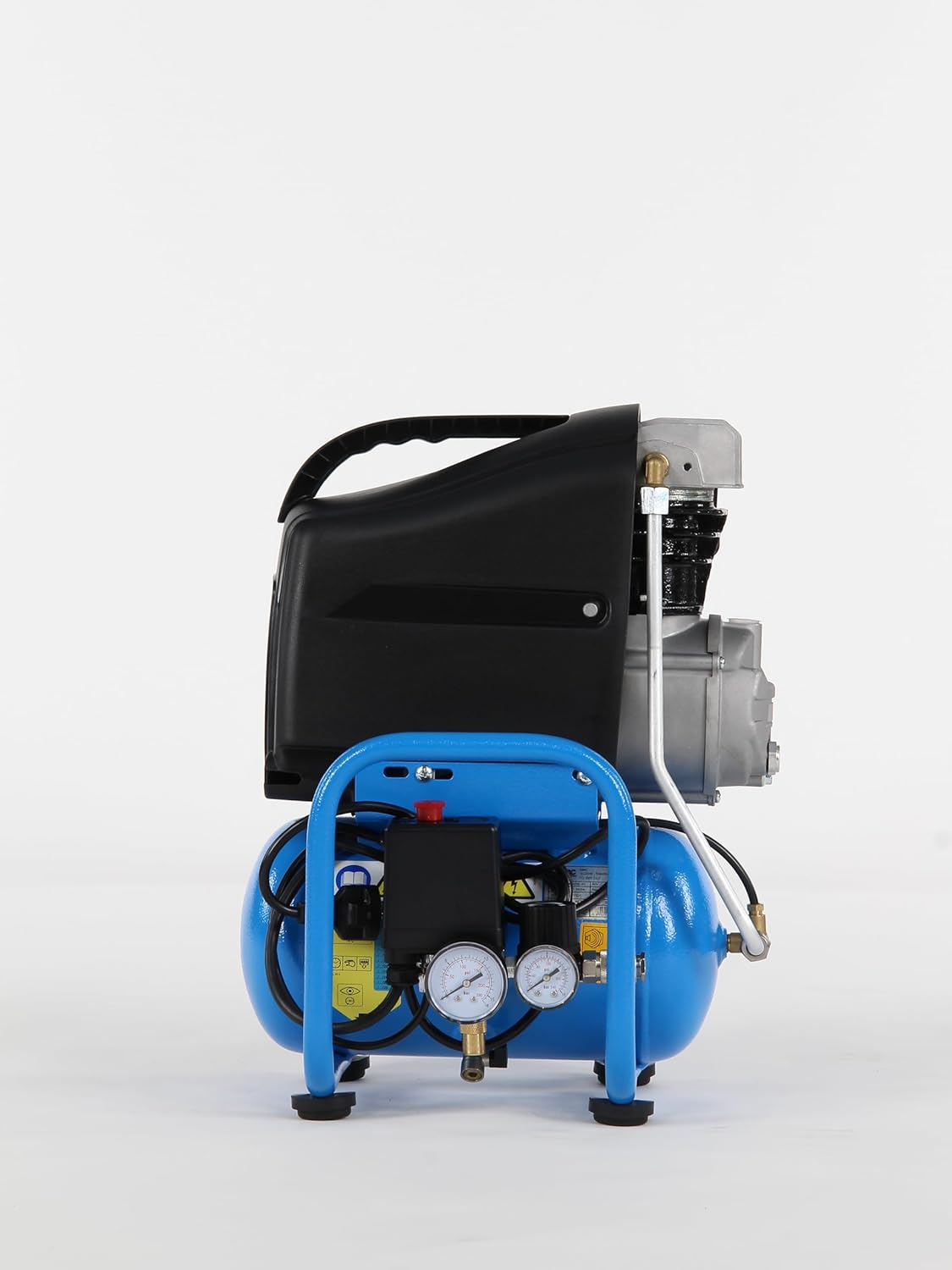
Ọgụgụ 2: N'azụ view of the compressor, highlighting the control panel with dual pressure gauges for monitoring tank and output pressure.
4. Nhazi
- Iwepu: Carefully remove the compressor from its packaging. Inspect for any shipping damage. Report any damage to your supplier immediately.
- Nkwanye: Place the compressor on a firm, level, and stable surface. Ensure there is adequate ventilation around the unit to prevent overheating.
- Lelee ọkwa mmanụ: As this is an oil-lubricated compressor, verify the oil level before first use. Refer to the oil sight glass or dipstick (if present) and ensure the oil is within the recommended range. Top up with appropriate compressor oil if necessary.
- Njikọ ike: Connect the power cord to a grounded 230V electrical outlet. Ensure the circuit can handle the compressor's power requirements (2 HP).
- Agba mbụ: Before connecting any tools, turn on the compressor and allow it to build pressure to its maximum (10 bar). Check for any unusual noises or air leaks. Once maximum pressure is reached, the motor should stop.
5. Ntuziaka ọrụ
Soro usoro ndị a maka nchekwa na arụmọrụ dị irè:
- Ike Na: Ensure the compressor is plugged in. Flip the ON/OFF switch to the 'ON' position. The compressor will begin to build pressure.
- Nyochaa Nrụgide: Observe the dual pressure gauges. One gauge indicates the pressure inside the tank, and the other shows the regulated output pressure.
- Adjust Output Pressure: Use the pressure regulator knob (typically located near the output gauge) to set the desired working pressure for your air tool. Turn clockwise to increase pressure, counter-clockwise to decrease.
- Connect Air Tool: Attach your air tool to the quick-connect coupler on the compressor. Ensure a secure connection.
- Ọrụ: Use your air tool as required. The compressor will cycle on and off automatically to maintain the tank pressure.
- Gbanyụọ: When finished, turn the ON/OFF switch to the 'OFF' position.
- ịda mbà n'obi: Disconnect the air tool. Open the air outlet valve or use an air blow gun to release any remaining air pressure from the hose and tank until both gauges read zero.
6. Nlekọta
Regular maintenance ensures the longevity and optimal performance of your ABAC START L20 compressor. The oil-injected configuration facilitates easy and quick maintenance.
- Kwa ụbọchị/Mgbe ojiji ọ bụla gasịrị:
- Drain Condensation: Open the drain valve located at the bottom of the air tank to release accumulated moisture. This prevents rust and extends tank life.
- Weekly/Every 10-20 Operating Hours:
- Lelee ọkwa mmanụ: Verify the oil level using the sight glass or dipstick. Top up with ABAC-recommended compressor oil if needed.
- Lelee nzacha ikuku: Check the air filter for dirt and debris. Clean or replace if necessary to ensure proper airflow and prevent damage to the pump.
- Monthly/Every 50 Operating Hours:
- Mgbanwe mmanụ: Change the compressor oil. Refer to the manufacturer's specifications for the correct type and quantity of oil.
- Nyochaa Hoses na Ngwa: Check all air hoses and connections for wear, cracks, or leaks. Replace any damaged components.

Foto 3: Akụkụ view of the compressor, indicating areas for oil level check and condensation drain valve.
7. Nchọpụta nsogbu
This section addresses common issues you might encounter with your compressor.
| Nsogbu | Ihe nwere ike ime | Ngwọta |
|---|---|---|
| Compressor anaghị ebido | Enweghị ike, sekit mebiri emebi, mgba ọkụ adịghị mma | Check power connection, reset breaker, contact service if switch is faulty. |
| Low air pressure / Slow pressure build-up | Air leak, clogged air filter, worn piston rings | Check all connections for leaks, clean/replace air filter, contact service for internal issues. |
| Oke mkpọtụ ma ọ bụ ịma jijiji | Loose components, insufficient oil, compressor not level | Tighten loose parts, check/add oil, ensure compressor is on a stable, level surface. |
| Moto ahụ na-ekpo oke ọkụ ma gbanyụọ | Poor ventilation, prolonged use, low oil level | Ensure adequate ventilation, allow compressor to cool, check oil level. |
8. Nkọwapụta
Technical specifications for the ABAC START L20 Air Compressor:
- Akara: ABAC
- Nọmba nlereanya: 8020119043080
- Voltage: 230 Volt
- Isi mmalite ike: Igwe ọkụ eletrik
- Ike kacha Ike Ịnyịnya 2 (HP)
- Ike tankị: 6 lita
- Ikike mbugharị ikuku: 220 Liters per minute
- Oke nrụgide: 10 Ogwe
- Ọkwa mkpọtụ: 70 decibel
- Ibu ihe: 15.5 kilogram
- Agba: Acha anụnụ anụnụ
- Ụdị: Kehoraizin
- Ihe: Aluminom
- Eji akwadoro: Tire inflation, Pressure cleaning

Ọgụgụ 4: Akụkụ view of the ABAC START L20 air compressor, showing its height, width, and depth.
9. Akwụkwọ ikike na nkwado
For warranty information, technical assistance, or to purchase replacement parts, please contact ABAC customer service or visit the official ABAC websaịtị. Debe nnata nzụta gị dị ka ihe akaebe nke ịzụrụ ihe maka akwụkwọ ikike ọ bụla.
ABAC is committed to providing durable and high-quality compressed air solutions. For further support, please refer to the contact details provided with your product packaging or on the ABAC official websaịtị.