
DFI Vaginal Health pH Test Strips
DFI Vaginal Health pH Test Strips Instruction Manual
Ngwaahịa gafereview
The DFI Vaginal Health pH Test Strips are designed for monitoring the acidity of the female vaginal environment. These strips can assist in identifying potential pH imbalances that may be associated with conditions such as yeast infections, trichomoniasis, or bacterial infections. Each pack contains 25 test strips for convenient home use.
Ozi nchekwa na akpachapụ anya
- Maka na vitro diagnostic use only. Do not ingest.
- Debe ebe ụmụaka na-apụghị iru.
- Chekwaa n'ebe dị jụụ, kpọrọ nkụ, pụọ na ìhè anyanwụ kpọmkwem na mmiri.
- Do not use if the packaging is damaged or expired.
- Consult a healthcare professional for diagnosis and treatment. These strips are for monitoring purposes and do not replace professional medical advice.
- Zere kọntaktị na anya. N'ihe gbasara kọntaktị, kpochaa ya nke ọma na mmiri.
Melite
No special setup is required. Ensure you have a clean, dry surface to place the test strip after use and a timer for accurate reading.
Ntuziaka ọrụ
Follow these steps for accurate pH testing:
- Nkwadebe: Wash your hands thoroughly with soap and water. Open the test strip container and carefully remove one strip. Immediately close the container to protect the remaining strips from moisture.
- Ngwa: Gently insert the test strip into the vagina, ensuring the reactive pad comes into contact with vaginal fluid. You may use a sterile swab to collect a sample and then apply it to the test strip if direct insertion is uncomfortable or difficult.
- Chere: Remove the strip and wait for 20 sekọnd for the color to develop on the reactive pad.
- Gụọ nsonaazụ: Compare the color of the reactive pad to the color chart provided on the test strip container.
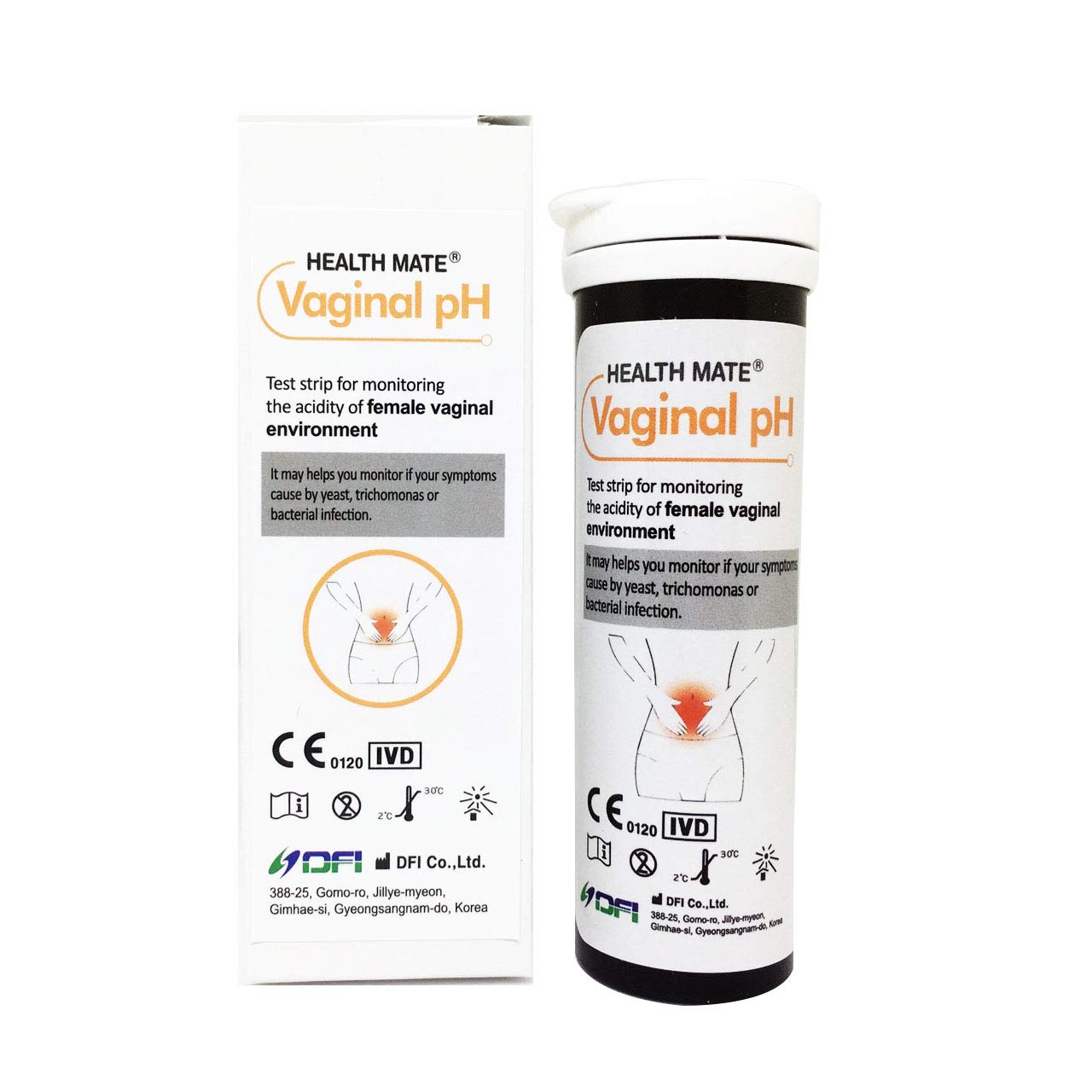
Image: Front and back of the DFI Vaginal Health pH Test Strips packaging. The back displays the pH color chart for result interpretation, ranging from normal (yellow/orange) to abnormal (green/blue).
Nsonaazụ ntụgharị asụsụ
The pH scale on the test strip container indicates different levels of vaginal acidity. A healthy vaginal pH typically falls within the acidic range.
| Uru pH | Nkọwa | Associated Color (Approximate) |
|---|---|---|
| 4.0-4.7 | Nkịtị vaginal pH. | Yellow to light green |
| 5.0-7.0 | Adịghị mma vaginal pH. May indicate an imbalance or infection. | Green to dark blue/purple |
If your results consistently show an abnormal pH, it is recommended to consult a healthcare professional for further evaluation and guidance.
Nlekọta
- Store the test strips in their original sealed container at room temperature (typically 15-30°C or 59-86°F).
- Protect from moisture, heat, and direct sunlight.
- Ejila friji ma ọ bụ ifriizi.
- Ensure the container lid is tightly closed immediately after removing a strip to prevent degradation of remaining strips.
Nchọpụta nsogbu
- No Color Change or Faint Color: Ensure the reactive pad made sufficient contact with vaginal fluid. Re-test with a new strip if necessary.
- Unclear Reading: Make sure to read the result exactly 20 seconds after application. Reading too early or too late may affect accuracy. Ensure good lighting when comparing to the color chart.
- Expired Strips: Always check the expiration date on the container. Expired strips may yield inaccurate results.
- If you have concerns about the accuracy of the test or your vaginal health, consult a healthcare professional.
Nkọwapụta
- Aha ngwaahịa: Vaginal Health pH Test Strips
- Akara: DFI
- Ụdị: Not explicitly stated as a distinct model number, refers to the product type.
- Ọnụọgụ nke mpempe akwụkwọ: 25 kwa ngwugwu
- Ụdị ule: Vaginal pH
- Oge nsonaazụ: Read at 20 seconds
- Onye nrụpụta: ivitamo
- ASIN: B076J14CSL
- Atụmatụ ndị ọzọ: Easy to Use, Instant Result
Akwụkwọ ikike na nkwado
For questions regarding product performance, technical support, or warranty information, please refer to the contact details provided on the product packaging or contact your retailer. Keep your purchase receipt for warranty claims.
Ask a question about this manual
Ask about setup, troubleshooting, compatibility, parts, safety, or missing instructions. Manuals+ will review the question and use this page’s manual context to help answer it.