
1. Okwu mmalite
This manual provides essential information for the safe and efficient operation, maintenance, and troubleshooting of your RURIS DAC 322E Electric Chainsaw. Please read this manual thoroughly before operating the chainsaw to ensure your safety and prolong the life of the tool. Keep this manual in a safe place for future reference.
The RURIS DAC 322E electric chainsaw is designed for construction work or carpentry workshops. It operates on 220V with a 2200W motor. It features a chain brake for emergency stops or chain lock during kickback. The design minimizes vibrations for extended comfortable use.
2. Ozi nchekwa
Operating a chainsaw can be dangerous if proper safety precautions are not followed. Always prioritize safety to prevent serious injury or death.
2.1 Iwu nchekwa izugbe
- Gụọ akwụkwọ ntuziaka a: Ghọta ntuziaka na ịdọ aka ná ntị niile tupu ejiri ya.
- Ngwa nchekwa nkeonwe (PPE): Always wear appropriate PPE, including safety glasses, hearing protection, gloves, safety helmet, and sturdy footwear.
- Mpaghara ọrụ: Keep the work area clear of bystanders, children, and pets. Ensure good lighting and a stable footing.
- Nchekwa Eletriki: Ensure the power cord is in good condition and suitable for outdoor use. Avoid cutting near electrical lines.
- Jikwaa njikwa: Jiri aka abụọ jide chainsaw mgbe niile.
- Mgbochi azụ azụ: Be aware of kickback risks. Avoid cutting with the tip of the guide bar.
- Nlekọta: Regularly inspect and maintain the chainsaw as described in this manual.
- Nchekwa: Debe ihe e ji akwọ chainsaw n'ebe kpọrọ nkụ, nke dị nchebe, ebe ụmụaka na-agaghị eru ya aka.
3. Ngwaahịa gafereview na akụrụngwa
Familiarize yourself with the main parts of your RURIS DAC 322E Electric Chainsaw.

Foto 1: N'ozuzu view of the RURIS DAC 322E Electric Chainsaw, showing the motor housing, handles, guide bar, and chain.

Foto 2: Akụkụ view of the chainsaw, highlighting the chain brake lever and front handle.

Foto 3: Zuru ezu view of the chain and guide bar assembly, showing the cutting teeth and chain tensioning mechanism.

Foto 4: Close-up of the oil reservoir cap located on the top handle, used for filling chain lubricant.
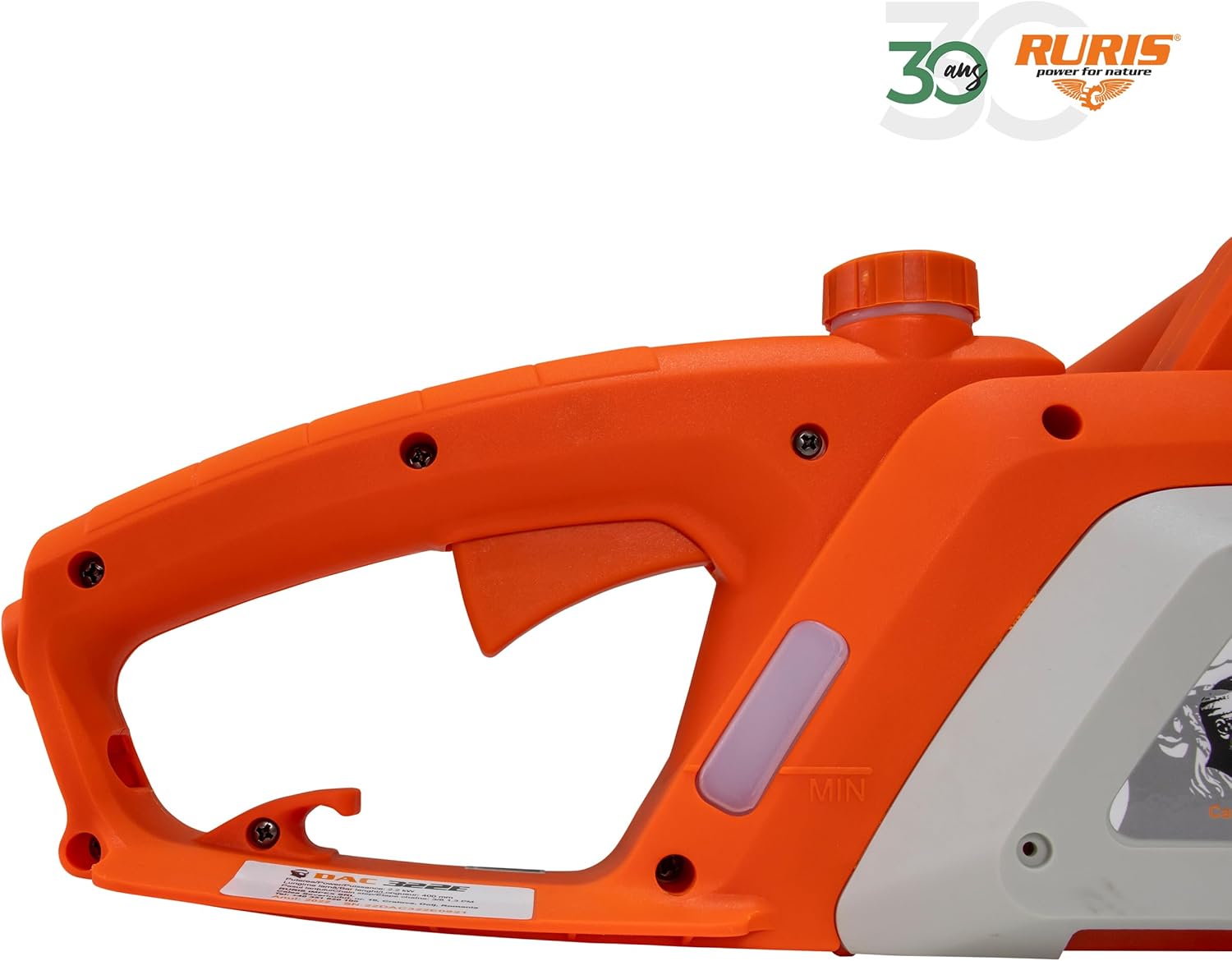
Foto 5: View of the main rear handle with the trigger switch and a visible oil level indicator window.
Isi ihe:
- Ogwe nduzi: Na-akwado ma na-eduzi yinye saw.
- Chain hụrụ: The cutting tool with sharp teeth.
- Brake Chain: Safety device that stops the chain rotation.
- Aka n'ihu: Maka ịrụ ọrụ aka abụọ kwụsiri ike.
- Aka n'azụ: Contains the trigger switch and power cord connection.
- Okpu Nchekwa Mmanụ: Maka ihe na-emeju ihe na-emeju ihe.
- Oil Level Indicator: Shows the amount of chain lubricant remaining.
- Chain Tensioning Screw: Adjusts the chain tension.
4. Nhazi
Before first use, or after maintenance, ensure the chainsaw is correctly assembled and prepared.
4.1 Nduzi Ogwe na Nwụnye Agbụ
- Hụ na ewepụla chainsaw ahụ na isi iyi ike.
- Wepụ mkpuchi agbụ ahụ site n'ịtọpụ mkpụrụ ndị na-ejide ya.
- Place the chain around the sprocket and then into the groove of the guide bar. Ensure the cutting edges of the chain teeth are facing in the correct direction (refer to the arrow on the guide bar or motor housing).
- Fit the guide bar onto the mounting studs, ensuring the chain tensioning pin engages with the hole in the guide bar.
- Replace the chain cover and hand-tighten the retaining nuts.
- Adjust the chain tension using the tensioning screw. The chain should be snug against the guide bar but still able to be pulled freely by hand. There should be no slack on the underside of the guide bar.
- Fully tighten the retaining nuts.
4.2 Filling the Chain Lubricant Reservoir
- Ensure the chainsaw is unplugged and on a stable, level surface.
- Unscrew the oil reservoir cap (see Figure 4).
- Jupụta ebe a na-edebe ihe n'ime ya na mmanụ dị mma. Ejila mmanụ mkpofu ma ọ bụ mmanụ ụgbọala.
- Monitor the oil level using the indicator (see Figure 5).
- Replace the oil cap securely.
5. Ntuziaka ọrụ
Always follow safety guidelines when operating the chainsaw.
5.1 Nlele Tupu Ọrụ
- Lelee nrụgide agbụ ígwè.
- Ensure the oil reservoir is full.
- Nyochaa ụdọ ike maka mmebi.
- Verify the chain brake is functioning correctly.
- Confirm all covers and fasteners are securely in place.
5.2 Ịmalite na Ịkwụsị Ịnyịnya Chainsaw
- Malite: Ensure the chain brake is disengaged (pulled back towards the front handle). Plug the chainsaw into a suitable 220V power outlet. Press the safety lock-off button (if present) and then squeeze the trigger switch to start the motor.
- Nkwụsị: Release the trigger switch. For emergency stops, push the chain brake lever forward to engage the brake.
5.3 Usoro ịkpụ
- Jiri aka abụọ jidesie ike mgbe niile.
- Stand in a balanced position.
- Allow the chain to reach full speed before contacting the wood.
- Zere ịkpụcha ya site n'ọnụ ogwe ntụzi iji gbochie ya ịla azụ.
- Be aware of falling branches and shifting logs.
- When cutting a limb under tension, make an undercut first to prevent pinching.
6. Nlekọta
Nlekọta mgbe niile na-eme ka arụmọrụ kachasị mma ma na-agbatị ndụ nke chainsaw gị.
6.1 Ịkpụcha Agbụ
A sharp chain is crucial for safe and efficient cutting. Sharpen the chain regularly or replace it when dull. Refer to the chain manufacturer's specifications for the correct file nha na akụkụ nkọ.
6.2 Guide Bar Maintenance
- Na-asachapụ oghere mmanya nduzi mgbe niile iji wepụ ahịhịa na irighiri ihe.
- Tụgharịa ogwe ntụzịaka oge ụfọdụ ka ị hụ na ọ ga-eyi.
- Check for burrs on the guide bar rails and file them smooth if present.
6.3 Nhicha na Nchekwa
- Disconnect the chainsaw from power before cleaning.
- Clean the motor housing and air vents with a brush or compressed air.
- Remove sawdust and debris from the chain and guide bar area.
- When storing, ensure the chain is oiled to prevent rust.
- Store the chainsaw in a dry, secure location, away from moisture and extreme temperatures.
7. Nchọpụta nsogbu
This section addresses common issues you might encounter with your RURIS DAC 322E Electric Chainsaw.
| Nsogbu | Ihe nwere ike ime | Ngwọta |
|---|---|---|
| Chainsaw anaghị amalite | Enweghị ọkụ Breeki yinye aka Emebiri ike ụdọ | Check power outlet and connection yinye mgbapụ breeki Nyochaa ma dochie eriri mebiri emebi |
| Agbụ anaghị emegharị | Breeki yinye aka Agbụ nke siri ike Ihe mgbochi | yinye mgbapụ breeki Gbanwee esemokwu agbụ Clear any debris from guide bar and chain |
| Ogbenye ịcha arụmọrụ | Yinye siri ike Esemokwu yinye ezighi ezi Mmanu yinye ezughi oke | Kọwaa ma ọ bụ dochie yinye Gbanwee esemokwu agbụ Fill oil reservoir and check oil flow |
| Chainsaw na-ekpo oke ọkụ | Ọkụ ikuku akpọchiri Ibufe moto ahụ gabiga ókè Yinye siri ike | Igwe ikuku dị ọcha Reduce cutting load, allow motor to cool Kọwaa ma ọ bụ dochie yinye |
| Enweghị mmanu yinye | Empty oil reservoir Blocked oil port Ụdị mmanụ ezighi ezi | Fill oil reservoir Clean oil port Use recommended chain and bar oil |
8. Nkọwapụta
Technical data for the RURIS DAC 322E Electric Chainsaw.
| Nkọwapụta | Uru |
|---|---|
| Onye nrụpụta | RURIS |
| Nọmba Nlereanya ihe | 322e2015 |
| Ụdị isi iyi ike | Igwe ọkụ eletrik |
| Voltage | 220 volts |
| Ike | 2200 Watt |
| Ịnyịnya ike (HP) | 2200 Watt |
| Ogologo Ogwe ndu | 40 cm (implied from product title) |
| Agba | oroma |
| Ibu Ibu | 5.99 kilogram |
| Akụkụ ngwaahịa | 47L x 28W x 20H centimita |
| Batrị(ndị) dị n'ime ya | Mba |
| A chọrọ batrị(ndị) | Mba |
| Nnweta akụkụ mapụtara | Ozi adịghị na akụkụ mapụtara |
9. Akwụkwọ ikike na nkwado
For warranty information, technical support, or to inquire about spare parts, please contact RURIS customer service or your authorized dealer. Keep your purchase receipt as proof of purchase.
Maka ozi ndị ọzọ, ị nwere ike ịga na RURIS brand page.