
1. Ntuziaka nchekwa
Please read these safety instructions carefully before installing or using your appliance. Keep this manual for future reference.
- Nchekwa Eletriki: Ensure the appliance is connected to a properly grounded power outlet. Do not use extension cords or multiple socket adapters. Disconnect the appliance from the power supply before cleaning or maintenance.
- Igwe ikuku: Ensure adequate ventilation around the appliance. Do not block ventilation openings. Insufficient ventilation can lead to overheating and reduced efficiency.
- Ngwa ndị na-ere ọkụ: Echekwala ihe mgbawa dị ka ite aerosol nwere ihe na-ere ọkụ n'ime ngwa a.
- Nchekwa ụmụaka: Ezubere ngwa a maka iji ndị mmadụ (gụnyere ụmụaka) nwere ike anụ ahụ, mmetụta uche ma ọ bụ nke uche, ma ọ bụ enweghị ahụmịhe na ihe ọmụma, ma ọ bụrụ na enyereghị ha nlekọta ma ọ bụ ntụziaka gbasara iji ngwa ahụ site n'aka onye na-ahụ maka nchekwa ha. Ekwesịrị ilekọta ụmụaka ka ha hụ na ha ejighi ngwa eji egwu egwu egwu.
- Ijikwa: When moving the appliance, always lift it by the base or sides. Avoid tilting it more than 45 degrees. After transport, allow the appliance to stand upright for at least 2-4 hours before plugging it in to allow the refrigerant to settle.
2. Ngwaahịa gafereview
The Inventum KK550 is a compact, freestanding refrigerator designed for efficient food storage. It features a single door and a total capacity of 133 liters, making it suitable for small households or as an auxiliary cooling unit.
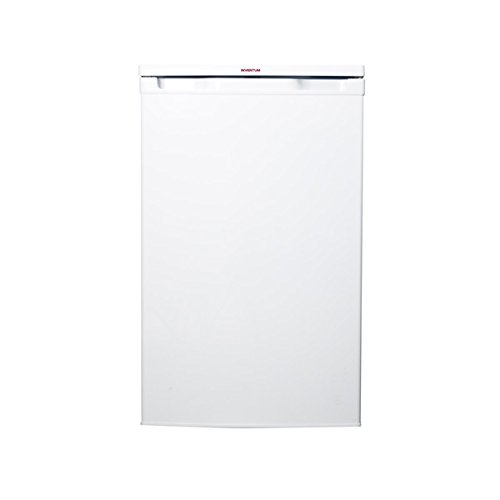
Foto nke 1: N'ihu view of the Inventum KK550 freestanding refrigerator. The appliance is white with a single door and a top-mounted control panel area.
Isi ihe dị mkpa na-agụnyekarị:
- Ọkpọ oku njikwa okpomọkụ
- shelves na-agbanwe agbanwe
- Ụlọ nchekwa ọnụ ụzọ
- Crisper drawer (if applicable)
3. Nhazi
3.1 Nwepu
- Wepu ihe nkwakọ ngwaahịa niile, gụnyere ụfụfụ na teepu nrapado.
- Inspect the appliance for any transport damage. If damaged, do not plug it in and contact your retailer.
- Debe ihe nkwakọ ngwaahịa ebe ụmụaka na-apụghị iru.
3.2 Ntinye
- Place the refrigerator on a firm, level surface away from direct sunlight, heat sources (e.g., oven, radiator), and extreme cold.
- Ensure there is at least 10 cm (4 inches) of space at the back and sides for proper air circulation.
- Adjust the leveling feet at the bottom of the appliance to ensure it is stable and level.
3.3 Ojiji mbụ
- Before plugging in, clean the interior of the refrigerator with a damp ákwà na ihe dị nro. Kpọọ nke ọma.
- After cleaning, allow the appliance to stand for at least 2-4 hours before connecting it to the power supply. This allows the refrigerant to stabilize.
- Plug the refrigerator into a dedicated, grounded power outlet.
- Set the temperature control to a medium setting and allow the refrigerator to cool for several hours (e.g., 4-6 hours) before placing food inside.
4. .rụ ọrụ
4.1 Njikwa okpomọkụ
The temperature inside the refrigerator is controlled by a thermostat dial, usually located inside the appliance. The dial typically has settings from 1 (warmest) to 5 or 7 (coldest), or a similar scale. Adjust the dial to achieve the desired cooling level.
- Ntọala akwadoro: For general use, a medium setting (e.g., 3 or 4) is often sufficient.
- Ịgbanwe: Turn the dial towards a higher number for colder temperatures and towards a lower number for warmer temperatures. Allow several hours for the temperature to stabilize after adjustment.
4.2 Ntuziaka nchekwa nri
- Ebufeela ibu: Avoid packing food too tightly, as this can restrict air circulation and reduce cooling efficiency.
- Cover food: Always cover food to prevent drying out and odor transfer.
- Hot food: Allow hot food to cool down to room temperature before placing it in the refrigerator to avoid increasing the internal temperature and energy consumption.
- Door storage: Use door shelves for items that require less critical cooling, such as condiments and drinks.
5. Nlekọta
5.1 Nhicha
Ịsacha mgbe niile na-enyere aka ịnọgide na-adị ọcha ma na-arụ ọrụ nke ọma.
- Tupu ihicha: Kwụpụ ihe nkwụnye ọkụ eletrik mgbe niile.
- Ime: Clean the interior with a solution of warm water and a mild, non-abrasive detergent. Rinse with clean water and dry thoroughly. Do not use harsh chemicals or abrasive cleaners.
- Mputa: Jiri nwayọ hichaa elu mpụta, damp ákwà. Maka ntụpọ siri ike, jiri ihe nhicha dị nro.
- Akara ọnụ ụzọ: Na-ehicha gasket ọnụ ụzọ mgbe niile iji hụ na e nwere mkpọchi siri ike.
5.2 Na-ekpochapụ
This refrigerator model typically requires manual defrosting when ice buildup on the evaporator reaches approximately 5 mm (0.2 inches) thick.
- Nkwadebe: Unplug the refrigerator. Remove all food items and place them in a cooler. Remove all shelves and drawers.
- Na-ekpochapu: Leave the refrigerator door open. Place towels on the floor to catch melting ice. You can speed up the process by placing bowls of hot water inside (do not use sharp objects to chip ice).
- Mgbe ewepụsịrị: Clean and dry the interior thoroughly. Replace shelves and drawers. Plug the refrigerator back in and allow it to cool for a few hours before returning food.
5.3 Ike gịtage
Ọ bụrụ na ike gịtage, keep the refrigerator door closed as much as possible to maintain the internal temperature. Food should remain safe for several hours depending on the ambient temperature and how full the refrigerator is.
6. Nchọpụta nsogbu
Tupu ịkpọtụrụ ọrụ ndị ahịa, biko lelee nsogbu na azịza ndị a na-ahụkarị:
| Nsogbu | Ihe nwere ike ime | Ngwọta |
|---|---|---|
| Igwe nju oyi anaghị arụ ọrụ. | Enweghị ọkụ ọkụ; eriri ọkụ anaghị etinye ya; fuse fụrụ. | Lelee njikọ ike; lelee fiusi/circuit breaker. |
| Igwe nju oyi adịghị oyi nke ukwuu. | Temperature setting too high; door opened too frequently; door not closed properly; excessive food load; poor ventilation. | Adjust temperature setting; ensure door is closed tightly; reduce food load; ensure adequate space around the appliance. |
| Mkpọtụ na-adịghị ahụkebe. | Ngwaọrụ anaghị adị larịị; ihe ndị na-ama jijiji megide ngwaọrụ ahụ; ụda ọrụ nkịtị (compressor, refrigerant fridge). | Adjust leveling feet; ensure no objects are touching the appliance; normal operating sounds are expected. |
| Mmiri na ala. | Drain hole blocked; defrost water overflowing. | Clear the drain hole; ensure proper defrosting procedure is followed. |
7. Nkọwapụta
| Njirimara | Nkọwapụta |
|---|---|
| Nlereanya | KK550 |
| Ụdị | Igwe nju oyi friza |
| Ike | 133 lita |
| Akụkụ ngwaahịa (W x D x H) | 55 x 58 x 85 cm |
| ASIN | B014PIB9ZM |
| Date of First Availability | Ọnwa Isii 11, 2022 |
8. Akwụkwọ ikike na nkwado
Warranty information for the Inventum KK550 refrigerator is typically provided with the purchase documentation or can be found on the manufacturer's official websaịtị. Biko dowe ihe akaebe nke ịzụrụ ihe maka akwụkwọ ikike.
For technical support, spare parts, or service requests, please contact Inventum customer service directly. Contact details can usually be found on the product packaging, the manufacturer's website, or your purchase invoice.