
Casella CEL-246/K1
Casella CEL-246/K1 Digital Logging Integrating Sound Level Meter Type 2 Kit User Manual
Model: CEL-246/K1
Brand: Casella
1. Okwu mmalite
This manual provides comprehensive instructions for the proper use, setup, operation, and maintenance of the Casella CEL-246/K1 Digital Logging Integrating Sound Level Meter Type 2 Kit. This device is designed for precise sound level measurements, incorporating Digital Signal Processing (DSP) technology for accurate and reliable data.
The CEL-246/K1 offers a wide measurement range, selectable frequency weightings (A and C), and time responses (Slow, Fast, Impulse). It features a non-decaying maximum hold function and a clear display showing current, highest, and average noise levels, along with a time history trend. Data logging capabilities are available via a USB output port.
2. Gịnị gụnyere
The Casella CEL-246/K1 Kit includes the following components:
- One (1) Casella CEL-246/K1 Sound Level Meter
- One (1) Acoustic Calibrator
- One (1) Foam Windscreen
- Otu (1) Akpa na-ebu
- One (1) Calibration Certificate
- Three (3) AA Batteries
3. Nhazi
3.1 Ntinye batrị
- Locate the battery compartment on the rear of the sound level meter.
- Mepee mkpuchi ụlọ.
- Insert three (3) AA batteries, ensuring correct polarity (+/-).
- Mechie mkpuchi nke batrị batrị nke ọma.
3.2 Attaching the Foam Windscreen
Gently slide the foam windscreen over the microphone at the top of the sound level meter. This helps to reduce wind noise during outdoor measurements.
3.3 Ike mbido
Press the power button to turn on the device. The display will illuminate, showing the current measurement mode and readings.
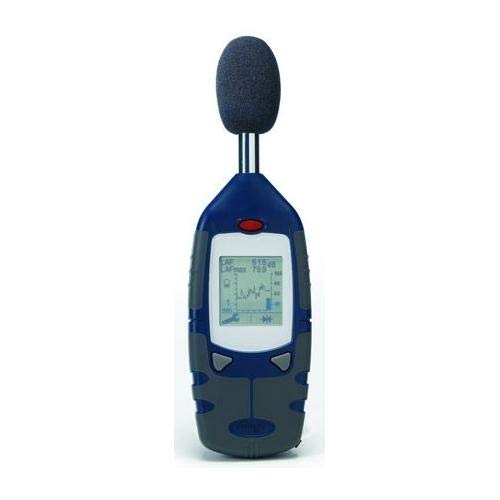
An image showing the Casella CEL-246/K1 Digital Logging Integrating Sound Level Meter. The device is blue and grey, with a display screen showing measurement data and a graph. A black foam windscreen is attached to the top microphone.
4. Ntuziaka ọrụ
4.1 Basic Arụmọrụ
The CEL-246/K1 features simple two-button operation for ease of use. Refer to the on-screen prompts and the full user guide for detailed button functions.
4.2 Frequency Weighting
The meter supports two frequency weighting scales:
- A-Weighting: Attenuates lower frequencies to approximate the human ear's response, which is most sensitive between 3000 and 4000 Hz. Use for general noise measurements.
- C-Weighting: Reads all frequencies more uniformly, providing a better response to higher frequencies than A-weighting. Useful for pinpointing problems when A-weighted readings are very high.
4.3 Time Weighting
Selectable time responses include:
- Nwayọọ: Provides a slower response, suitable for measuring steady noise levels.
- Ọsọ: Offers a quicker response, ideal for capturing fluctuating noise levels.
- Mkpali: Designed for very short, sharp noise events.
4.4 Maximum Hold Feature
The non-decaying maximum hold feature captures and displays the highest sound pressure level detected until manually reset. This is useful for identifying peak noise events.
4.5 Data Logging and USB Output
The meter includes a USB output port for simple data logging. Connect the device to a PC to download stored data or for real-time data analysis using the optional software package. Data can be exported in spreadsheet format for further analysis.
4.6 Auto Calibration
The CEL-246/K1 supports auto calibration at a selected decibel level using the included acoustic calibrator. Refer to the full user guide for detailed calibration procedures to ensure measurement accuracy.
5. Nlekọta
5.1 Nhicha
Wipe the meter's exterior with a soft, dry cloth. Do not use abrasive cleaners or solvents. Ensure no moisture enters the device.
5.2 nnọchi batrị
Replace batteries when the low battery indicator appears on the display. Always use three (3) new AA batteries of the same type.
5.3 Nchekwa
When not in use for extended periods, remove the batteries to prevent leakage. Store the meter in its carrying case in a cool, dry place, away from direct sunlight and extreme temperatures.
5.4 nhazi nhazi
Regular calibration is crucial for maintaining measurement accuracy. Use the provided acoustic calibrator according to the instructions in Section 4.6 and the full user guide. It is recommended to calibrate the device before each critical measurement session.
6. Nchọpụta nsogbu
6.1 Meter Not Powering On
- Check if the batteries are correctly inserted with proper polarity.
- Jiri batrị AA ọhụrụ dochie.
- Gbaa mbọ hụ na ịpịrị bọtịnụ ike nke ọma.
6.2 Ọgụgụ na-ezighi ezi
- Perform an auto calibration using the acoustic calibrator.
- Ensure the foam windscreen is properly attached to minimize wind noise.
- Verify that the correct frequency (A or C) and time weighting (Slow, Fast, Impulse) are selected for your measurement environment.
- Check for any physical damage to the microphone or device.
6.3 Data Logging Issues
- Ensure the USB cable is securely connected to both the meter and the PC.
- Verify that the necessary software drivers are installed on your PC.
- Consult the software manual for specific data transfer instructions.
7. Nkọwapụta
| Njirimara | Nkọwapụta |
|---|---|
| Nọmba nlereanya | CEL-246/K1 |
| Oke nha | 30 ruo 130 dB |
| Ugboro ugboro Ibu ibu | A ma ọ bụ C |
| Ogologo oge | Slow, Fast, Impulse |
| Ngosipụta | Current, Highest, Average Noise Level, Time History Trend |
| Mmepụta Port | USB for data logging |
| Isi Iyi Ike | 3 x AA batrị |
| Akụkụ ngwugwu | 17 x 12.5 x 4 sentimita asatọ |
| Ibu ngwugwu | 3.9 pound |
| Mba onye si | United Kingdom |
| Onye nrụpụta | Cole-Parmer |
8. Akwụkwọ ikike na nkwado
For warranty information and technical support, please refer to the documentation provided with your purchase or contact Casella customer service directly. Keep your purchase receipt as proof of purchase.
Manufacturer: Cole-Parmer
Ask a question about this manual
Ask about setup, troubleshooting, compatibility, parts, safety, or missing instructions. Manuals+ will review the question and use this page’s manual context to help answer it.