
1. Okwu mmalite
Thank you for choosing the Microlife BP A80 Semi-automatic Upper Arm Blood Pressure Monitor. This device is designed for accurate and reliable measurement of blood pressure in adults. Please read this instruction manual thoroughly before using the device to ensure safe and correct operation. Keep this manual for future reference.
2. Ozi nchekwa dị mkpa
- Consult your doctor before using this device if you have any medical conditions.
- Do not self-diagnose or self-medicate based on blood pressure measurements. Always consult a healthcare professional.
- This device is not suitable for use on infants, children, or pregnant women without medical advice.
- Ejila ngwaọrụ ahụ n'ime ụgbọala na-agagharị ma ọ bụ n'ụgbọelu.
- Debe ngwaọrụ ahụ na ihe ndị dị na ya ka ụmụaka ghara iru ya aka.
- Use only Microlife-approved cuffs and accessories.
- Avoid strong electromagnetic fields, such as those near mobile phones or microwave ovens, during use.
3. Ngwaahịa gafereview
Familiarize yourself with the components of your Microlife BP A80 blood pressure monitor:

Foto 1: Microlife BP A80 Blood Pressure Monitor showing the main unit, display, power button, cuff, and inflation bulb.
- Isi ngalaba: Contains the electronics and display.
- Ngosipụta: Shows blood pressure readings (systolic, diastolic, pulse) and other indicators.
- Bọtịnụ ike: A na-eji ya agbanyụọ ma gbanyụọ ngwaọrụ ahụ.
- Cuff: Applied to the upper arm for measurement.
- Inflation Bulb: Used to manually inflate the cuff.
- Cuff Connector: Port on the main unit for connecting the cuff tube.
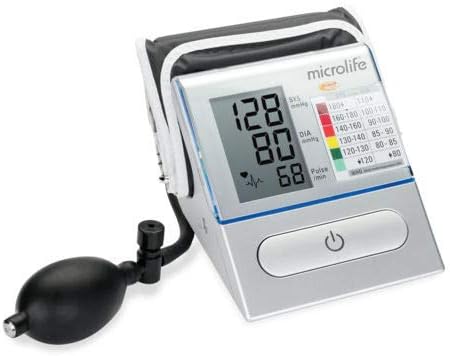
Foto 2: Zuru ezu view of the Microlife BP A80 display, highlighting the blood pressure values (systolic, diastolic, pulse) and the integrated WHO blood pressure classification indicator.
4. Nhazi
4.1. Ntinye batrị
- Open the battery compartment cover located on the bottom or back of the device.
- Insert four 1.5V AA batteries, ensuring correct polarity (+/-) as indicated inside the compartment.
- Mechie mkpuchi nke batrị batrị nke ọma.
- If the battery symbol appears on the display, replace all batteries.
4.2. Na-ejikọta Cuff
- Insert the air tube connector of the cuff firmly into the cuff socket on the left side of the monitor.
- Hụ na njikọ ahụ dị nchebe iji gbochie ikuku na-agbapụta n'oge nha.
5. Ntuziaka ọrụ
5.1. Before Measurement
- Avoid eating, smoking, or exercising for at least 30 minutes before measurement.
- Rest for 5-10 minutes in a quiet environment before taking a measurement.
- Sit comfortably with your back supported and feet flat on the floor. Do not cross your legs.
- Tinye ogwe aka gị n'elu larịị ka cuff wee nọrọ n'ogo obi.
- Wepụ uwe dabara adaba na ogwe aka elu gị.
5.2. Na-etinye Cuff
- Place the cuff on your bare upper arm, approximately 2-3 cm above the elbow joint.
- Ensure the artery mark on the cuff aligns with your brachial artery (on the inside of your arm).
- Wrap the cuff snugly around your arm, but not too tightly. You should be able to insert two fingers between the cuff and your arm.
5.3. Iwere nha
- Pịa Gbanye/ Gbanyụọ button to turn on the monitor. The display will show all segments briefly.
- Once the display shows "0", begin inflating the cuff by repeatedly squeezing the inflation bulb.
- Inflate the cuff until the pressure displayed is about 30 mmHg higher than your usual systolic pressure. If you don't know your usual pressure, inflate to 180-200 mmHg.
- Stop inflating. The device will automatically deflate the cuff slowly and measure your blood pressure.
- Once the measurement is complete, your systolic pressure, diastolic pressure, and pulse rate will be displayed.
- Pịa Gbanye/ Gbanyụọ button to turn off the device. If you forget, it will automatically shut off after approximately 1 minute.
6. Ịghọta Ihe Ọgụgụ Gị
Your blood pressure monitor displays three values:
- Systolic Pressure (SYS): The top number, indicating the pressure when your heart beats.
- Diastolic Pressure (DIA): The bottom number, indicating the pressure when your heart rests between beats.
- Pulse ọnụego: Your heart rate per minute.
The Microlife BP A80 also features a WHO (World Health Organization) blood pressure classification indicator on the display, which uses a color scale to help you interpret your readings:
| Otu | Systolic (mmHg) | Diastolic (mmHg) | Agba egosi |
|---|---|---|---|
| Kachasị mma | < 120 | < 80 | Akwụkwọ ndụ akwụkwọ ndụ |
| Nkịtị | 120-129 | 80-84 | Green dị ọkụ |
| Elu Nkịtị | 130-139 | 85-89 | Odo |
| Ọbara mgbali elu 1 | 140-159 | 90-99 | oroma |
| Ọbara mgbali elu 2 | 160-179 | 100-109 | Uhie |
| Ọbara mgbali elu 3 | ≥ 180 | ≥ 110 | Uhie gbara ọchịchịrị |
Note: This classification is a general guideline. Always consult your doctor for interpretation of your blood pressure readings.
7. Nlekọta
7.1. Nhicha
- Clean the monitor and cuff gently with a soft, dry cloth.
- Ọ bụrụ na ọ dị mkpa, jiri ákwà dị nro.ampened with water or a mild detergent. Do not use abrasive cleaners or solvents.
- Do not immerse the device or cuff in water.
7.2. Nchekwa
- Store the device and cuff in a clean, dry place, away from direct sunlight and extreme temperatures.
- Ọ bụrụ na a gaghị eji ngwaọrụ ahụ ruo ogologo oge, wepụ batrị ndị ahụ iji gbochie mmiri ịpụpụta.
- Zere idobe ma ọ bụ idobe ngwaọrụ ahụ na mmetụta siri ike.
8. Nchọpụta nsogbu
If you encounter any issues with your Microlife BP A80, please refer to the following table:
| Nsogbu | Ihe nwere ike ime | Ngwọta |
|---|---|---|
| Ngwaọrụ anaghị agbanwu. | Akwụsịla batrị ma ọ bụ tinye na ezighi ezi. | Dochie batrị ọhụrụ, na-ahụ na polarity ziri ezi. |
| "E1" or "Error" displayed. | Ejikọghị klọf ahụ nke ọma ma ọ bụ ikuku na-agbapụta. | Check cuff connection. Re-apply cuff snugly. |
| "E2" displayed. | Movement during measurement or irregular pulse. | Remain still and quiet during measurement. Repeat measurement after a few minutes. |
| Ọgụgụ na-ekwekọghị ekwekọ. | Improper cuff placement, incorrect body position, or external factors. | Ensure correct cuff placement and body posture. Avoid talking or moving. Take multiple readings at different times. |
If the problem persists, contact Microlife customer support.
9. Nkọwapụta
- Ụdị: BP A80
- Ụzọ nha: Oscillometric
- Oke nha:
- Blood Pressure: 20-280 mmHg
- Pulse: 40-200 beats per minute
- izi ezi:
- Blood Pressure: ±3 mmHg
- Pulse: ± 5% nke ọgụgụ
- Isi mmalite ike: 4 x 1.5 V AA batrị
- Ụdị ngosi: LCD
- Akụkụ: Approximately 16.5 x 16 x 10 cm (as per package dimensions, actual device may vary slightly)
- Arọ: Approximately 600 grams (including batteries, as per package weight)
- Ọnọdụ ọrụ: 10-40 °C (50-104 °F), 15-95% relative humidity non-condensing
- Ọnọdụ Nchekwa: -20-55 °C (-4-131 °F), 15-95% relative humidity non-condensing
- International Article Code (EAN): 04719003310080
10. Akwụkwọ ikike na nkwado
Microlife products are manufactured to the highest quality standards. For detailed warranty information specific to your region, please refer to the warranty card included with your product or visit the official Microlife websaịtị.
For technical support, troubleshooting assistance, or to inquire about replacement parts, please contact Microlife customer service. Contact details can typically be found on the Microlife websaịtị ma ọ bụ na nkwakọ ngwaahịa.
Websaịtị: www.microlife.com