
1. Okwu mmalite
Thank you for choosing the PORTER-CABLE 20V MAX Reciprocating Saw (PCC670B). This powerful cordless tool is designed for aggressive cutting applications across various materials. This manual provides essential information for safe operation, proper maintenance, and optimal performance of your reciprocating saw. Please read all instructions carefully before use.
2. Ntuziaka nchekwa n'ozuzu
Ịdọ aka ná ntị: Gụọ ịdọ aka ná ntị nchekwa niile, ntuziaka, nkọwa na nkọwapụta enyere na ngwa ike a. Ọdịda ịgbaso ntuziaka niile edepụtara n'okpuru nwere ike bute ujo ọkụ eletrik, ọkụ na/ma ọ bụ mmerụ ahụ dị egwu.
- Always wear eye protection, such as safety glasses or goggles, and hearing protection when operating power tools.
- Debe ebe a na-arụ ọrụ ọcha na ọkụ nke ọma. Ebe mgbagwoju anya ma ọ bụ ọchịchịrị na-akpọ ihe mberede.
- Ejila ngwaọrụ ike rụọ ọrụ n'ime ikuku mgbawa, dị ka n'ihu mmiri ọkụ, gas, ma ọ bụ uzuzu.
- Chebe ụmụaka na ndị na-ekiri ebe ha na-arụ ọrụ ike. Ihe ndọpụ uche nwere ike ime ka ị kwụsị ịchịkwa.
- Yi uwe nke ọma. Ejila uwe na-adịghị mma ma ọ bụ ọla. Debe ntutu gị na uwe gị ka ọ ghara imegharị akụkụ ahụ.
- Avoid accidental starting. Ensure the switch is in the off-position before connecting to a battery pack, picking up, or carrying the tool.
- Emechala oke. Debe ụkwụ kwesịrị ekwesị na nguzozi mgbe niile.
- Use the correct power tool for your application. Do not force the tool.
- Kwụpụ ngwugwu batrị na ngwa ike tupu ime mgbanwe ọ bụla, ịgbanwe ngwa ma ọ bụ ichekwa ngwa ike.
- Nọgide na -enwe ngwaọrụ ike. Lelee maka ndọtị ma ọ bụ njigide nke akụkụ na -akpụ akpụ, mmebi nke akụkụ, yana ọnọdụ ọ bụla ọzọ nwere ike imetụta ọrụ ngwa ike.
3. Ngwa na atụmatụ
Familiarize yourself with the parts of your PORTER-CABLE reciprocating saw for safe and effective use.

This image highlights the key features of the PORTER-CABLE 20V MAX Reciprocating Saw, including its tool-free blade release for quick changes, a pivoting shoe for consistent material contact, a high-performance drivetrain, a comfortable contoured handle, and a variable speed trigger for precise control.
- Tool-Free Blade Release: Allows for quick and easy blade changes without additional tools.
- Pivoting Shoe: Helps maintain constant contact with the material being cut, improving stability and control.
- High Performance Drivetrain: Delivers a 1-inch stroke length and 0-3,000 SPM (strokes per minute) for aggressive cutting speed.
- Contoured Overmolded Handle: Designed for enhanced comfort and grip during extended use.
- Mkpalite ọsọ na-agbanwe agbanwe: Provides greater control over cutting speed, allowing adjustment for different materials and applications.
4. Nhazi
4.1. Ntinye batrị
The PORTER-CABLE PCC670B is a tool-only unit. A 20V MAX lithium-ion battery and charger (sold separately) are required for operation.
- Ensure the saw's trigger is in the OFF position.
- Dozie ngwugwu batrị ahụ na ọdụ ụgbọ mmiri batrị na ngwaọrụ ahụ.
- Manye ngwungwu batrị n'ime ngwá ọrụ ahụ ruo mgbe ọ pịrị na ebe nchekwa.
- Iji wepụ batrị ahụ, pịa bọtịnụ ntọhapụ dị na ngwugwu batrị wee wepụ ya.
4.2. Nwụnye na mwepụ agụba
This saw features a tool-free blade release for quick and easy blade changes.
- To Install a Blade: Tụgharịa agụba clamp collar counter-clockwise. Insert the blade shank fully into the clamp. Release the collar to secure the blade. Tug on the blade to ensure it is firmly seated.
- To Remove a Blade: Tụgharịa agụba clamp collar counter-clockwise. The blade will release.
This video demonstrates the process of installing and removing blades from a reciprocating saw, adjusting the shoe angle, and operating the variable speed trigger. It also shows the saw cutting through various materials like wood, plastic, and metal.
5. Ọrụ
5.1. Mmalite na ịkwụsị
- To start the saw, depress the variable speed trigger.
- To stop the saw, release the variable speed trigger.
- The variable speed trigger allows you to control the cutting speed by varying the pressure applied.
A hand is shown adjusting the variable speed trigger of the PORTER-CABLE reciprocating saw, illustrating the control available for different cutting applications.
5.2. Usoro ịkpụcha
- Mkpụcha izugbe: Hold the saw firmly with both hands. Place the pivoting shoe against the workpiece. Depress the trigger and allow the blade to reach full speed before engaging the material. Apply steady, even pressure.
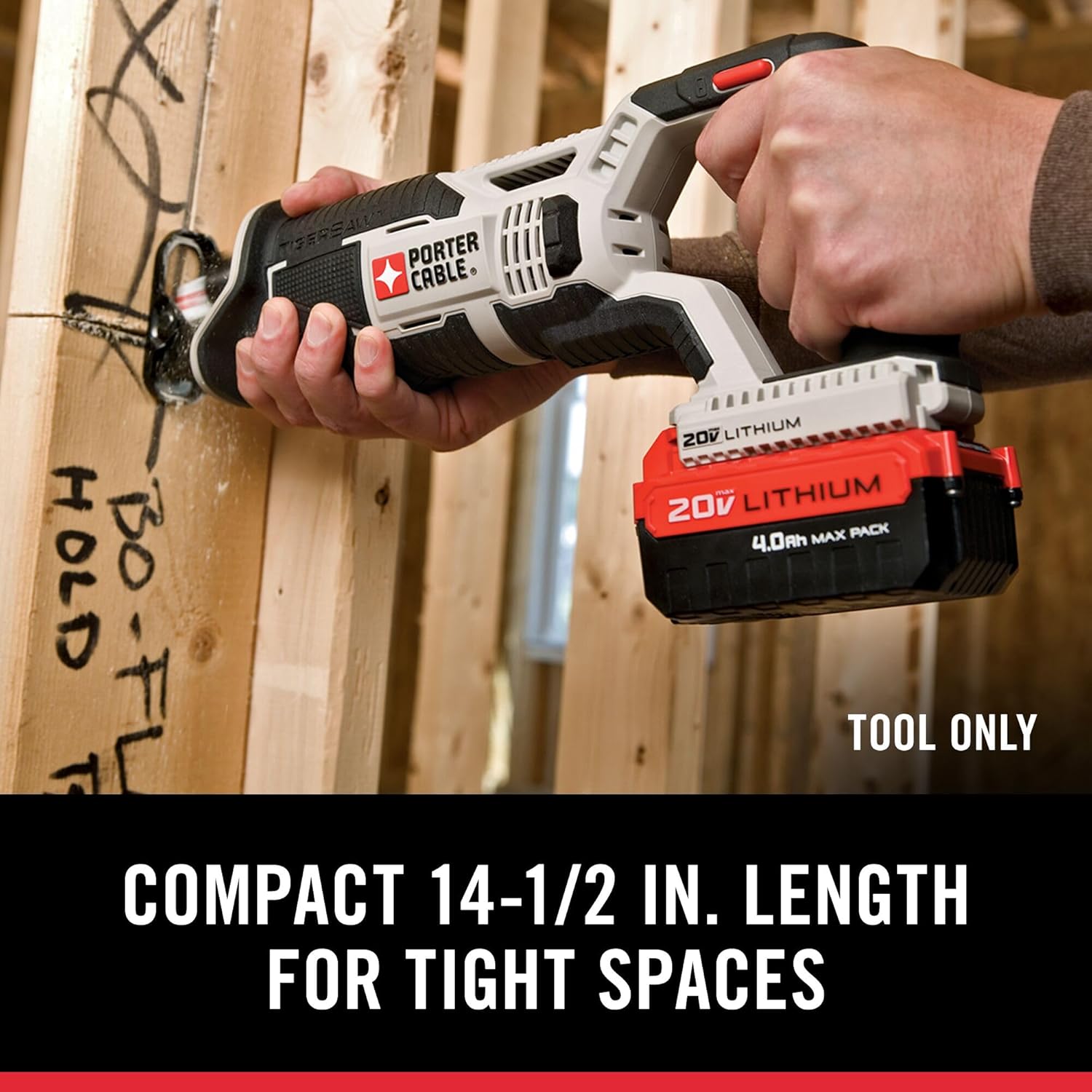
- Cutting in Tight Spaces: The saw's compact 14.5-inch length allows access to confined areas. Ensure adequate clearance around the blade and tool body.
- Pivoting Shoe: Utilize the pivoting shoe to maintain consistent contact with the material, especially on irregular surfaces, for improved stability and reduced vibration.

A user demonstrates cutting into a wooden wall stud with the PORTER-CABLE reciprocating saw, showcasing its application in construction or demolition tasks.

Nchikota a view shows the PORTER-CABLE reciprocating saw in action, cutting through a wooden beam. The image emphasizes the tool's compact design, allowing access to confined spaces.

The pivoting shoe of the PORTER-CABLE reciprocating saw is shown maintaining constant contact with the material, which helps stabilize the saw during cutting operations.
6. Nlekọta
6.1. Nhicha
- Keep the tool's air vents clean to prevent overheating.
- Use a clean cloth to wipe down the tool. Do not use solvents or harsh chemicals.
- Regularly remove sawdust and debris from the blade clamp mpaghara.
6.2. Nlekọta agụba
- Always use sharp, undamaged blades appropriate for the material being cut.
- Replace dull or bent blades immediately to ensure efficient cutting and prevent strain on the tool.
7. Nchọpụta nsogbu
| Nsogbu | Ihe nwere ike ime | Ngwọta |
|---|---|---|
| Saw anaghị amalite. | Achajighị batrị ma ọ bụ tinye ya na-ezighi ezi. | Gbaa mbọ hụ na chajịrị batrị zuru oke na itinye ya nke ọma ruo mgbe ọ pịrị. |
| Mbelata arụmọrụ ịkpụ. | Mpempe akwụkwọ na-ezighi ezi ma ọ bụ na-ezighi ezi maka ngwa ahụ. | Replace with a sharp blade suitable for the material. |
| Oke ịma jijiji. | agụba tọgbọrọ chakoo ma ọ bụ agụba mebiri emebi. | Check blade for secure installation and damage. Replace if necessary. |
8. Nkọwapụta
| Njirimara | Nkọwa |
|---|---|
| Nọmba nlereanya | PCC670B |
| Voltage | 20 Volts MAX (Battery sold separately) |
| Ogologo ọrịa strok | 1 inch |
| Ọrịa strok kwa nkeji (SPM) | 0-3,000 |
| Ogologo Ngwaọrụ | 14.5 sentimita (36.83 cm) |
| Ibu (Naanị Ngwá Ọrụ) | 3.75 lbs (1.7 n'arọ) |
| Isi Iyi Ike | Akwanyere batrị |
| Ihe agụba | High-Speed Steel (typical for included blade, varies by accessory) |
| Atụmatụ pụrụ iche | Variable Speed, Tool-Free Blade Release, Pivoting Shoe |
9. Akwụkwọ ikike na nkwado
For warranty information, technical support, or to purchase replacement parts and accessories, please refer to the official PORTER-CABLE websaịtị ma ọ bụ kpọtụrụ ngalaba ọrụ ndị ahịa ha. Debe nnata nzụta gị ka ihe akaebe nke ịzụrụ.