
Phanteks PH-ES813P_BL
Phanteks Enthoo Series Primo Ultimate Full Tower Computer Case User Manual
Model: PH-ES813P_BL
Okwu mmalite
The Phanteks Enthoo Primo is a full tower computer case designed for enthusiasts seeking exceptional cooling possibilities and functional design. This manual provides detailed instructions for setting up, operating, maintaining, and troubleshooting your Enthoo Primo case, ensuring optimal performance and longevity.

Figure 1: Phanteks Enthoo Primo Ultimate Full Tower Computer Case (Black/Blue)
Ntọala na nwụnye
Proper installation is crucial for the performance and stability of your system. Follow these steps carefully.
1. Nrụnye Ike Ike (PSU).
The Enthoo Primo features a unique thermally isolated PSU location at the rear of the case, promoting cooler temperatures and improved cable management.
- Locate the PSU compartment at the bottom rear of the case.
- Slide your PSU into the designated area.
- Secure the PSU with the provided screws from the rear of the case.
Video 1: Animated demonstration of internal case features, including PSU placement, HDD trays, and cable management. This video highlights the thermally isolated PSU location and hidden cable routing.

Ọgụgụ 2: N'azụ view of the Enthoo Primo case, showing the PSU mounting area at the bottom.
2. Drive Installation (HDD/SSD)
The case supports up to 6 HDDs with dual repositionable and removable HDD cages, and features Drop-n-Lock double stack SSD brackets.
- Access the hidden HDD trays by removing the side panel.
- Slide your 3.5" HDDs into the trays and secure them.
- For 2.5" SSDs, utilize the removable Drop-n-Lock brackets. These can be installed in three different locations within the case.
- Ensure all drives are securely fastened to prevent vibration.

Ọgụgụ 3: Ime view of the Enthoo Primo, highlighting the hidden HDD trays and SSD mounting points.
3. Nrụnye motherboard na akụrụngwa
The Enthoo Primo supports ATX motherboards and offers ample space for various components.
- Install your ATX motherboard onto the standoffs.
- Install your CPU, RAM, and graphics cards as per their respective manuals.
- Utilize the pre-installed cable management tools behind the motherboard tray to route cables neatly.
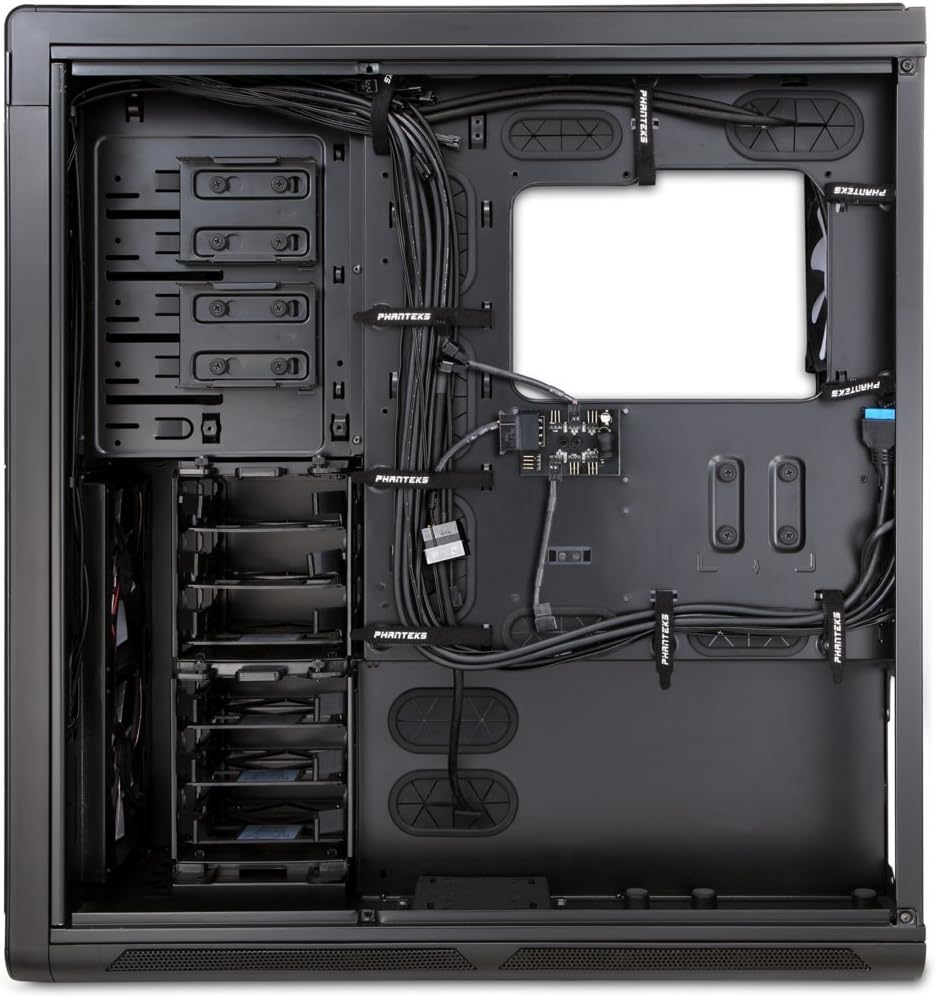
Ọgụgụ 4: Ime view of the Enthoo Primo, showcasing the cable management features behind the motherboard tray.
Atụmatụ arụ ọrụ
The Enthoo Primo is designed with user convenience and optimal performance in mind.
Ogwe ihu I/O
The front I/O panel provides easy access to essential ports and controls:
- 2x USB 3.0 Ports: Maka mbufe data dị elu.
- 2x USB 2.0 Ports: Maka njikọ dị n'akụkụ ọkọlọtọ.
- Igwe okwu Jack: Maka ntinye ọdịyo.
- Jack Audio: 3.5mm Maka mmepụta ọdịyo.
- Mgbanwe LED: Controls the integrated LED lighting (LED strip & Fan LED).

Ọgụgụ 5: N'elu akụkụ view of the Enthoo Primo, illustrating the accessible front I/O panel.
Sistemụ jụrụ oyi
The Enthoo Primo offers extensive cooling support for both air and liquid cooling configurations.
- Fans etinyegoro mbụ: Includes 1x 140mm fan on top, 2x 140mm LED fans in front, 1x 140mm fan in the rear, and 1x 140mm fan on the bottom. All are Phanteks' PH-F140SP fans.
- Ikuku oyi: Supports up to 14x 120mm fans or 11x 140mm fans for comprehensive airflow.
- Mmiri jụrụ oyi: Provides up to 5 different installation areas for slim and thick radiators (120mm and 140mm form factors), including clearance for push-pull fan configurations. Innovative liquid cooling mounting systems include radiator brackets and a versatile reservoir/pump bracket.

Foto 6: N'ihu view of the Enthoo Primo, showcasing the clean design and intake areas.
Nlekọta
Regular maintenance ensures optimal performance and extends the lifespan of your computer case.
- Ihe nzacha uzuzu: The Enthoo Primo features removable dust filters located at the front, top, bottom (2x), and side panel (2x). Regularly remove and clean these filters to maintain optimal airflow and prevent dust buildup inside the case.
- Nchacha mpụta: Jiri nwayọọ, damp cloth to wipe down the aluminum front and top panels. Avoid abrasive cleaners.
- Ime nhicha: Periodically use compressed air to clear dust from internal components and fan blades. Ensure the system is powered off and unplugged before cleaning.
Nchọpụta nsogbu
Akụkụ a na-ekwu maka nsogbu ndị ị nwere ike izute.
- Enweghị ike:
- Ensure the PSU is properly seated and connected to the motherboard and wall outlet.
- Verify that the front panel power switch cable is correctly connected to the motherboard's header.
- Fans Not Spinning / LED Not Lighting:
- Check fan connections to the motherboard or fan hub.
- Ensure the fan hub is powered (SATA connection).
- Verify the LED switch on the front panel is in the 'on' position.
- Ọdụ ụgbọ mmiri USB anaghị arụ ọrụ:
- Confirm that the USB 3.0 and USB 2.0 headers from the front panel are securely connected to the motherboard.
- Oke mkpọtụ:
- Check if all fans are securely mounted and free from obstructions.
- Ensure drive trays are properly secured to minimize vibration.
- Clean dust filters and fan blades if necessary.
Nkọwapụta
| Njirimara | Nkọwa |
|---|---|
| Aha Nlereanya | PH-ES813P_BL |
| Ụdị ikpe | Ulo elu |
| Ndakọrịta Motherboard | ATX |
| Ihe onwunwe | Aluminum Faceplates, Steel Chassis |
| Agba | Oji/acha anụnụ anụnụ |
| Akụkụ (LxWxH) | 23.62 x 9.84 x 25.59 sentimita asatọ |
| Ibu Ibu | 50 pound |
| USB 3.0 ọdụ ụgbọ mmiri | 2 |
| USB 2.0 ọdụ ụgbọ mmiri | 2 |
| Ọdụ ụgbọ mmiri | 1x Microphone, 1x 3.5mm Audio Jack |
| Oghere Mgbasawanye | 8 |
| Usoro jụrụ oyi | Ikuku / Mmiri |
| Ndị Fans etinyegoro mbụ | 5x 140mm (1 top, 2 front LED, 1 rear, 1 bottom) |
| Max Fan Support | 14 x 120mm ma ọ bụ 11x 140mm |
| Nkwado Radiator | Up to 5 locations (120mm/140mm form factors) |
Akwụkwọ ikike na nkwado
For warranty information and technical support, please refer to the official Phanteks websaịtị ma ọ bụ akwụkwọ ntuziaka onye ọrụ zuru oke.
You can download the complete user manual in PDF format here: Phanteks Enthoo Primo User Manual (PDF)
Ask a question about this manual
Ask about setup, troubleshooting, compatibility, parts, safety, or missing instructions. Manuals+ will review the question and use this page’s manual context to help answer it.