
CanaKit RASPBERRY-PI-STK
CanaKit Raspberry Pi 2 Model B Starter Kit Instruction Manual
Brand: CanaKit | Model: RASPBERRY-PI-STK
Okwu mmalite
This manual provides comprehensive instructions for setting up, operating, and maintaining your CanaKit Raspberry Pi 2 Model B Starter Kit. The kit is designed to provide all necessary components to begin exploring the world of Raspberry Pi computing.

Image: All components of the CanaKit Raspberry Pi 2 Starter Kit, including the Raspberry Pi board, case, power supply, HDMI cable, WiFi adapter, MicroSD card, heat sink, and quick-start guide.
Kedu ihe gụnyere
Your CanaKit Raspberry Pi 2 Starter Kit includes the following items:
- Raspberry Pi 2 (RPi2) Model B (Version 1.2): Quad-Core 900 MHz, 1 GB RAM.
- 8 GB MicroSD Card (Class 10): Pre-loaded with NOOBS (New Out Of Box Software).
- CanaKit WiFi Adapter / Dongle (RT5370 chipset): Supports Access Point Mode.
- CanaKit 2.5A Micro USB Power Supply: UL Listed, with Noise Filter (5-foot cable), specifically designed for Raspberry Pi 2.
- High Quality Raspberry Pi 2 Case: Designed for protection and accessibility.
- Premium Quality HDMI Cable: 6-foot cable with CEC support.
- Ngwa mbelata okpomọkụ: For thermal management of the Raspberry Pi's main chips.
- GPIO Quick Reference Card: For easy identification of GPIO pins.
- CanaKit Full Color Quick-Start Guide: A printed guide to get started.

Image: Visual breakdown of the kit contents, highlighting the Raspberry Pi 2 board, case, power adapter, MicroSD card, WiFi adapter, HDMI cable, and quick-start guide.
Ntuziaka nhazi
- Install Heat Sinks: Carefully peel the adhesive backing from the heat sinks and attach them to the main processor and other designated chips on the Raspberry Pi board. Ensure proper alignment for optimal heat dissipation.
- Assemble the Case: Place the Raspberry Pi 2 board into the bottom half of the provided case. Ensure all ports align correctly with the case openings. Snap the top half of the case onto the bottom half, securing the Raspberry Pi inside.
- Fanye kaadị MicroSD: Locate the MicroSD card slot on the Raspberry Pi board (accessible through the case). Insert the pre-loaded 8 GB Class 10 MicroSD card into the slot until it clicks into place.
- Ngwa njikọ:
- Connect a keyboard and mouse to the USB ports on the Raspberry Pi.
- Connect the HDMI cable from the Raspberry Pi's HDMI port to your display (monitor or TV).
- Plug the CanaKit WiFi Adapter into an available USB port.
- Njikọ Ike: Plug the CanaKit 2.5A Micro USB Power Supply into the Micro USB power port on the Raspberry Pi. Then, plug the power supply into a wall outlet. The Raspberry Pi will power on automatically.
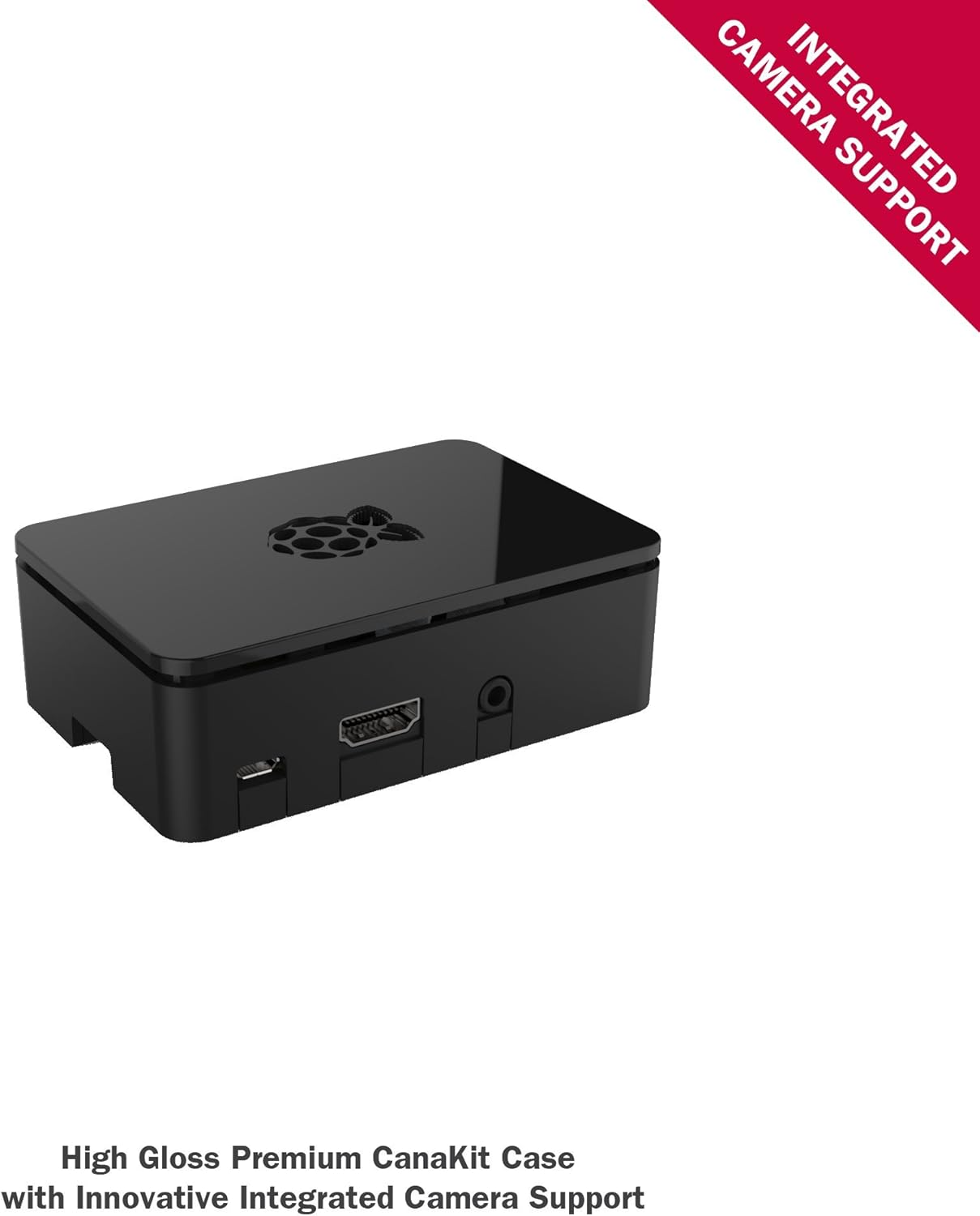
Image: The high-gloss premium CanaKit case, designed to house the Raspberry Pi 2 board and provide integrated camera support.

Image: An 8 GB Class 10 MicroSD card, highly optimized for Raspberry Pi 2 and pre-loaded with NOOBS.

Image: A 6.5-foot (2-meter) premium quality HDMI cable with CEC support, allowing a CEC compatible TV's remote to control the Raspberry Pi.

Image: The CanaKit 2.5A Micro USB Power Supply, UL Listed and designed for the Raspberry Pi 2, featuring a noise filter for stability.

Image: The CanaKit WiFi Adapter, a mini USB wireless adapter supporting 150 Mbps 802.11N/G/B and Access Point (AP) Mode.
Ntuziaka ọrụ
First Boot and OS Installation (NOOBS)
Upon connecting power, your Raspberry Pi will boot into the NOOBS (New Out Of Box Software) menu. This interface allows you to easily install various operating systems.
- When the NOOBS menu appears, select your desired operating system (e.g., Raspbian).
- Follow the on-screen prompts to complete the installation. A wired internet connection may be required for some operating systems or updates.
- Once the installation is complete, your Raspberry Pi will reboot into the newly installed operating system.
Jikọọ na Wi-Fi
After installing your operating system, you can configure the Wi-Fi connection using the CanaKit WiFi Adapter:
- Ensure the CanaKit WiFi Adapter is firmly seated in a USB port.
- Navigate to the network settings or Wi-Fi icon in your operating system's desktop environment.
- Họrọ netwọk Wi-Fi gị site na ndetu netwọkụ dị.
- Enter your Wi-Fi password if prompted and connect.
GPIO Usage
The General Purpose Input/Output (GPIO) pins allow you to connect and control various electronic components. Refer to the included GPIO Quick Reference Card for pinout details and functions.

Image: The CanaKit GPIO Quick Reference Card, providing a visual guide to the Raspberry Pi's GPIO header pins and their functions.
Nlekọta
- Heat Sinks: The included heat sinks help manage the temperature of the Raspberry Pi's processor. Ensure they remain securely attached. While not strictly necessary for all operations, they are beneficial, especially when the device is enclosed in a case or under heavy load.
- Nlekọta kaadị MicroSD: Always shut down your Raspberry Pi properly through the operating system before removing the power or the MicroSD card. Improper shutdown can corrupt the MicroSD card's file usoro.
- Nhicha ikpe: Clean the case with a soft, dry cloth. Avoid using harsh chemicals or abrasive materials.
Nchọpụta nsogbu
- Enweghị mmepụta ihe ngosi:
- Ensure the HDMI cable is securely connected to both the Raspberry Pi and the display.
- Hụ na edobere ihe ngosi ahụ na isi mmalite ntinye ziri ezi.
- Check that the power supply is connected and providing power (LEDs on the Pi should illuminate).
- Okwu njikọ Wi-Fi:
- Confirm the CanaKit WiFi Adapter is firmly seated in a USB port.
- Ensure you have selected the correct Wi-Fi network and entered the password accurately.
- If issues persist, try restarting the Raspberry Pi.
- MicroSD Card Appears as 1 GB: The 8 GB MicroSD card is pre-partitioned. When inserted into a PC, it may initially show only a smaller partition (e.g., 1 GB). The remaining space can be expanded within the Raspberry Pi's operating system using tools like
raspi-config(for Raspbian). - Njikọ ọkọnọ ike: The Micro USB power connector is designed to fit snugly. If it feels loose, ensure it is fully inserted. While the included power supply is robust, repeated forceful insertion/removal of the WiFi dongle might affect its long-term stability.
Nkọwapụta
| Njirimara | Nkọwa |
|---|---|
| Nhazi | Broadcom Quad-Core 900 MHz |
| RAM | 1 GB |
| Nchekwa | 8 GB MicroSD Card (Class 10) |
| Ụdị ikuku | Wi-Fi (via included adapter), Bluetooth (built-in) |
| Operating System (Pre-loaded) | NOOBS (for installing Raspbian and others) |
| Ịnye ọkụ | CanaKit 2.5A Micro USB (UL Listed) |
| Nọmba nlereanya | RASPBERRY-PI-STK |
| Ibu Ibu | 0.16 ounces |
| Akụkụ ngwugwu | 11.14 x 8.66 x 2.2 sentimita asatọ |
Akwụkwọ ikike na nkwado
Akwụkwọ ikike nke onye nrụpụta
The CanaKit Raspberry Pi Starter Kit is covered by CanaKit's Akwụkwọ ikike nke onye nrụpụta afọ 1. This warranty offers hassle-free replacements for eligible issues.
Nkwado ndị teknuzu
For technical assistance, troubleshooting tips, or further information, please refer to the official CanaKit support resources. The included Quick-Start Guide may also contain contact information or links to online support. For general Raspberry Pi information and community support, visit the official Raspberry Pi websaịtị.
Mara: The GPIO Quick Reference Card included in your kit also provides a support websaịtị: support.canakit.com.
Ask a question about this manual
Ask about setup, troubleshooting, compatibility, parts, safety, or missing instructions. Manuals+ will review the question and use this page’s manual context to help answer it.