
1. Okwu Mmalite na Product Overview
This manual provides essential information for the safe and efficient operation of your Ribimex Electric Hoist PE125/250C/1. This electric hoist is designed for lifting heavy loads in domestic, garden, and workshop environments. It features a powerful 500W single-phase motor and a versatile steel cable system allowing for different load capacities and lifting heights.
Please read this manual thoroughly before installation, operation, or maintenance to ensure proper use and to prevent injury or damage.
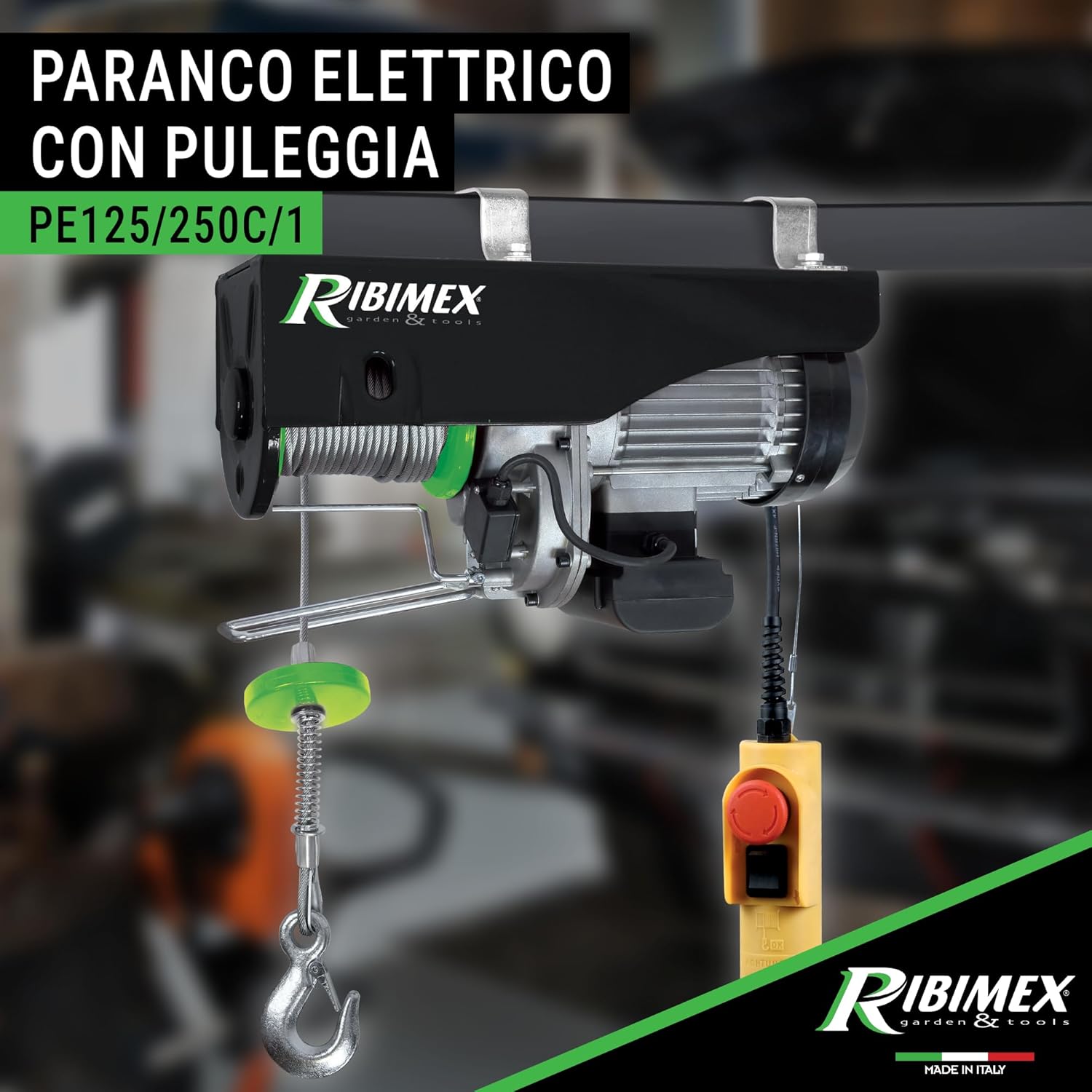
Figure 1: Ribimex Electric Hoist PE125/250C/1. This image shows the main unit of the electric hoist, including the motor, cable drum, steel cable, hook, and wired control unit.
2. Ntuziaka nchekwa
Ịdọ aka ná ntị: Ọdịda ịgbaso ntuziaka nchekwa ndị a nwere ike ibute nnukwu mmerụ ahụ ma ọ bụ ọnwụ.
- Always read and understand the entire instruction manual before operating the hoist.
- Ensure the hoist is securely mounted to a suitable support structure capable of safely bearing the maximum load.
- Never exceed the rated load capacity of the hoist (125 kg for single line, 250 kg for double line).
- Inspect the steel cable, hook, and all components for wear or damage before each use. Do not use if any damage is found.
- Keep hands and body clear of the cable and moving parts during operation.
- Do not use the hoist to lift people or animals.
- Ensure the load is balanced and securely attached to the hook before lifting.
- The wired control features an immediate stop button (red button). Use it in case of emergency.
- Chebe eriri ọkụ site na akụkụ dị nkọ, okpomọkụ na mmanụ.
- Do not operate the hoist in hazardous environments or in the presence of flammable liquids or gases.
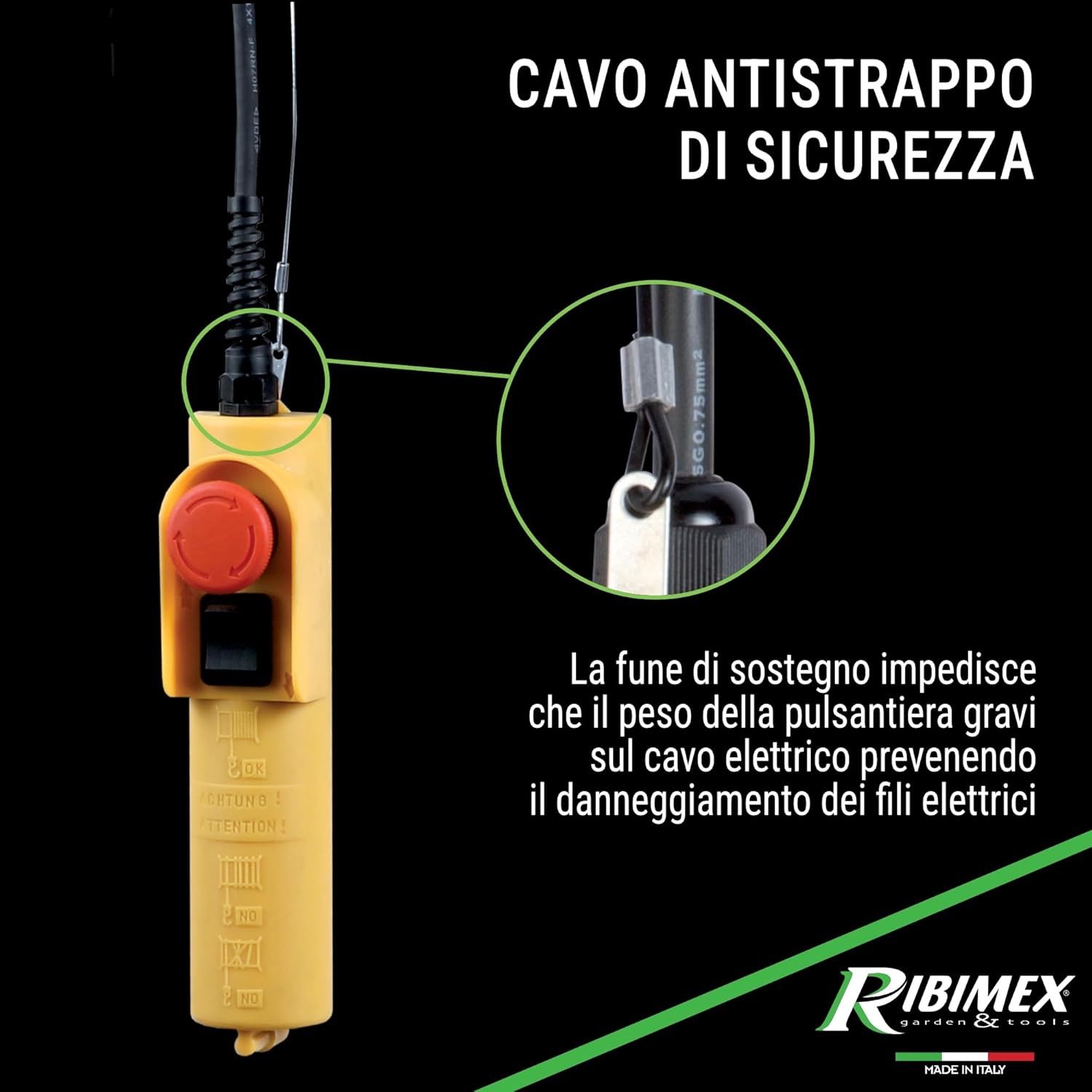
Figure 2: Wired control with safety cable detail. This image highlights the safety cable anti-tear feature on the wired control, which prevents strain on the electrical wires.
3. Akụrụngwa Ndepụta
The Ribimex Electric Hoist PE125/250C/1 package includes the following components:
- Electric Hoist Unit (with integrated motor, cable drum, and steel cable)
- Wired Control Unit with Emergency Stop Button
- Pulley (for double line operation)
- 2 Fixing Brackets
- Steel Cable with Rubber Stop and Hook (pre-installed)

Figure 3: Included accessories. This image displays the separate pulley and the two fixing brackets that come with the hoist.
4. Ntọala na nwụnye
Proper installation is crucial for safe operation. The hoist must be mounted on a robust and stable support structure, such as a steel beam or a specially designed hoist frame, capable of supporting at least twice the maximum load capacity.
- Mounting the Hoist: Use the two provided fixing brackets to securely attach the hoist unit to your chosen support structure. Ensure all bolts and fasteners are tightened according to manufacturer specifications.
- Njikọ eletrik: Connect the hoist to a suitable 230V-50Hz power supply. Ensure the power outlet is properly grounded and protected by a residual current device (RCD).
- Nhazi eriri:
- Single Line Operation (Max 125 kg): For lighter loads and maximum lifting height (18 meters), use the steel cable directly with the hook. The lifting speed will be 8 m/min.
- Double Line Operation (Max 250 kg): For heavier loads and reduced lifting height (9 meters), attach the included pulley to the main hook. Then, route the steel cable through the pulley and secure it back to the hoist unit's designated attachment point. The lifting speed will be 4 m/min.

Figure 4: Single vs. Double Cable Configuration. This diagram visually explains how to set up the hoist for single-line operation (125 kg capacity, 18m height, 8m/min speed) and double-line operation using the pulley (250 kg capacity, 9m height, 4m/min speed).
5. Ntuziaka ọrụ
Before operating, ensure all safety checks are completed and the load is securely attached.
- Ike Na: Plug the hoist into a suitable power outlet.
- Attach Load: Securely attach the load to the hook. Ensure the load is balanced to prevent swinging.
- Lifting/Lowering: Use the wired control unit. Press the 'UP' button to lift the load and the 'DOWN' button to lower it. Release the button to stop movement.
- Nkwụsị ihe mberede: In case of any emergency or malfunction, immediately press the large red emergency stop button on the wired control unit. This will cut power to the motor and stop all movement.
- Nleba anya ibu: Always keep the load in sight during operation. Do not leave a suspended load unattended.
Video 1: Ribimex Electric Hoist Product Overview. Vidiyo a na-enye nkọwa zuru okeview of the Ribimex electric hoist, showcasing its features and components. (Note: Video source is a placeholder as specific m3u8 URL was not provided in the data.)
6. Nlekọta
Nlekọta oge niile na-achọpụta ogologo ndụ yana ọrụ nchekwa nke elu gị.
- Nyocha USB: Periodically inspect the steel cable for fraying, kinks, corrosion, or other damage. Replace the cable if any damage is observed.
- Hook and Latch: Check the hook for deformation and ensure the safety latch operates freely and closes properly.
- Housing and Motor: Keep the hoist's aluminum alloy housing and plastic fan cover clean and free from debris. Do not allow dust or moisture to accumulate on the motor.
- Njikọ eletrik: Gbaa mbọ hụ na njikọ eletrik niile nwere nchekwa na enweghị mmebi.
- mmanu mmanu: Consult a qualified technician for any internal lubrication requirements. Do not attempt to lubricate internal components yourself unless specifically instructed.
7. Nchọpụta nsogbu
If you encounter issues with your Ribimex Electric Hoist, refer to the following common troubleshooting steps:
- Hoist does not power on:
- Check if the power cable is securely plugged into a working outlet.
- Verify the power supply (230V-50Hz).
- Ensure the emergency stop button is not engaged. Rotate or pull it to disengage if necessary.
- Motor runs but load does not lift/lower:
- Check if the load exceeds the maximum capacity for the current cable configuration (125 kg single, 250 kg double).
- Inspect the cable drum for any obstructions or tangles.
- Mkpọtụ na-adịghị ahụkebe n'oge arụ ọrụ:
- Kwụsị ọrụ ozugbo.
- Inspect the hoist for any loose parts or foreign objects.
- If the noise persists, discontinue use and contact customer support.
For issues not covered here, or if troubleshooting steps do not resolve the problem, contact Ribimex customer support or a qualified service technician.
8. Nkọwapụta
The following table details the technical specifications for the Ribimex Electric Hoist PE125/250C/1:

Figure 5: Key Product Specifications. This image visually presents the main technical specifications of the hoist.
| Nkọwapụta | Uru |
|---|---|
| Onye nrụpụta | Ribimex |
| Nọmba nlereanya | PE125/250C |
| Ụdị Ike | AC |
| Voltage | 230 volts |
| Wattage | 500 watt |
| Lifting Capacity (Single Line) | 125 n'arọ |
| Lifting Capacity (Double Line with Pulley) | 250 n'arọ |
| Elu Elu (Otu Ahịrị) | 18 mita |
| Lifting Height (Double Line with Pulley) | 9 mita |
| Ọsọ ibuli (Otu Ahịrị) | 8 m/min |
| Lifting Speed (Double Line with Pulley) | 4 m/min |
| Ogologo eriri USB | 18 mita |
| Ụdị USB | Braided Steel Wire |
| Akụkụ ngwaahịa (L x W x H) | 24 x 15 x 42.5 cm |
| Ibu Ibu | 10.5 kilogram |
| Ngwa gụnyere | Electric hoist, 2 fixing brackets, Pulley |
| Batrị achọrọ | Mba |
9. Akwụkwọ ikike na nkwado
For warranty information, technical support, or spare parts, please contact your retailer or the manufacturer, Ribimex, directly. Keep your purchase receipt as proof of purchase for any warranty claims.